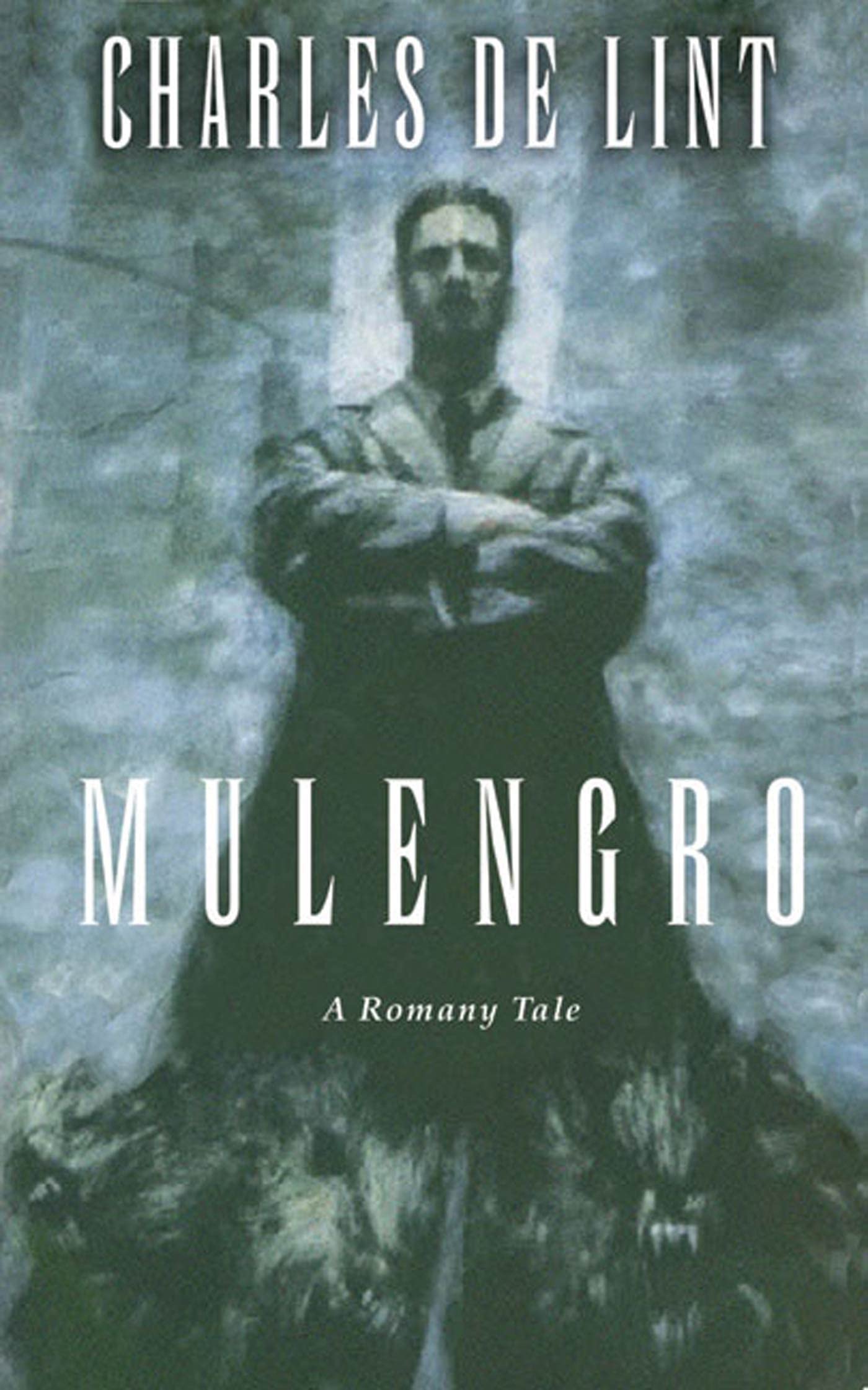



A tale of magic and murder The increasingly bizarre murders have baffled the police―but each death is somehow connected with Ottawa's elusive Gypsy community. The police are searching for a human killer, but the Romany know better. They know the name of the darkness that hunts them down, one by one: Mulengro . “There is no better writer now than Charles de Lint at bringing out the magic in everyday life.” ― Orson Scott Card “In de Lint's capable hands, modern fantasy becomes something other than escapism. It becomes folk song, the stuff of urban myth.” ― The Phoenix Gazette A tale of magic and murder The increasingly bizarre murders have baffled the police--but each death is somehow connected with the city's elusive Gypsy community. The police are searching for a human killer, but the Romany know better. They know the name of the darkness that hunts them down, one by one: Mulengro . There is no better writer now than Charles de Lint at bringing out the magic in everyday life. - Orson Scott Card In de Lint's capable hands, modern fantasy becomes something other than escapism. It becomes folk song, the stuff of urban myth. -- The Phoenix Gazette An Orb Book A tale of magic and murder The increasingly bizarre murders have baffled the police―but each death is somehow connected with the city's elusive Gypsy community. The police are searching for a human killer, but the Romany know better. They know the name of the darkness that hunts them down, one by one: Mulengro . "There is no better writer now than Charles de Lint at bringing out the magic in everyday life." – Orson Scott Card "In de Lint's capable hands, modern fantasy becomes something other than escapism. It becomes folk song, the stuff of urban myth." ― The Phoenix Gazette An Orb Book Charles de Lint and his wife, the artist MaryAnn Harris, live in Ottawa, Ontario, Canada. His evocative novels, including Moonheart, Forests of the Heart, and The Onion Girl, have earned him a devoted following and critical acclaim as a master of contemporary magical fiction in the manner of storytellers like John Crowley, Jonathan Carroll, Alice Hoffman, Ray Bradbury, and Isabel Allende. Mulengro By De Lint, Charles Orb Books Copyright © 2003 De Lint, Charles All right reserved. ISBN: 9780312873998 One Janfri Yayal watched his house burn down without expression. The two-story, wood-frame structure was beyond rescue. Flames leapt half its height into the night skies. Smoke erupted from windows and eaves, roiling upward like a ghost escaping the doomed flesh of its host body. A gasp came from the watching crowd as a section of roof collapsed in a shower of sparks. The firemen pulled back, all too aware of how ineffectual their efforts were at this point. Janfri’s only response was a nerve that twitched in his cheek. The red light of the flames and the glare of the rotating beacons on the police cars and fire trucks flickered across his dark skin, highlighting the strong features set in their mask of indifference. He was oblivious to the growing crowd of thrill-seekers who jostled for position against the hastily-erected barricades that the police had set up. He watched the home he’d known for three years burning and remembered other fires. Not the cook and camp fires of his childhood, nor the pleasant crack and spit of seasoned wood burning in a stone hearth. Instead his mind thrust up memories of a man set afire and the crowd around him, jeering and laying wagers as to how long he would live. Of the wagons of his parents and grandparents and others of their kumpania burning in the night. Of the men who wore the four-armed symbol of the swastika and set countries alight with the same single-minded purpose with which they burned Gypsy wagons. But there were no swastikas here. It was another symbol that had erased the expression from Janfri’s features. He had seen it on the wall of his home before the flames and smoke took it from his sight—a scrawl of black paint that was meaningless to the Gaje , the non-Gypsies, but that he understood with a bleak emptiness. It meant marhime . Ceremonially defiled. Unclean. It was a message from another Rom to him that there was no welcome among the Gypsies for a Rom who had become too Gaje . And yet, though he understood, he could not believe that one of his people could have done such a thing. Such a display of violence was not the way of the Rom. One who was marhime was not tolerated in the company of o phral , the true Rom. He was ostracized from every facet of Rom society, but he was not treated with violence. Or fire. And yet…He had seen the symbol, the black paint with the excess liquid dripping from its lines like drops of blood; and who else but a Rom knew that he was one of their own? Who else but a Rom would know the secret patrin and defile the wall of his home with it? “Jesus, John,” a voice said in hushed tones at his side. “You’ve lost everything.” Janfri’s compani