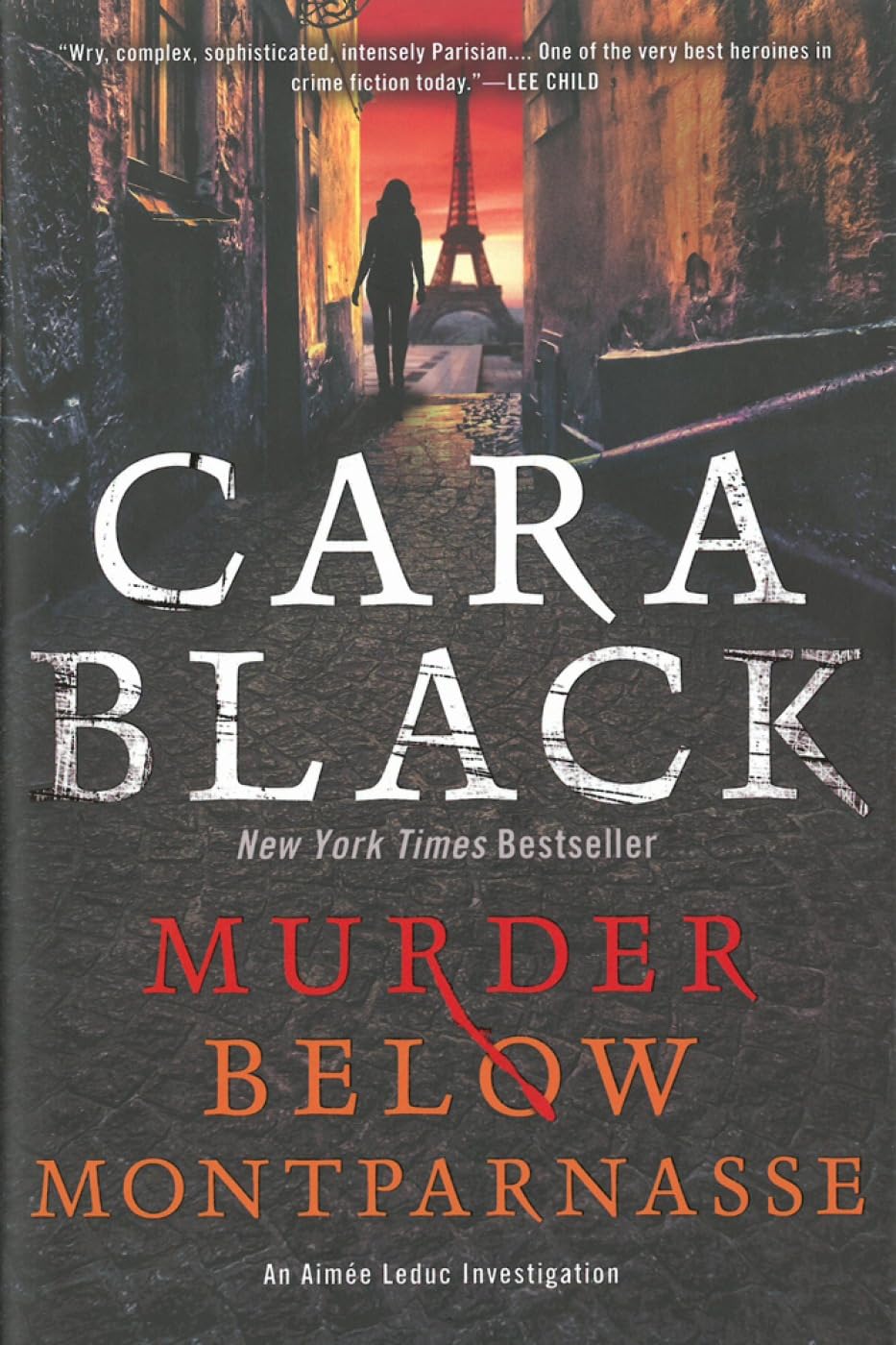



A long-lost Modigliani portrait, a grieving brother’s blood vendetta, a Soviet secret that’s been buried for 80 years—Parisian private investigator Aimée Leduc’s current case is her most exciting one yet. The cobbled streets of Montparnasse might have been boho-chic in the 1920s, when artists, writers, and their muses drank absinthe and danced on cafe tables. But to Parisian private investigator Aimée Leduc, these streets hold darker secrets. When an old Russian man named Yuri hires Aimée to protect a priceless painting that just might be a Modigliani, she learns how deadly art theft can be. Yuri is found tortured to death in his atelier, and the painting is missing. Every time Aimée thinks she's found a new witness, the body count rises. What exactly is so special about this painting that so many people are willing to kill—and die—for it? Beleaguered Parisian investigator Aimée Leduc has a couple of new problems: her best friend and partner, Rene Friant, has decamped to Silicon Valley, and, equally disturbing, Aimée is having trouble fitting into her vintage Dior. All that pales in comparison, however, when she receives a phone call from a Russian manwho wants her to find a lost painting and who claims to have known Aimée’s long-vanished mother. Any mention of Maman sends Aimée into high gear, and that turns out to be a very good thing as the plot strands start raining down on her like golf-ball-sized hailstones: the missing painting is an unknown Modigliani, a portrait of Lenin done when he lived in Paris, and its allure prompts multiple murders in the quartier below Montparnasse, where latter-day revolutionaries continue to plot and counterplot; Rene has his own crisis when it turns out his new bosses are crooks; and let’s not forget the Serb who is determined to kill Aimée and her friend Saj. Longtime fans of the series will turn pages frantically, hoping to finally meet Aimée’s mother, and, as always, Black directs traffic with panache. --Bill Ott Praise for New York Times Bestselling Murder Below Montparnasse A Strand Magazine Best Book of the Year "Francophiles and mystery-novel lovers alike will devour investigator Aimée Leduc's latest outing, which takes her through the gorgeous if treacherous world of black-market art in Paris, as she safeguards a long-lost Modigliani painting." — Entertainment Weekly "As always, with airfares so high, Black offers armchair travelers a whirlwind trip through the City of Light." — USA Today “Aimée Leduc, the appealing sleuth in this series . . . is always zipping around on her pink Vespa, carrying out some "quick and dirty" computer security job. But she keeps up a running commentary on whatever quartier of the city her work takes her to. Here it's the unfashionable backside of Montparnasse . . . This unassuming neighborhood is a rich one for the purposes of a plot that hangs on a Modigliani canvas and involves Russian émigrés and Surrealist artists, including some who live on in legend.” — The New York Times Book Review “[Black's] tone is lighter than in most other Euro-noir. After all, this is Paris . . . The spice in this tale, set in 1998, involves a long-hidden, newly stolen Modigliani that Leduc is hired to retrieve. Before she can even begin hunting, her client is killed . . . Fortunately, Leduc has a network of loyal friends to aid in her escapades. Pity the knife-wielding villain who offends that infallible sense of style.” — The Wall Street Journal "Aimée Leduc is never less than chic." — The Seattle Times "Black is an old pro with a ear for language and dialogue and a gift for knowing just when to pop the next surprise." — The Denver Post "For those who love or long for Paris, Cara Black's Murder Below Montparnasse is an intriguing wander through the streets of the French capital." —Noir Journal "A breathless tale of double-, triple- and quadruple-crosses as the private eye finds herself at the heart of a century-old plot that incorporates not only the great painters of the avant garde but also one Vladimir Illyich Lenin." — The Irish Times “Thoroughly and intriguingly plotted, as always...[grabs] the reader from its opening pages to its heart-rending denouement. Further, the Paris setting, especially its Montparnasse locale, is marvelously evoked by Black, a frequent visitor to France. A visitor she may be, but she writes of The City of Lights like a native Parisian.” — D eadly Pleasures "Brisk, engaging . . . Another great Aimée Leduc read; fans will be intrigued by the new developments." — Library Journal "Tantalizing." — Publishers Weekly “Aimée [goes] into high gear, and that turns out to be a very good thing as the plot strands start raining down on her like golf-ball-sized hailstones . . . Longtime fans of the series will turn pages frantically, hoping to finally meet Aimée’s mother, and, as always, Black directs traffic with panache.” — Booklist "Dressed in black leather leggings, ba