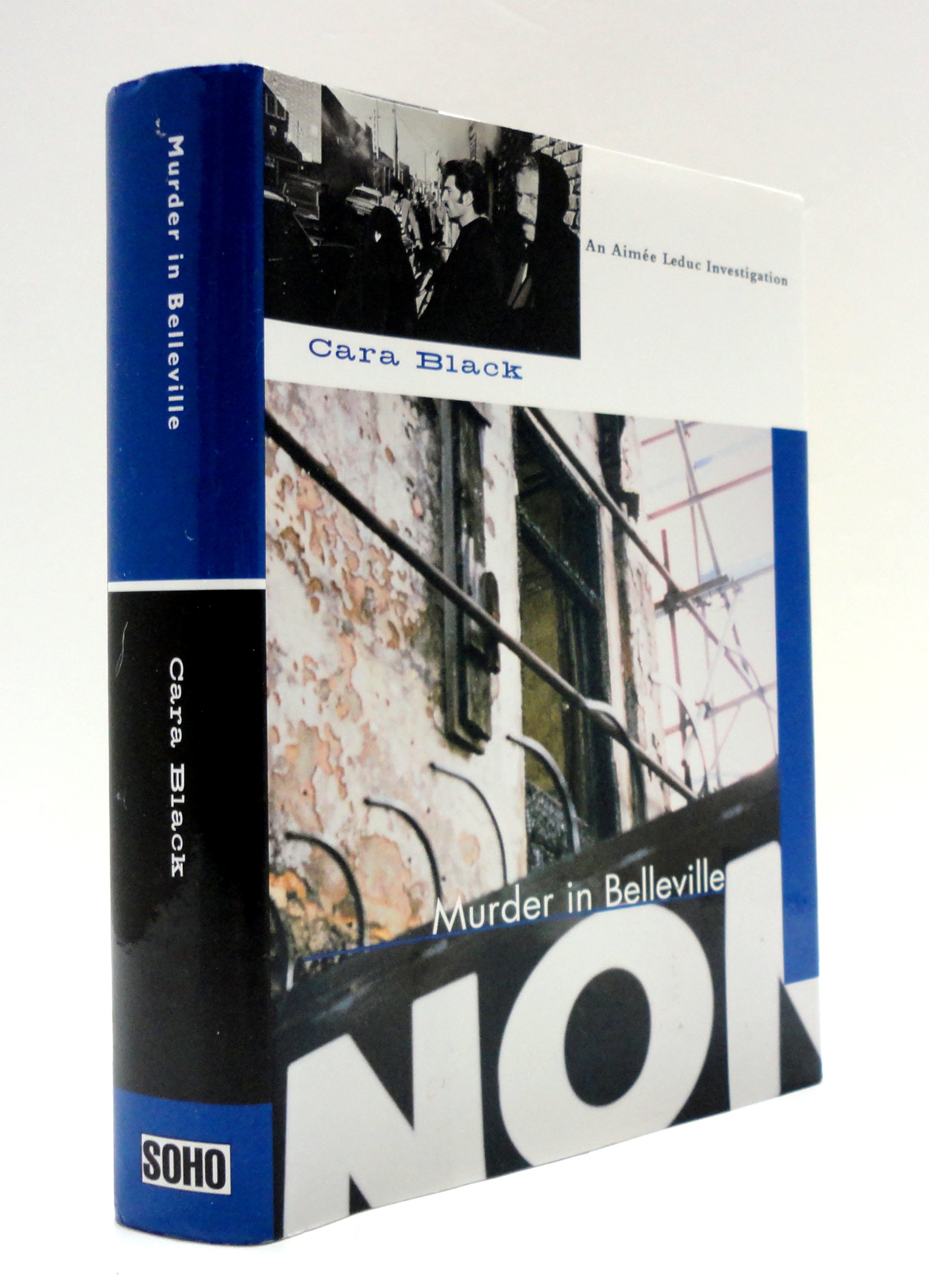



Tension runs high in this working-class neighborhood as a hunger strike to protest strict immigration laws escalates among the Algerian immigrants. Aimée barely escapes death in a car bombing in this tale of terrorism and greed in the shadows of Paris. April in Paris, 1994, is hardly the stuff of song: forget lilacs and lights twinkling along the Seine and think riots and firebombings. Private investigator Aimée Leduc ( Murder in the Marais ) specializes in corporate security, but when Anaïs, an old friend and wife of an interior minister, sends her a terrified SOS from Belleville, an immigrants' quartier , the racial violence festering in the city explodes on a very personal level. Anaïs had intended to confront Sylvie, her husband's mistress, but when a car bomb fueled by Algerian plastique takes Sylvie's life, Anaïs begs Aimée to unravel the tangled threads that led to her death. Aimée's investigations take her into the heart of the unrest surrounding the political status of illegal Algerian immigrants, or sans-papiers . What was the connection between Sylvie (also known as Eugénie, a pied-noir , or Algerian-born French citizen) and Mustafa Hamid, charismatic leader of the Alliance Fédération Libération , a humanitarian mission bent on stopping the forced repatriation of North African Magrébhins ? Was Anaïs' husband being blackmailed by a radical faction of the AFL? The jam-packed plot is occasionally hard to follow (and the intermittent presence of Yves, Aimée's fickle lover, is downright distracting), but Black's Paris, at times grimly threatening, is also wondrously vibrant: She wondered how Sylvie/Eugénie fit into the melange that swelled the boulevard: the Tunisian Jewish bakery where a line formed while old women who ran the nearby hammam conversed with one and all from their curbside café tables, the occasional rollerblader weaving in and out of the crowd, the Asian men unloading garments from their sliding-door Renault vans, the Syrian butchers with their white coats stained bloody pink, the tall, ebony Senegalese man in a flowing white tunic, prayer shawl, and blue jogging shoes with a sport bag filled with date branches, a well-coiffed French matron tugging a wheeled shopping cart, a short, one-eyed Arabe man who hawked shopping bags hanging from his arms, and the watchful men in front of the Abou Bakr Mosque near the Métro. Who needs lilacs when you have Paris in all of its confounding, confusing splendor? Francophiles and mystery fans alike will be waiting anxiously for Aimée's next outing. --Kelly Flynn When Paris private investigator Aimee Leduc agrees to help a friend's sister, whose husband is having an affair, she quickly finds herself ensnared in a politically charged case involving the deportation of illegal immigrants ( sans papiers ). The philandering husband is a diplomat who turns out to be in cahoots with Afghani-based terrorists who are using funds raised for the immigrants to purchase guns. The action takes place in Belleville, home to Paris' large Arab immigrant community. Black effectively captures the tension and energy of the area, as feuding political factions struggle for power, and the criminal underworld, undeterred by ideals, finds ways to profit from the turmoil. Leduc, a computer specialist, gets to the bottom of the mystery by following the money through cyberspace. It's doubtful that the clicking of a keyboard will ever pack the power of the rat-tat-tat of a .45, but Black generates genuine excitement as Leduc slices and dices databases with a gusto that Philip Marlowe would have admired. The Leduc novels make a natural pairing with Daniel Pennac's equally hip Malaussene series (also set in Belleville). Bill Ott Copyright © American Library Association. All rights reserved Cara Black is the author of eleven book in the bestselling Aimée Leduc series, all of which are available from Soho Crime. She lives in San Francisco with her husband and son and visits Paris frequently.