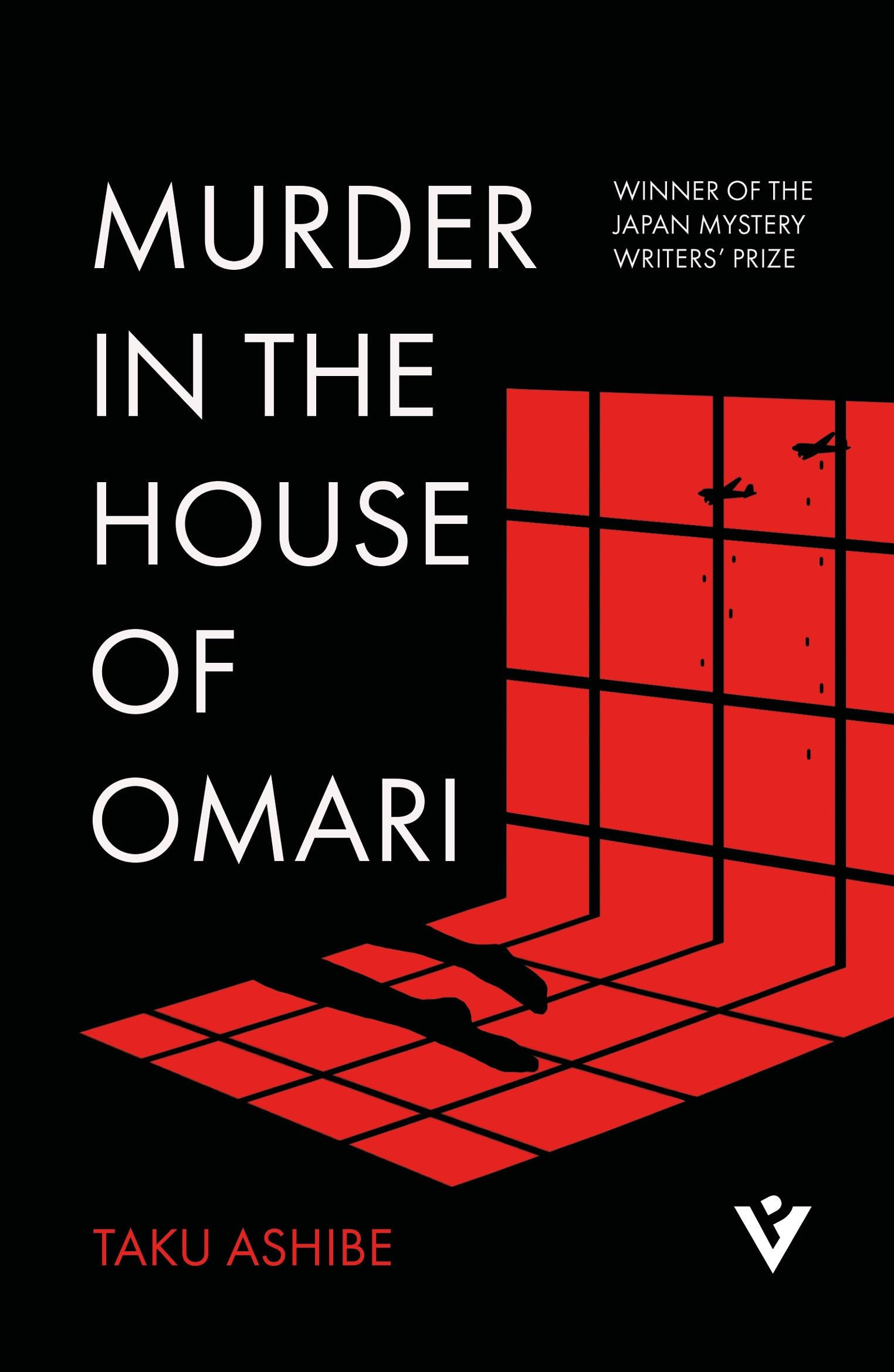



Use your powers of logic and deduction to solve this classic honkaku puzzler—the Japanese tradition of detective fiction—in this delicious twisty murder mystery! In Osaka, dark secrets haunt a wealthy merchant family throughout the first half of the 20th century . . . In 1906, the young heir to the Omari family business climbs to the top of a Panorama and vanishes. In 1914, a fight between two mysterious figures on a bridge tragically ends with one falling to their death. In 1943, as war rages on, the once illustrious family has fallen. Both potential heirs have been drafted into war, and a string of strange and violent happenings has beset the house of Omari. Combining the classic honkaku mystery and Golden Age crime writing with the trappings of historical fiction, it’s easy to see why Murder in the House of Ōmari is an award-winning sensation in Japan! Set in Semba (modern-day Osaka), this gripping murder mystery twists and turns with dark secrets, red herrings, and the turbulent history of Japan in the early 20th century. "It’s a bumpy ride." —Publishers Weekly "A Christie-like whodunnit, set in war-torn 1943 Japan" —Peterborough Telegraph "Resurrects the Golden Age detective story with a Japanese twist... A must-read for fans of Agatha Christie or Yukito Ayatsuji" —The Arts Shelf (UK) Born in 1958 in Osaka, Taku Ashibe graduated from the faculty of law at Dōshisha University, after which he began a career in journalism, holding various posts at the Yomiuri Shimbun ’s Osaka office. In 1986 he received an honourable mention at the 2nd Fantasy Literature Newcomers Award, and in 1990 he won the inaugural Ayukawa Prize for his debut novel A Thirteen-Hand Murder-Comedy . He became a full-time writer in 1994. A member of Japan’s Honkaku Mystery Writers’ Club, he is the author of over two dozen novels and many short-story collections. Bryan Karetnyk is a translator of Japanese and Russian literature. His recent translations for Pushkin Press include Seishi Yokomizo’s The Village of Eight Graves , Futaro Yamada’s The Meiji Guillotine Murders and Ryunosuke Akutagawa’s Murder in the Age of Enlightenment . On a certain street corner, one day in the near future: — Nestled in Osaka’s Central Ward (formerly East and South Wards) is an area called Semba, which stretches one kilometre east to west and two kilometres north to south. It has been a commercial hub ever since the days of the shoguns. Bound by the Tosabori River to the north, by the Higashi Yokobori River to the east, by the old Nagabori River (now Nagabori Road) to the south, and by the old Nishi Yokobori River (now the Osaka–Kobe Highway) to the west, it was once connected to the outside world by some forty bridges. In Osaka, streets that run north to south are called ‘suji’, while those running east to west are known as ‘dori’, and in Semba this crisscrossing of streets formed a chequerboard in which merchants’ houses of all kinds jostled side by side. The most renowned of these were the pharmacies in Dosho-machi, the furniture dealers in Dobuike, the drapers in Honmachi, the haberdashers and cosmetics manufacturers in South Kyuhoji-machi. It is no exaggeration to say that this is where the image of the typical ‘Osaka merchant’ was formed. The culture there was unique, and reputation was paramount. The men and women working there had all endured rigorous training, serving live-in apprenticeships from a young age before working their way up to become shop assistants and then eventually head clerks. Perhaps the most peculiar thing about that culture was the singular brand of Osakan Japanese known as ‘Semba dialect’… …Bang! With a tremendous blast, the noticeboard and the wall to which it was affixed came crashing down. The neat string of characters, which appeared to have been handwritten, were broken off mid-sentence, making the remainder of the text impossible to read. Nobody grumbled about this, much less regretted it—for there was nobody there reading the notice in the first place. All around, jackhammers were striking the ground furiously, while excavators were swinging around arms powerful enough to knock down an entire wall with a single blow. Compressors were vibrating away incessantly, and industrial crushers were chewing up scrap materials with an insatiable appetite. All in all, this was not an atmosphere in which one could easily pause to learn about the history of the area. And besides, this little corner was about to disappear for good due to redevelopment. Not only bland concrete boxes, but also the houses and shops that lent the area its distinctiveness, were being demolished, each without exception, reduced to rubble in the blink of an eye. Misshapen now, that noticeboard lay at the side of the road, nothing more than a piece of junk. Ah, Semba… Those lines that told of its past glories were not written by any government office or merchants’ association, but probably by some loca