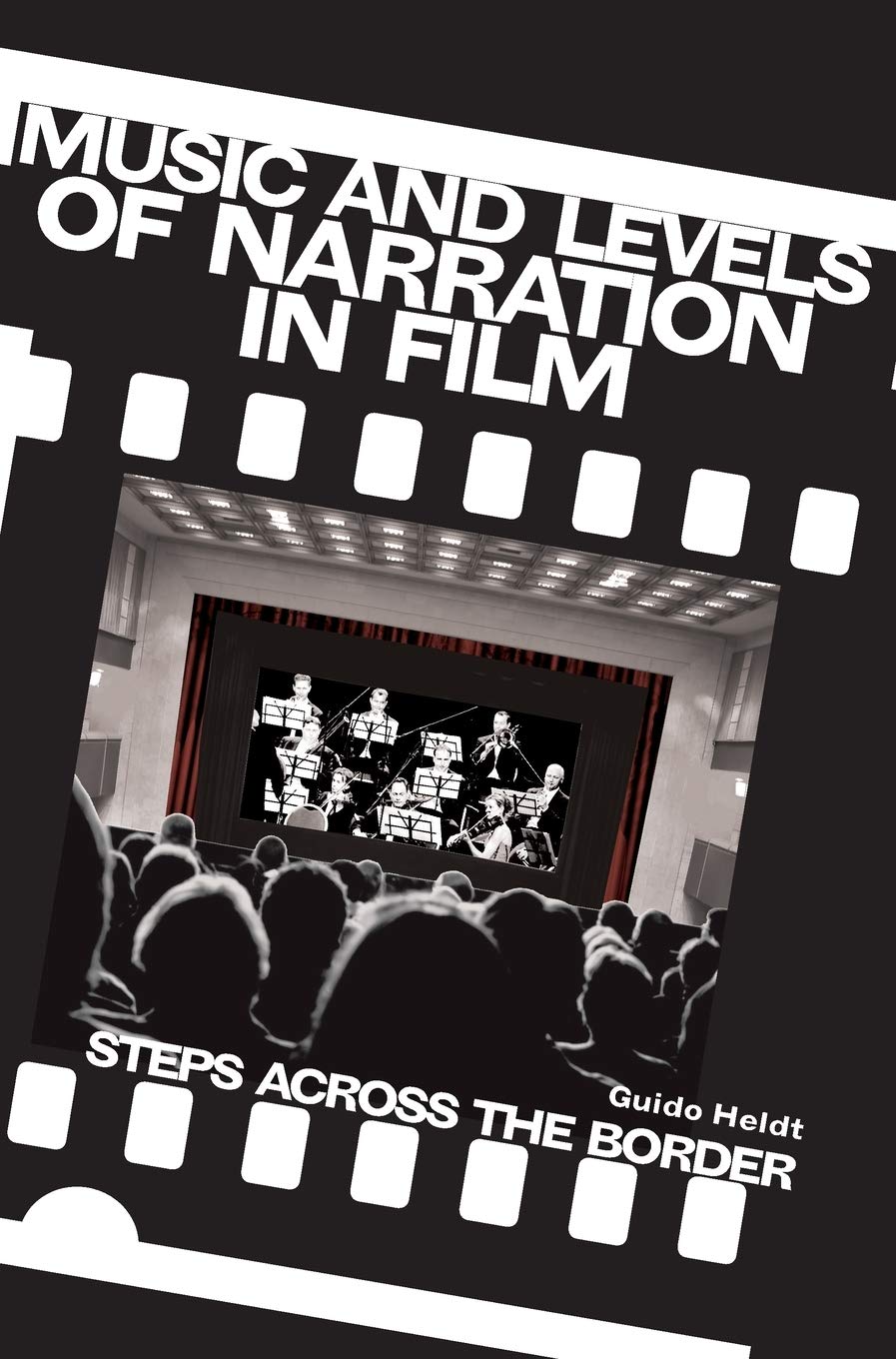



Music and Levels of Narration in Film is the first book-length study to synthesize scholarly contributions toward a narrative theory of film music. Moving beyond the distinction between diegetic and nondiegetic music—or music that is not understood as part of a film’s “story world”—Guido Heldt systematically discusses music at different levels of narration, from the extrafictional to “focalizations” of subjectivity. Heldt then applies this conceptual toolkit to study the narrative strategies of music in individual films, as well as genres, including musicals and horror films. The resulting volume will be an indispensable resource for anyone researching or studying film music or film narratology. A PDF version of this book is available for free in open access via the OAPEN Library platform, www.oapen.org It has been made available under a Creative Commons Attribution 4.0 International Public License and is part of Knowledge Unlatched. “The first book-length study of musical narrativity, Heldt’s Music and Levels of Narration in Film: Steps Across the Border is an essential resource for one interested in the relationship between music and film. Written for scholars with a background in film music and film narratology, Heldt’s study unifies and expands upon current work in the field and is a welcome and necessary addition to the literature.” ― Notes Guido Heldt is a lecturer in music at the University of Bristol. Music and Levels of Narration Film Steps Across the Border By Guido Heidt Intellect Ltd Copyright © 2013 Intellect Ltd All rights reserved. ISBN: 978-1-84150-625-8 Contents Preface, Chapter I: Introduction: Film Music Narratology, Chapter II: The Conceptual Toolkit: Music and Levels of Narration, Chapter III: Breaking into Song? Hollywood Musicals (and After), Chapter IV: Things That Go Bump in the Mind: Horror Films, Chapter V: Beyond the Moment: Long-range Musical Strategies, Chapter VI: The Future's Not Ours to See: Outlook, Bibliography, Filmography and Index of Films, Index of Names, Index of Terms, CHAPTER 1 Introduction: Film Music Narratology i. Laughing with film theory A book written and published in Bristol might do worse than to start with a scene from a film by Bristol's second-best claim to cinematic fame, animation studio Aardman. The film is Wallace & Gromit in 'The Curse of the Were-Rabbit' 2005), and the scene shows the villagers gathered in the church, anxious because of mysterious goings-on in their vegetable gardens. The old parish priest is wheeled in and, accompanied by ominous orchestral chords, gives a fire-and-brimstone speech, surmising that the culprit is 'no man', but something more terrible, and that in their reckless quest for ever larger vegetables the villagers have brought a terrible curse upon themselves – a curse promptly underlined by a fortissimo organ repeating the chords. But then the village policeman barks at someone to be quiet, the image cuts away from the nave, and we see the organist in her corner, fingers still on the keys, and everyone in the cinema is laughing. Why do we laugh? Because the organist is not supposed to play this music in this situation, and to pull the rug from under our expectation works like the punchline of a joke. The organist is supposed to be stuck in the storyworld of the film, while the organ chords are at first assumed to belong to a different order of filmic elements: to the machinery that presents the storyworld to us, selects, frames, structures, highlights, comments upon it, but is not part of it. We may just about accept that the village organist is familiar with the topoi of horror film music. But she takes her cue from the preceding orchestral underscore – plasticine life imitating art – and usurps the task of a different kind of filmic agency, crossing a conceptual borderline we usually accept without thinking about it, because it is part and parcel of our understanding of cinema. When the music is shown to thunder from the organist's instrument, its ostensible source is a surprise. The question at the heart of that surprise – where the music comes from – is the basis of this study. Not, of course, in real-world terms: in one sense, the music comes from a musician in a recording studio; in an equally relevant sense, it comes from a loudspeaker in the cinema or on our television set. But that tends not to be in our mind when we are immersed in a film. For our experience of a film, the real-world circumstances of its production recede into the background, as do the circumstances of its projection (e.g. that sounds actually issue from locations in the cinema or living room, not from their putative sources on the screen). Instead, other frameworks for comprehension take over (though the question 'How did they do this?' may be close to the surface of our consciousness, the willing suspension of disbelief rarely more than a temporary arrangement). One such framework is narra