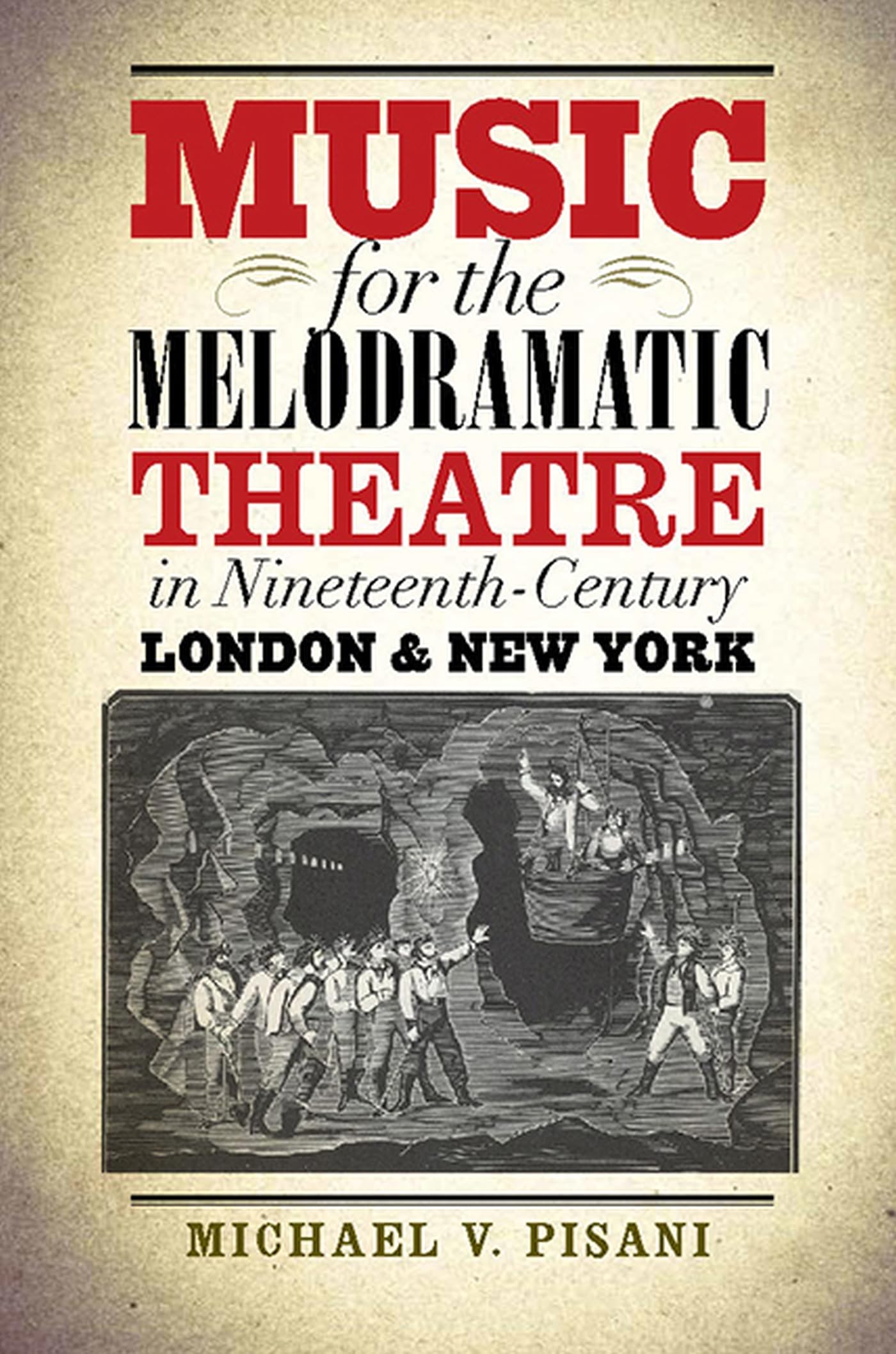
Music for the Melodramatic Theatre in Nineteenth-Century London and New York (Studies Theatre Hist & Culture)
$40.00
by Michael V. Pisani



Throughout the nineteenth century, people heard more music in the theatre—accompanying popular dramas such as Frankenstein , Oliver Twist , Uncle Tom’s Cabin , Lady Audley’s Secret , The Corsican Brothers , The Three Musketeers , as well as historical romances by Shakespeare and Schiller—than they did in almost any other area of their lives. But unlike film music, theatrical music has received very little attention from scholars and so it has been largely lost to us. In this groundbreaking study, Michael V. Pisani goes in search of these abandoned sounds. Mining old manuscripts and newspapers, he finds that starting in the 1790s, theatrical managers in Britain and the United States began to rely on music to play an interpretive role in melodramatic productions. During the nineteenth century, instrumental music—in addition to song—was a common feature in the production of stage plays. The music played by instrumental ensembles not only enlivened performances but also served other important functions. Many actors and actresses found that accompanimental music helped them sustain the emotional pitch of a monologue or dialogue sequence. Music also helped audiences to identify the motivations of characters. Playwrights used music to hold together the hybrid elements of melodrama, heighten the build toward sensation, and dignify the tragic pathos of villains and other characters. Music also aided manager-directors by providing cues for lighting and other stage effects. Moreover, in a century of seismic social and economic changes, music could provide a moral compass in an uncertain moral universe. Featuring dozens of musical examples and images of the old theatres, Music for the Melodramatic Theatre charts the progress of the genre from its earliest use in the eighteenth century to the elaborate stage productions of the very early twentieth century. “An immensely brilliant scholarly work that should be compulsory reading for anyone interested in nineteenth-century theatre.”―David Mayer, author, Stagestruck Filmmaker: D. W. Griffith and the America Theatre “We may know vaguely that nineteenth-century popular theatre depended on mu-sic for its sensational effects, but Michael Pisani’s study of the subject takes us into the creative systems of the musicians and their theatrical collaborators who produced those effects, and then into the theatre to feel how they worked.”―James Parakilas, author, The Story of Opera Michael V. Pisani is professor of music at Vassar College, where he teaches courses on general music history, opera, and film music. Among his many publications are the book Imagining Native America in Music , which received an ASCAP-Deems Taylor Award in 2006. He lives in Poughkeepsie, New York.