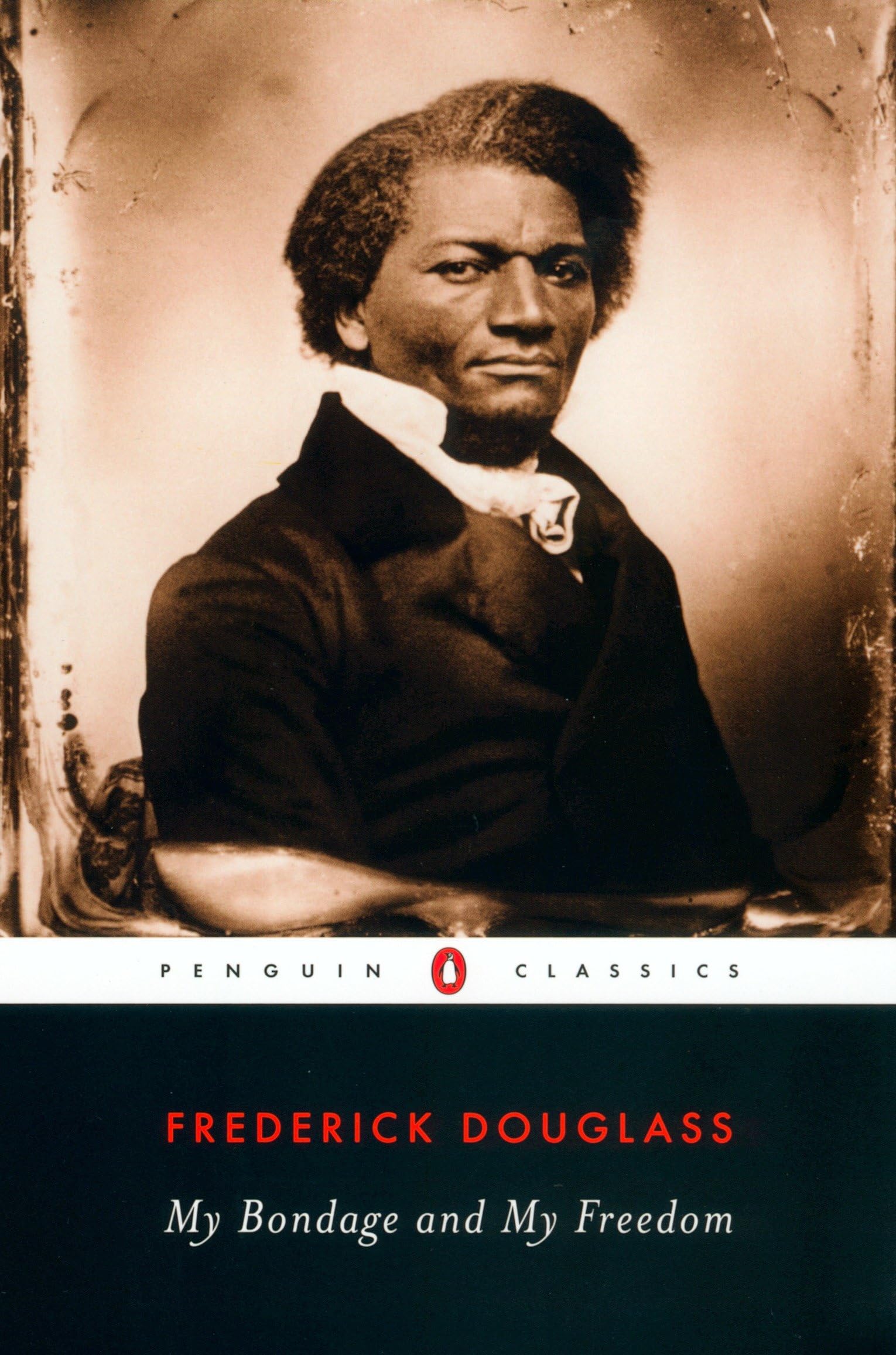



Ex-slave Frederick Douglass's second autobiography-written after ten years of reflection following his legal emancipation in 1846 and his break with his mentor William Lloyd Garrison-catapulted Douglass into the international spotlight as the foremost spokesman for American blacks, both freed and slave. Written during his celebrated career as a speaker and newspaper editor, My Bondage and My Freedom reveals the author of the Narrative of the Life of Frederick Douglass (1845) grown more mature, forceful, analytical, and complex with a deepened commitment to the fight for equal rights and liberties. Edited with an Introduction and Notes by John David Smith" “ My Bondage and My Freedom , besides giving a fresh impulse to antislavery literature, [shows] upon its pages the untiring industry of the ripe scholar.”—William Wells Brown Frederick Douglass, an outspoken abolitionist, was born into slavery in 1818 and, after his escape in 1838, repeatedly risked his own freedom as an antislavery lecturer, writer, and publisher. John David Smith is Distinguished Professor of History and Director of the Masters in Public History Program at North Carolina State University. John David Smith is Distinguished Professor of History and Director of the Masters in Public History Program at North Carolina State University. My Bondage and My Freedom By Frederick Douglass Penguin Books Copyright © 2003 Frederick Douglass All right reserved. ISBN: 0140439188 Excerpt Chapter One Life as a Slave. The Author's Childhood. PLACE OF BIRTH - CHARACTER OF THE DISTRICT - TUCKAHOE - ORIGIN OF THE NAME - CHOPTANK RIVER - TIME OF BIRTH - GENEALOGICAL TREES - MODE OF COUNTING TIME - NAMES OF GRANDPARENTS - THEIR POSITION - GRANDMOTHER ESPECIALLY ESTEEMED - "BORN TO GOOD LUCK" - SWEET POTATOES - SUPERSTITION - THE LOG CABIN - ITS CHARMS - SEPARATING CHILDREN - AUTHOR'S AUNTS - THEIR NAMES - FIRST KNOWLEDGE OF BEING A SLAVE - "OLD MASTER" - GRIEFS AND JOYS OF CHILDHOOD - COMPARATIVE HAPPINESS OF THE SLAVE-BOY AND THE SON OF A SLAVEHOLDER. In Talbot county, Eastern Shore, Maryland, near Easton, the county town of that county, there is a small district of country, thinly populated, and remarkable for nothing that I know of more than for the worn-out, sandy, desert-like appearance of its soil, the general dilapidation of its farms and fences, the indigent and spiritless character of its inhabitants, and the prevalence of ague and fever. The name of this singularly unpromising and truly famine stricken district is Tuckahoe, a name well known to all Marylanders, black and white. It was given to this section of country probably, at the first, merely in derision; or it may possibly have been applied to it, as I have heard, because some one of its earlier inhabitants had been guilty of the petty meanness of stealing a hoe - or taking a hoe - that did not belong to him. Eastern Shore men usually pronounce the word took, as tuck; Took-a-hoe, therefore, is, in Maryland parlance, Tuckahoe. But, whatever may have been its origin - and about this I will not be positive - that name has stuck to the district in question; and it is seldom mentioned but with contempt and derision, on account of the barrenness of its soil, and the ignorance, indolence, and poverty of its people. Decay and ruin are everywhere visible, and the thin population of the place would have quitted it long ago, but for the Choptank river, which runs through it, from which they take abundance of shad and herring, and plenty of ague and fever. It was in this dull, flat, and unthrifty district, or neighborhood, surrounded by a white population of the lowest order, indolent and drunken to a proverb, and among slaves, who seemed to ask, "Oh! what's the use?" every time they lifted a hoe, that I - without any fault of mine - was born, and spent the first years of my childhood. The reader will pardon so much about the place of my birth, on the score that it is always a fact of some importance to know where a man is born, if, indeed, it be important to know anything about him. In regard to the time of my birth, I cannot be as definite as I have been respecting the place. Nor, indeed, can I impart much knowledge concerning my parents. Genealogical trees do not flourish among slaves. A person of some consequence here in the north, sometimes designated father, is literally abolished in slave law and slave practice. It is only once in a while that an exception is found to this statement. I never met with a slave who could tell me how old he was. Few slave-mothers know anything of the months of the year, nor of the days of the month. They keep no family records, with marriages, births, and deaths. They measure the ages of their children by spring time, winter time, harvest time, planting time, and the like; but these soon become undistinguishable and forgotten. Like other slaves, I cannot tell how old I am. This destitution was among my earli