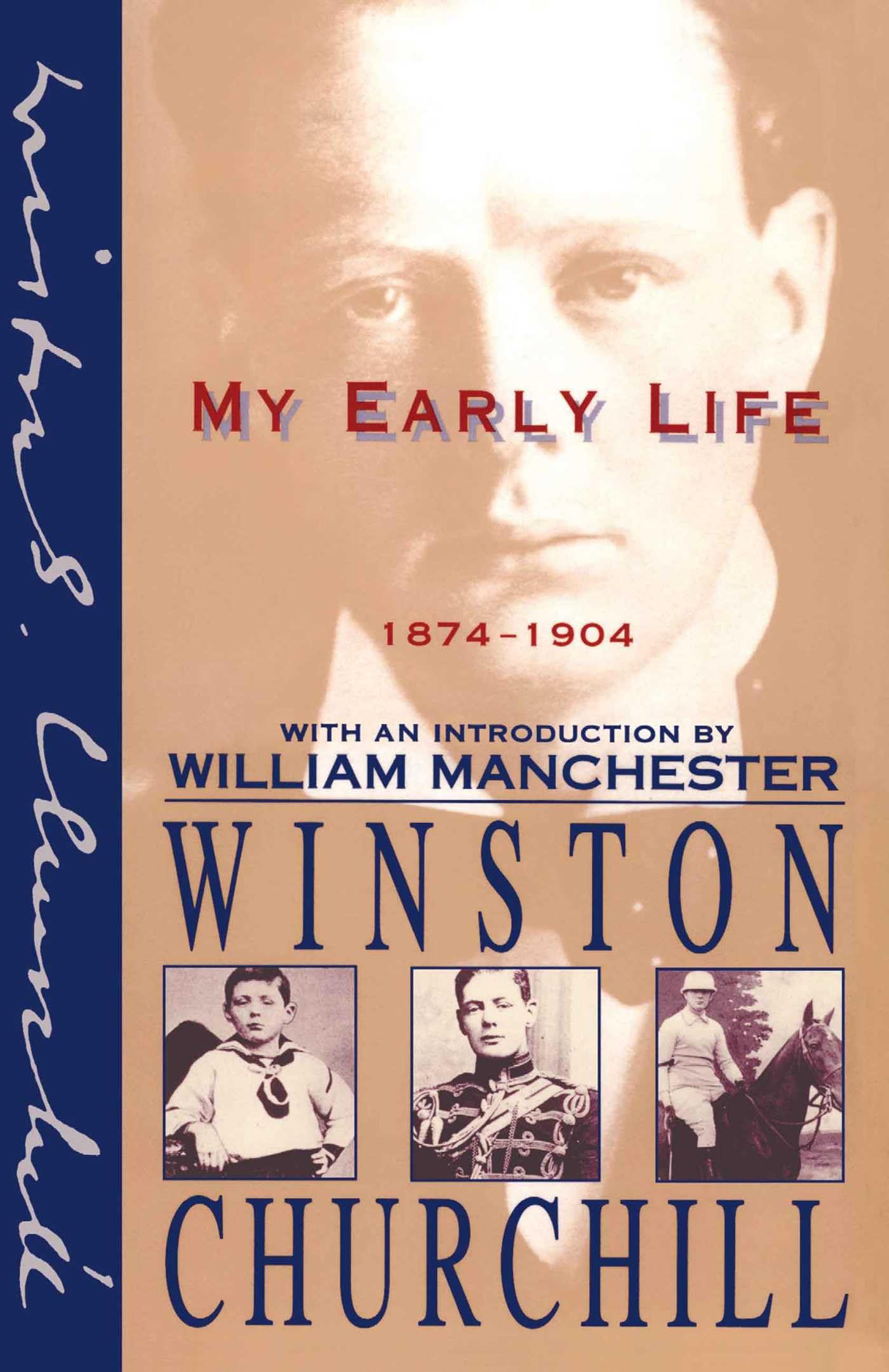



Here, in his own words, are the fascinating first thirty years in the life of one of the most provocative and compelling leaders of the twentieth century: Winston Churchill. As a visionary, statesman, and historian, and the most eloquent spokesman against Nazi Germany, Winston Churchill was one of the greatest figures of the twentieth century. In this autobiography, Churchill recalls his childhood, his schooling, his years as a war correspondent in South Africa during the Boer War, and his first forays into politics as a member of Parliament. My Early Life not only gives readers insights into the shaping of a great leader but, as Churchill himself wrote, “a picture of a vanished age.” To fully understand Winston Churchill and his times, My Early Life is essential reading. The voice of a vanished England speaks from the pages of Winston Churchill's evocative memoir of his first 30 years (1874-1904). The young Churchill inhabits a world in which men fight like hell in meaningless colonial wars--India, Egypt, South Africa--soldiering across the imperial map then extending the hand of friendship to their erstwhile enemy as if they were schoolmates at Harrow. Yet Churchill, born into a privileged family, was not an uncritical supporter of the Victorian status quo. He himself loathed Harrow; an especially amusing chapter skewers the school's emphasis on an irrelevant classical education and rote learning. A firm Tory, he considered himself a friend of the working class, and in 1899 campaigned for parliament with a Socialist colleague. Looking back from his vantage point of 1930, Churchill expresses the most attractive values of the English aristocracy--honor, loyalty, fair play--without giving the impression he wants to live in the past. The book's appeal also stems from its magisterial but colloquial prose. Anyone familiar with recordings of Churchill's rousing speeches during Word War II will hear in their minds' ears that growling timbre and unmistakably patrician accent as they read. Though he would have preferred the peace prize, My Early Life offers good evidence that Churchill's 1953 Nobel for literature was aptly awarded. --Wendy Smith Here, in his own words, are the fascinating first thirty years in the life of one of the most provocative and compelling leaders of the twentieth century - Winston Churchill. As a visionary, statesman, and historian, and the most eloquent spokesman against the Nazi Germany, Winston Churchill was one of the greatest figures of the twentieth century. In this autobiography, Churchill recalls his childhood, his schooling, his years as a war correspondent in South Africa during the Boer War, and his first forays into politics as a member of Parliament. My Early Life not only gives readers insights into the shaping of a great leader but, as Churchill himself wrote, "a picture of a vanished age". Winston Churchill (1874–1965) was prime minister of Great Britain from 1940–1945 and 1951–1955. A prolific writer, whose works include The Second World War and A History of the English Speaking Peoples , Churchill was awarded the Nobel Prize for Literature in 1953. CHAPTER I CHILDHOOD When does one first begin to remember? When do the waving lights and shadows of dawning consciousness cast their print upon the mind of a child? My earliest memories are Ireland. I can recall scenes and events in Ireland quite well, and sometimes dimly even, people. Yet I was born on November 30, 1874, and I left Ireland early in the year 1879. My father had gone to Ireland as secretary to his father, the Duke of Marlborough, appointed Lord-Lieutenant by Mr. Disraeli in 1876. We lived in a house called 'The Little Lodge,' about a stone's throw from the Viceregal. Here I spent nearly three years of childhood. I have clear and vivid impressions of some events. I remember my grandfather, the Viceroy, unveiling the Lord Gough statue in 1878. A great black crowd, scarlet soldiers on horseback, strings pulling away a brown shiny sheet, the old Duke, the formidable grandpapa, talking loudly to the crowd. I recall even a phrase he used: 'and with a withering volley he shattered the enemy's line.' I quite understood that he was speaking about war and fighting and that a 'volley' meant what the black-coated soldiers (Riflemen) used to do with loud bangs so often in the Phoenix Park where I was taken for my morning walks. This, I think, is my first coherent memory. Other events stand out more distinctly. We were to go to a pantomime. There was great excitement about it. The long-looked-for afternoon arrived. We started from the Viceregal and drove to the Castle where other children were no doubt to be picked up. Inside the Castle was a great square space paved with small oblong stones. It rained. It nearly always rained -- just as it does now. People came out of the doors of the Castle, and there seemed to be much stir. Then we were told we could not go to the pantomime because the theatre had been burn