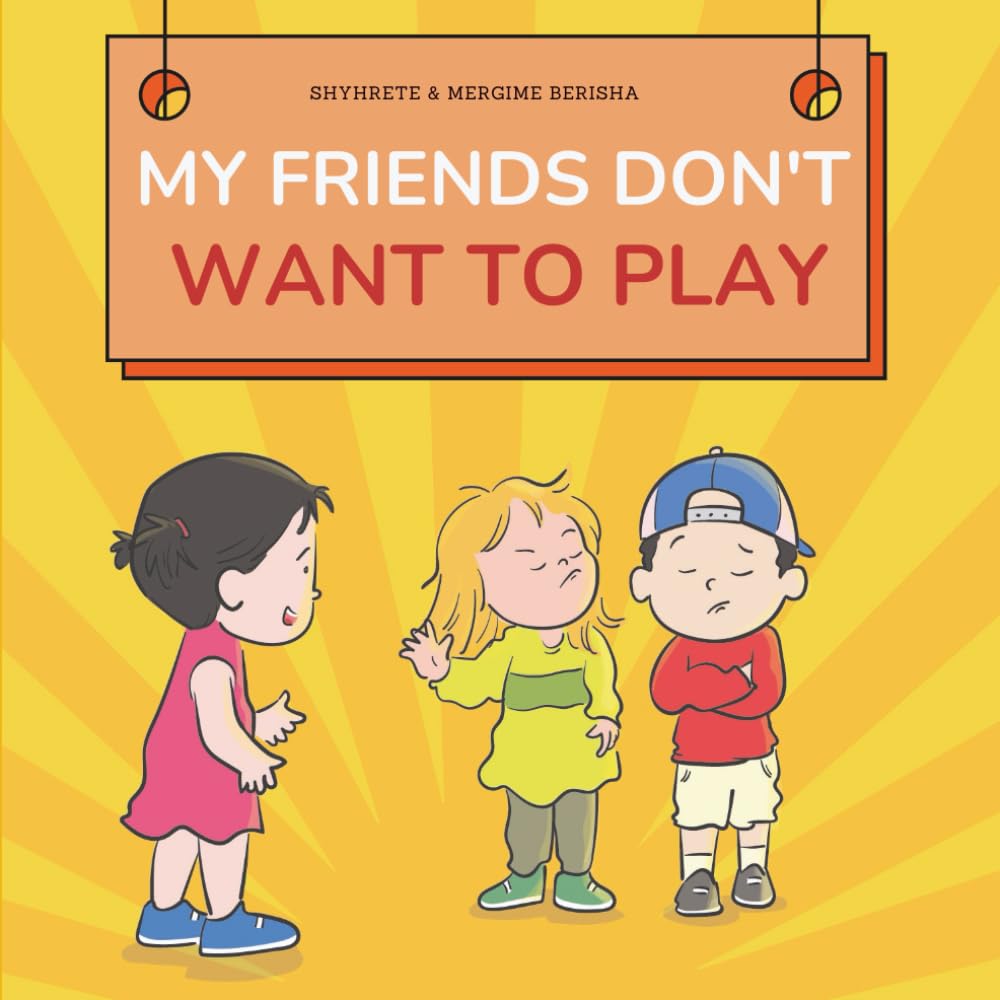
My Friends Don’t Want to Play: A Children’s Book about Friendship, Self-Love, and Overcoming Rejection
$16.99
by Shyhrete & Mergime Berisha



How Can I Support My Child in Dealing with School Bullying? What Can I Teach Them About Navigating On-and-Off Again Friendships? My Child Is Hurting, and I'm Determined to Safeguard Their Self-Confidence. How Can I Help? This heartwarming children’s book about friendship will help you answer these questions. "My Friends Don't Want to Play," instills the values of self-love, respect, and resilience in your children while helping you guide them through challenging situations at school. This book successfully navigates the complexities of friendship and will teach your child how to overcome rejection and maintain their self-confidence. The first time you drop your child off at school is always difficult because it marks their first steps into the real world, where they must face various situations on their own. It's heart-wrenching when they confide in you about someone saying or doing something mean, or not wanting to play with them. As a parent, you yearn to protect them, yet you also understand that this is one of many experiences they must learn to navigate on their own. This remarkable social-emotional book for kids will teach your children that it's alright if friends don't want to play with them and nurture your child's understanding of self-love and self-respect. While numerous books address big emotions, what sets this picture book apart is its ability to vividly depict scenarios commonly faced by children in school. It offers practical guidance on how to move forward by respecting others' desires and honoring one's own emotions. Through its pages, children will be introduced to the following essential concepts: Empathy: Understanding the feelings and emotions of others. - Resilience: Bouncing back from challenging situations. - Self-empowerment: Recognizing one's worth and embracing individuality. "My Friends Don’t Want to Play," is a must-have addition to your child's bookshelf, empowering them with the tools to navigate social dynamics, develop self-confidence, and cultivate healthy friendships. Order your copy today and don't forget to leave a review and tell other parents how this book has helped you discuss big emotions and difficult situations at school with your child! Shari Wladis - Elementary School Teacher & CEO of Professional Learning at EdTech Ease The title made me want to read this book immediately! Not a week goes by that I don't have this conversation with a student. My Friends Don't Want to Play said everything that I usually say: your friends may be in a sad mood, choose a new friend to play with today. But more than these important words, My Friends Don't Want to Play emphasized that there are alwayspeople who love you and that one bad day does not mean everything is wrong. But I finished this book and also thought that every parent should read this book as an example of how to handle your child's strong feelings! I will be recommending My Friends Don't Want to Play to teachers but also to parents. The first time my child came home from kindergarten and said someone didn't want to play with them, my heart broke. All I wanted was to fix it, but I realized I couldn't protect them from every disappointment. What I could do was help them become strong, confident, and resilient so that rejection wouldn't define them. That's why we wrote this book... for our own kids. Stories give children a mirror to see themselves and learn practical skills for handling real life challenges. Since reading it, our kids approach school and social situations differently. They're confident playing alone, handle rejection much better, and don't let these moments shake their self esteem. Even more incredible has been hearing from parents like you who have shared that the same growth and confidence we saw in our home is happening with their children too! It's been amazing to know that what worked for our kids is helping so many others navigate social challenges with reslience and self assurance. It has also become a trusted resource in classrooms, speech-language pathology offices, and doctor's offices with educators and professionals seeing real, positive results in children's confidence, social skills, and emotional resilience. For as long as we can remember, we've been interested in emotional intelligence and emotional regulation. Long before we became moms, we were already reading books, taking courses, and having long conversations about it. In our careers, one of us in HR, the other in journalism and communications, we conducted thousands of interviews. And time after time, we noticed the same thing: so many people struggled with self-awareness, communication, and regulating their emotions. It was clear to us that these "soft skills" weren't really soft at all. They were life skills, and they often made the difference between thriving or struggling, both personally and professionally. We would say to each other: "When we have kids, we need to focus on their emotional reg