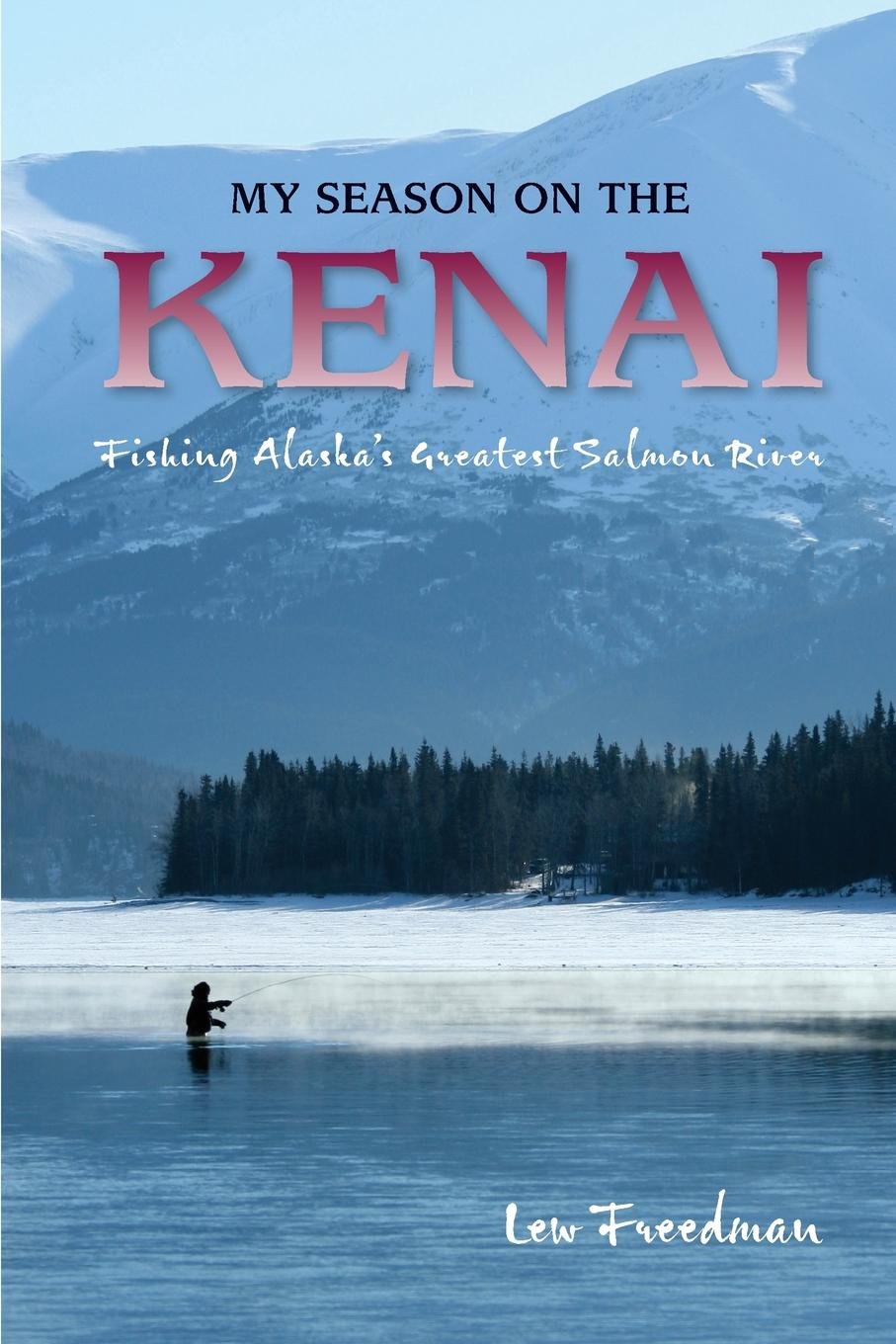



Follow along with award-winning sportswriter Lew Freedman as he journals an unforgettable season of fly fishing along the Kenai River. Just as you never know what kind of fish and what size fish might be tugging on your line when the rod bends, you never know what kind of excitement awaits during a season on the Kenai River. Located in Southcentral Alaska, the Kenai River is a world-class salmon river attracting fishermen from all over the world. Each summer thousands of anglers fish the magical Kenai River. Discover what makes the eighty-five-mile-long river a dream destination for the devout fisherman inside My Season on the Kenai. Freedman’s amusing stories and first-hand experience are sure to entertain and inspire the avid angler, with valuable information and insights sprinkled in each chapter. LEW FREEDMAN is a sportswriter with the Chicago Tribune. He has worked as an award-winning journalist with the Anchorage Daily News and is the author of over 21 books. A complete novice waiting to be hooked, I asked around and was told that if I was going to fish on the Kenai River and attempt to wrangle a salmon into my boat, I needed to look up a personable guide named Harry Gaines. Harry Gaines, I was told, could read the river like the lines on the palm of hands, and he was a wizened old-timer with more experience than almost anyone else in the Soldotna-Kenai area where most guides were based. That was about 150 miles from Anchorage, the banks of those small cities abutting the Lower River. The Lower River is where the king salmon, the most prized of all types of salmon, return to spawn each spring and summer, and where the angler with ambition goes to catch one. Kings, better known to the outside world as Chinook salmon, are the bad boys of the river, the big, even monstrous fish, that are difficult to entice onto a hook, that fight like hell when caught, and that offer delectable dinners when served. The kings were the kings of the river. The biggest kings in the world returned to the Kenai each year and this was proven year after year when fishermen and their guides were left agog as someone hooked into a hog of a fish weighing 90 pounds or more. For the typical fisherman, weaned on the sport in the rest of the United States, a big fish might be a five-pound bass, a common fish a perch, walleye, or bluegill weighing anywhere from a few ounces to a couple of pounds. Catching one of the giant king salmon (nobody even bothered to keep one that weighed less than 35 pounds) was the equivalent of hooking your fifth-grade son and trying to haul him into the boat. —from the Introduction