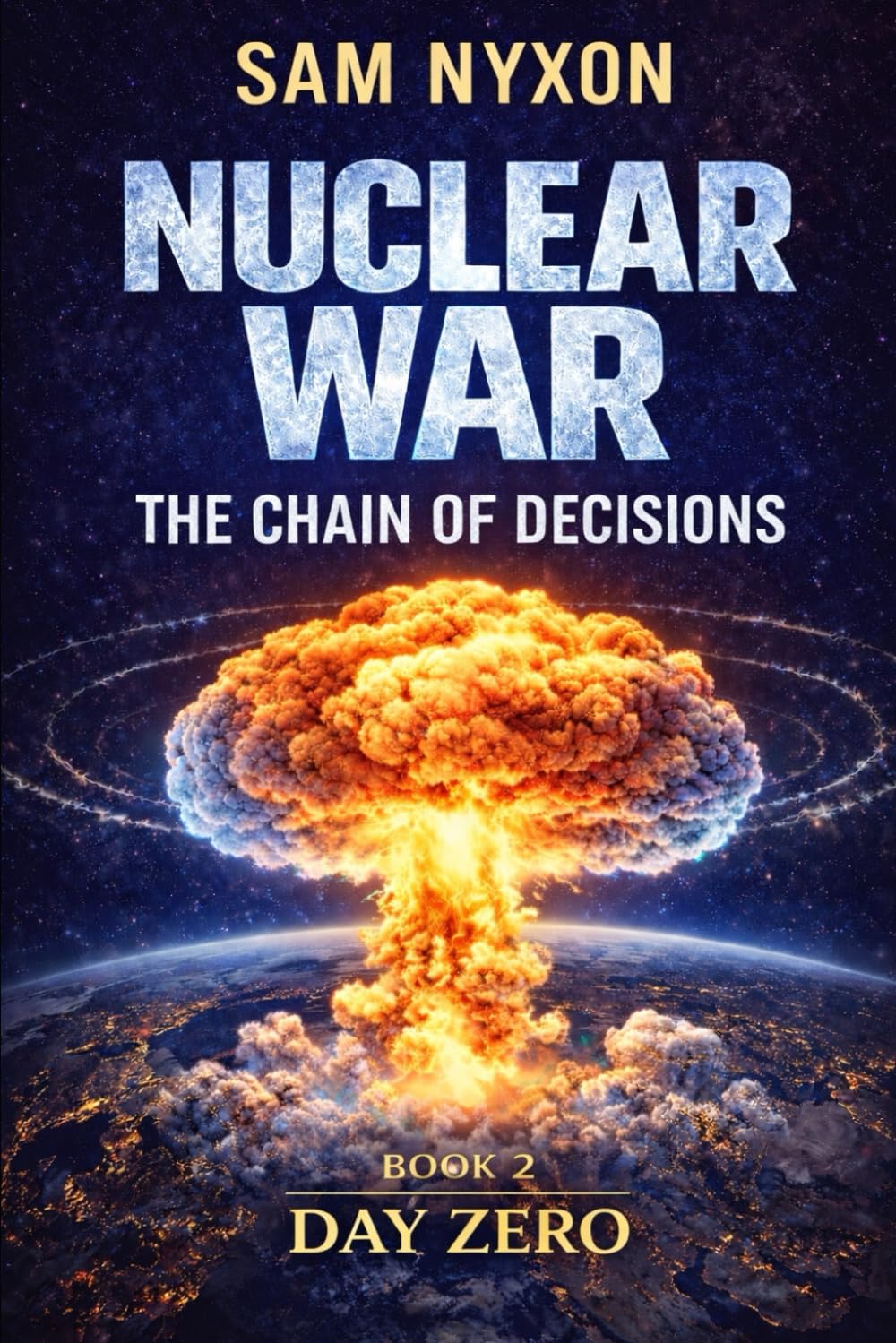



A nuclear device detonates high above the North Atlantic. No crater. No invasion. No declared target. No instant casualties. And New York still goes dark. Satellites “fall” off the network. Communications snap. Power grids die. Markets freeze. Radars see only “shadows.” The world can’t see the battlefield—until it realizes the battlefield is everywhere. This is what war looks like now: hybrid, deniable, paralysis instead of front lines. And yes—even nuclear war can be hybrid. This book is built on real-world procedures buried in manuals and classified checklists: alerts, confirmation rules, response windows, phrasing in secure channels, escalation control— and the human errors that leak through any system. Because this strike isn’t meant to kill. It’s meant to break the system— and force everyone to respond without proof. Who did it? A state? A proxy? An “accident” disguised as an attack? A signal that can’t be proven? In the Situation Room, the question is no longer “What happened?” The question is: What do you do when you’re not sure— but waiting could cost you everything? NUCLEAR WAR: THE CHAIN OF DECISIONS continues the Day Zero series at the most dangerous point of escalation: when decisions must be made without confirmation, when every protocol is ticking down, and when one “cautious” move becomes a sentence. Washington hunts for a culprit. Beijing weighs survival against humiliation. Moscow tests the limits. Jerusalem keeps its answer on a timer. Europe hesitates—until hesitation itself becomes damage. And then the next layers hit: a duel under the ocean, a public intercept “to demonstrate resolve,” the sky in orbit beginning to burn— and a single word in a closed channel that can ignite an entire region. This is not the end of the world “someday.” This is the end of the world at home: when the lights go out, your phone is just dead glass, and silence is louder than any siren. After the first flash, the world doesn’t end in fire. It ends in seconds. Day Zero continues. And the chain is already moving.