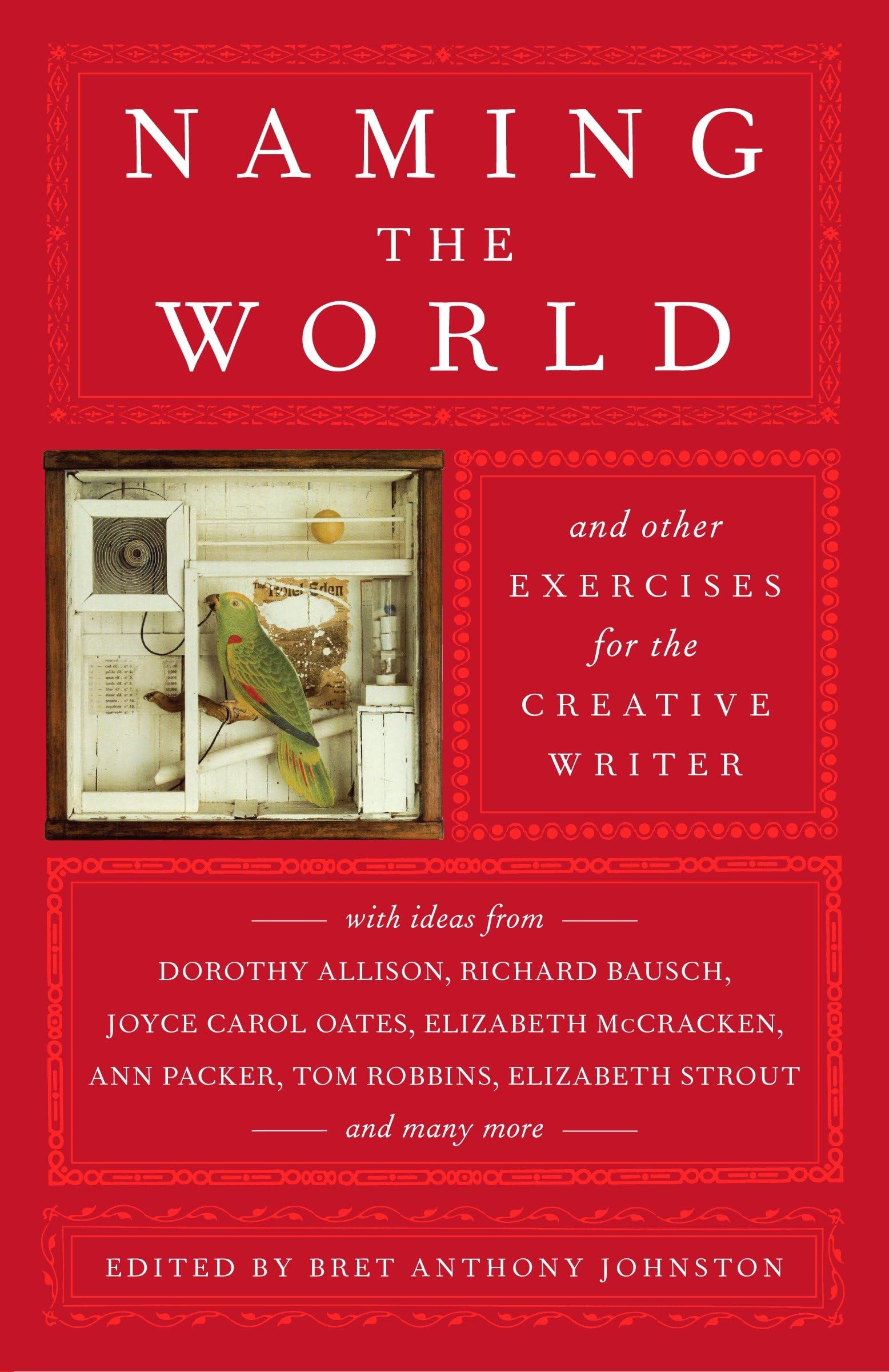
Naming the World: And Other Exercises for the Creative Writer
$17.00
by Bret Anthony Johnston



You already have the tools to become a gifted writer; what you need is the spark. Harvard creative writing professor and acclaimed author Bret Anthony Johnston brings you an irresistible interactive guide to the craft of narrative writing. From developing characters to building conflict, from mastering dialogue to setting the scene, Naming the World jump-starts your creativity with inspiring exercises that will have you scrambling for pen and paper. Every chapter is a master class with the country’s most eminent authors, renowned editors, and dedicated teachers. • Infuse emotion into your fiction with three key strategies from Margot Livesey. • Christopher Castellani dumps the “write what you know” maxim and challenges you to really delve into the imagination. • A point-of-view drill from Susan Straight can be just the breakthrough you need to flesh out your story. • Jewell Parker Rhodes shares how good dialogue is not just about what is being said but about what is being left unsaid. Brimming with imaginative springboards and hands-on exercises, Naming the World has everything you need to become a stronger, more inventive writer. “A delicious book. Imagine yourself at a cocktail party crammed with literary lions. You have the chance to spend a few moments with each of them. Wit and wisdom abound.” –Julia Cameron, author of The Artist’s Way “A highly useful and perceptive book. With charm and intelligence it touches on nearly every teachable aspect of the devilishly difficult art of writing.” –Ethan Canin, professor of creative writing at the Iowa Writers Workshop, and author of Carry Me Across the Water “These entertaining and useful exercises, intelligently organized, are a boon for both beginning and experienced writers.” –Andrea Barrett, National Book Award—winning author of The Air We Breathe “Forget about getting an MFA! For any writer struggling with his craft, here is the equivalent of a master class in writing by some of the best writer/teachers around.” –Betsy Lerner, author of The Forest for the Trees: An Editor’s Advice to Writers Bret Anthony Johnston is the author of Remember Me Like This, a New York Times Notable Book, the award-winning Corpus Christi: Stories, which was named a best book of the year by The Independent (London) and The Irish Times, and the editor of Naming the World: And Other Exercises for the Creative Writer . His work has appeared in The Atlantic Monthly, Esquire, The Paris Review, The Best American Short Stories, and elsewhere. A graduate of the Iowa Writers’ Workshop, he is the recipient of a National Endowment for the Arts literature fellowship and a 5 Under 35 honor from the National Book Foundation. He teaches in the Bennington Writing Seminars and at Harvard University, where he is the director of creative writing. John Dufresne GERMS Here are some germs, seeds, viruses for your writing. They come in different forms. You’ll think of more. Get used to starting with something small and exact, not with anything as large and as vague as an idea. THE EXERCISES 1.Start with a line. I’ll give you one. You can find them everywhere in what you read, in what you hear. Find them in poems, newspaper stories, on billboards, in the conversation of the people behind you at the supermarket checkout. Take the line as the opening of your novel. Write it out and keep going. Let it take you where it will. Write for ten minutes or until you want to stop. The line will likely be gone when you revise the piece, if you do. Maybe it will become the epigraph for your novel. Here’s one line: “Most things will never happen; this one will.” Taken (with grammatical liberties) from Philip Larkin. Here’s another: “Last night the moon seemed to say something.” (From Frank O’Hara.) One thing I hope these lines do is pull you out of your world and plop you into an imagined one. 2.Start with a list. Your novel begins with a list. Who’s making it? Why? What does it reveal about the list maker? Here’s the heading for one: “Things That Make One’s Heart Beat Faster.” And another: “People Who Seem to Suffer.” (And read The Pillow-Book of Sei Shonagon, from which these lists were taken.) 3.Start with a title. Why not? What does the title suggest to you? Certain themes, perhaps. Characters. A place? Titles are always important. They can be symbolic, can suggest tone, characterize, can push you along. The title is the essence of the novel—which is why, despite our exercise, the title often comes last. Here are a few titles. Do them one at a time. Write and then think. The Heart Specialist Murder Your Darlings You Belong to Me, I Believe Stirred, Not Shaken 4.Start with a character. Many stories (most of mine) begin with a character. Here’s one from the unfortunate news of the day: your character is a parish priest who hears the confession of his colleague and fellow curate at St. Paul’s Church and learns that h