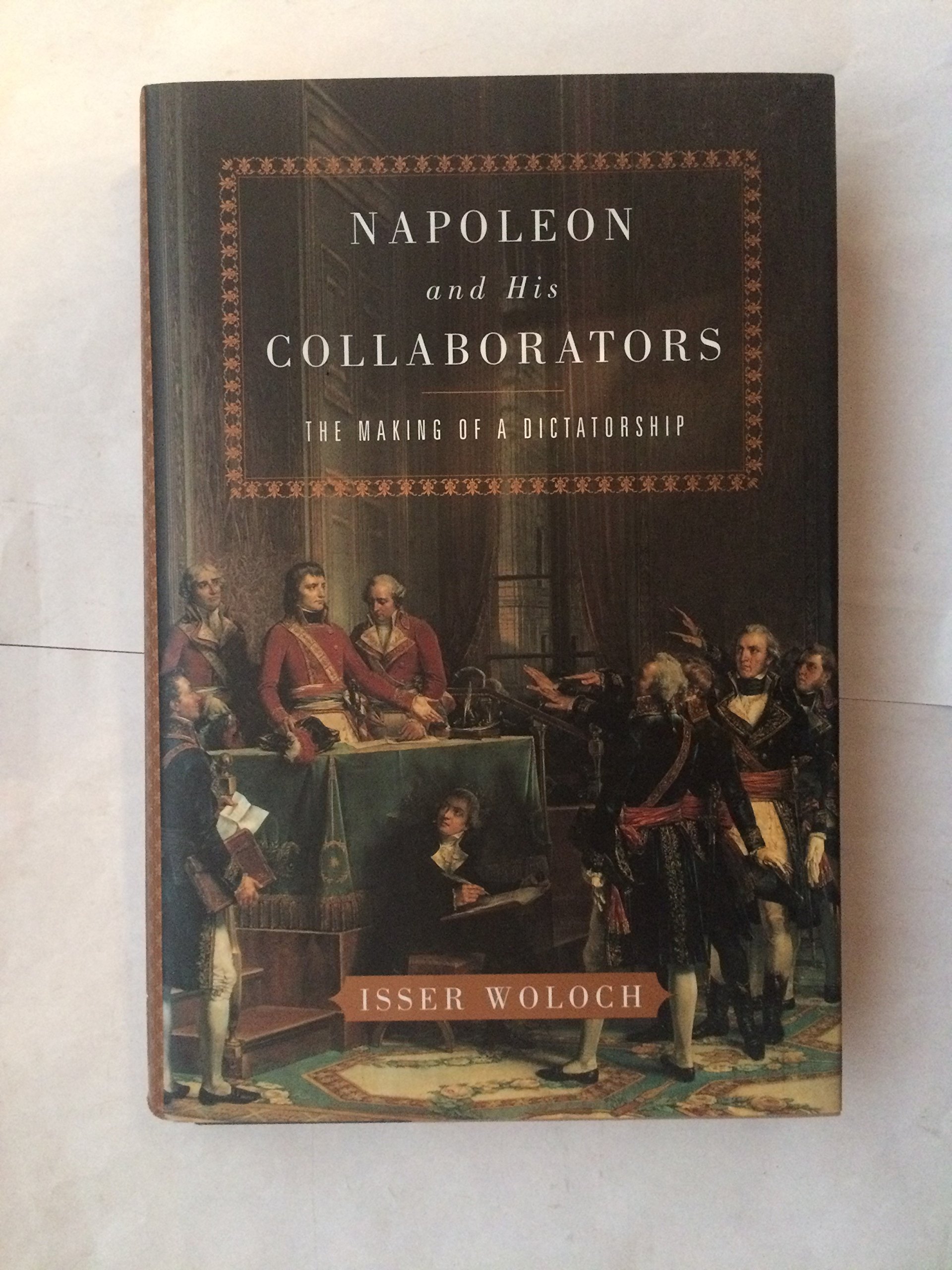



A great historian explains how Napoleon forged a dictatorship and explores the dilemmas of collaboration, personal and political. The Eighteenth Brumaire, November 9, 1799: with France in political and economic turmoil, a group of disaffected politicians enlisted the talented general Napoleon Bonaparte to lead a coup d'etat and establish "confidence from below, authority from above." This is the story of how Napoleon managed his ascent from general of the Republic and first consul to dictator and conqueror of Europe. Napoleon did not vault into the imperial throne but moved toward dictatorship gradually; each assertion of new power came gilded with a veneer of legality and a rhetoric of commitment to the ideals of 1789. In this fashion Napoleon not only gained the upper hand over his partners of Brumaire but also retained their loyalty and services going forward. Far from shunting aside those collaborators, he put them to use in ways that satisfied their most emphatic needs: political security, material self-interest, social status, and the opportunity for high-level public service. Ten black-and-white illustrations In his rise to power from obscure provincial military officer to internationally renowned revolutionary firebrand, and thence to star-crossed dictator of the faltering French republic, Napoleon Bonaparte relied on the material and spiritual encouragement of many friends and allies. Yet, apart from a few exceptions, such as the shrewd politician Charles-Maurice de Talleyrand and the policeman Joseph Fouché, "Napoleon's prominent collaborators remain almost faceless men," writes Columbia University historian Isser Woloch. History has all but forgotten those who labored behind the scenes to further Bonaparte's aims, whether out of true devotion to the ideals of liberty, equality, and fraternity, or out of naked self-interest and personal ambition. Woloch's well-written book does much to amplify the historical record. Offering portraits of such men as the legislators Boulay de la Meurthe and Théophile Berlier and the state counselor J.-G. Lacuée, who worked to convert former opponents to the emperor's cause, Woloch sheds light on the rise of the French state bureaucracy, one that in many respects has endured to the present--and one that has tended to maintain a centrist position under regimes of left and right alike. Napoleon's remarkable accomplishments relied not only on a disciplined army, Woloch demonstrates, but also on committed and skillful political operatives--some of whom eventually came to oppose Napoleon's transformation from liberator to tyrant. Anyone with an interest in the Napoleonic era will find much of value in Woloch's pages. --Gregory McNamee Napoleon is most frequently studied and lauded for his military genius, but his skill in the art of the politics of personal advancement is often neglected. Woloch, a professor of history at Columbia University and a specialist in French history, has written an engrossing chronicle of political manipulation and intrigue, with the dictatorship of revolutionary France as the prize. At the center, of course, is Napoleon. This is not a particularly flattering portrait of "the little Corsican." His ambition is all consuming and his ruthlessness is chilling. Yet one must admire his intuitive understanding of people and how to manipulate them while maintaining their loyalty. In an age when political propaganda emerged as a factor influencing the masses, Napoleon proved a master at cloaking his power grabs with an aura of legality. This is an important book that sheds light on a murky but critical aspect of European history. Jay Freeman Copyright © American Library Association. All rights reserved Isser Woloch is the Moore Collegiate Professor Emeritus at Columbia University. His publications include The New Regime: Transformations of the French Civic Order, 1789-1820s , which won the Leo Gershoy Award of the American Historical Association.