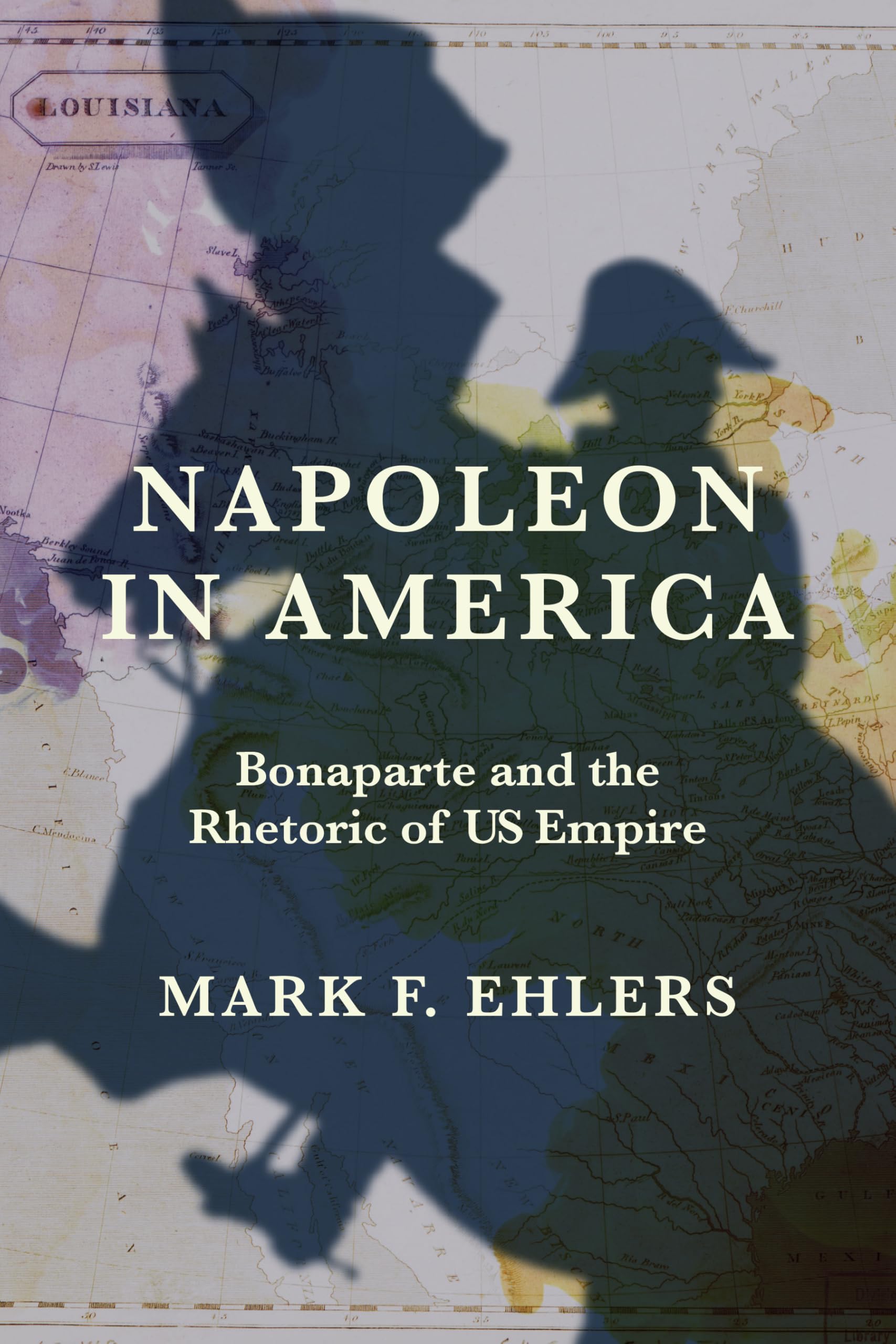
Napoleon in America: Bonaparte and the Rhetoric of US Empire (The Revolutionary Age)
$35.00
by Mark F. Ehlers Ph.D



How Napoleon’s legacy infused American debates over empire in the nineteenth century No individual dominated the early nineteenth century like Napoleon Bonaparte, the titanic figure who came to embody the French Revolution and nearly brought all of Europe to heel. He exerted a cultural influence in his time that few figures in world history have ever attained. As a result, when Americans debated the merits, limits, and administration of their own burgeoning republican empire, they continually invoked Napoleon to make their point. From the presidency of Thomas Jefferson and for decades afterward, the legacy of Napoleon loomed over discussions about the course their country’s expansion would take. As Mark Ehlers shows, Americans of all persuasions rhetorically enlisted Napoleon to advocate for their competing visions of US imperialism. Whether they admired his method of imperial rule or saw in him a warning against the hubris of imperial overreach, Napoleon’s image served as an essential cultural touchpoint in the early republic’s rhetoric of empire—until finally, by the Mexican War, most Americans had come to imagine their republican empire as a worthy successor to Napoleon’s own. This book will reshape how we view American empire in the nineteenth century. Ehlers has built an intriguing argument from a wide array of primary sources. Instead of simply reminding us that Napoleon was present in American discourse, the author uses him as a medium to show how Americans in the nineteenth century viewed empire in starkly different ways, and how they fiercely debated them all.? Daniel J. Burge, author of A Failed Vision of Empire: The Collapse of Manifest Destiny, 1845-1872 Napoleon in America is a fascinating exploration of the prominent place of Bonaparte in American political discourse and popular culture in the first half of the nineteenth century. Through his examination of a variety of contemporary sources including biographies, newspapers, and letters, Ehlers effectively demonstrates how early nineteenth-century Americans interpreted and revised Bonaparte's story as a democratic republican liberator or as an imperial despot to promote or to attack American territorial expansion from the time of the Louisiana Purchase through the Mexican War.? Julien Vernet, University of British Columbia, Okanagan Campus, author of Strangers on Their Native Soil: Opposition to United States' Governance in Louisiana's Orleans Territory, 1803-1809 Mark F. Ehlers's enjoyable and well-written book about the importance of Napoleon I in the United States from the late eighteenth century to the middle decades of the nineteenth century deserves to intrigue anyone who wishes to learn more about American history in terms of geographic expansion, party politics, cultural development, media influence, military matters, and changing ideals.? Jeffrey Zvengrowski, Ameritas College, author of Jefferson Davis, Napoleonic France, and the Nature of Confederate Ideology, 1815?1870 Mark F. Ehlers's enjoyable and well-written book about the importance of Napoleon I in the United States from the late eighteenth century to the middle decades of the nineteenth century deserves to intrigue anyone who wishes to learn more about American history in terms of geographic expansion, party politics, cultural development, media influence, military matters, and changing ideals.― Jeffrey Zvengrowski, Ameritas College, author of Jefferson Davis, Napoleonic France, and the Nature of Confederate Ideology, 1815–1870 Mark F. Ehlers is a History Instructor at Sandy Spring Friends School.