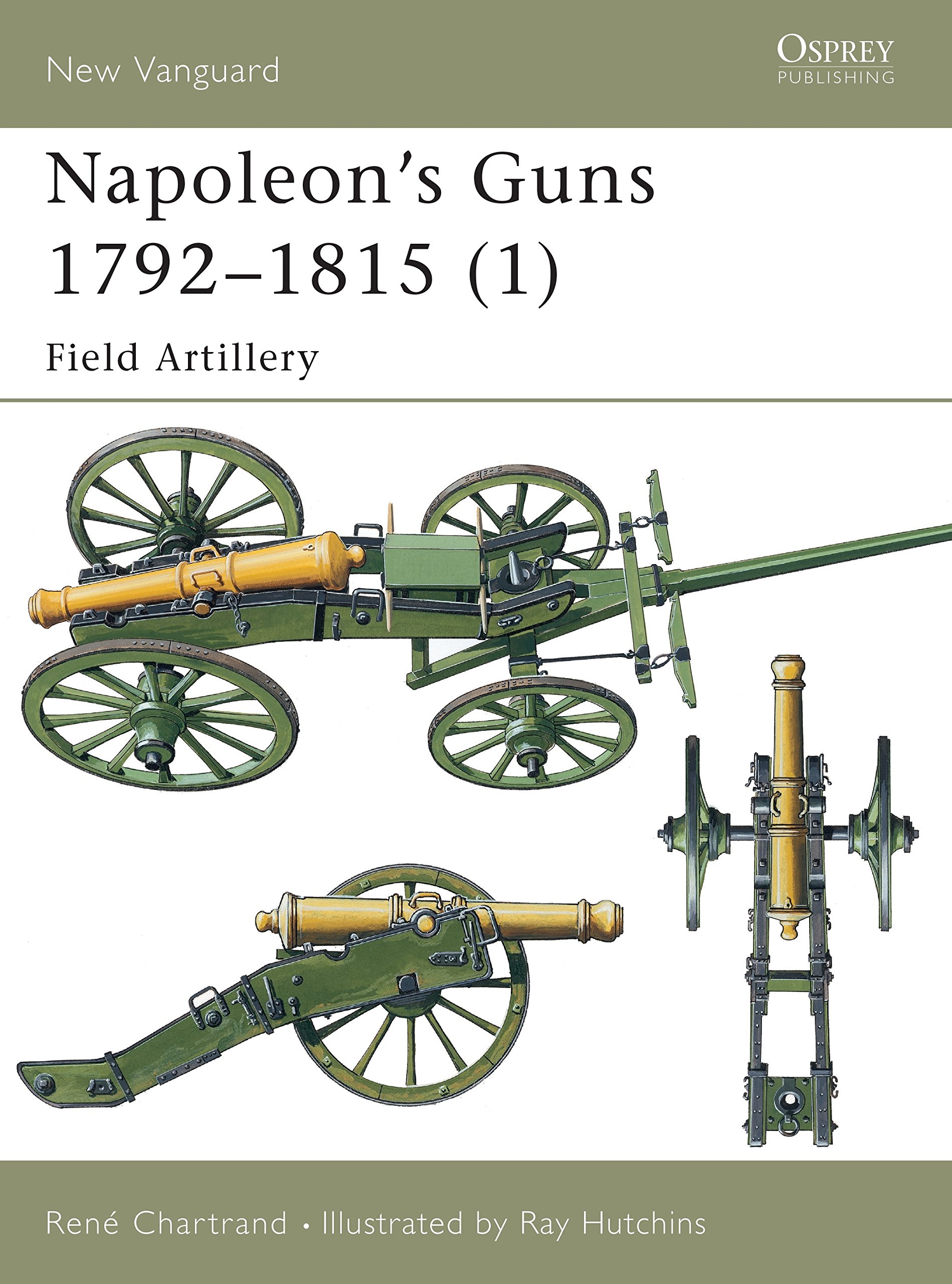



As a young gunner, Napoleon Bonaparte was trained in one of Europe's finest artillery arms. Both the technological sophistication of their weaponry and the skill of their gunners was largely the result of the adoption of the system devised by one man, Jean-Baptiste Vaquette de Gribeauval. Gribeauval's standardised system of parts and calibres allowed a degree of uniformity and sophistication in the French artillery that was unmatched throughout Europe, and allowed Napoleon to inherit and develop an arm that could dominate the battlefield. This volume covers the field artillery pieces of the system: the 4-, 8- and 12-pdr guns; light 1-pdr guns and mountain guns; and later innovations such as the 6-pdr gun. The unrivalled illustrated reference on fighting vehicles, transport and artillery through the ages. Each volume is illustrated throughout, making these books uniquely accessible to history enthusiasts of all ages. RENÉ CHARTRAND was born in Montreal and educated in Canada, the United States and the Bahamas. A senior curator with Canada's National Historic Sites for nearly three decades, he is now a freelance writer and historical consultant. He has written numerous articles and books including over 50 Osprey titles. He lives in Quebec, with his wife and two sons. Ray Hutchins was educated at the Duke of York's Royal Military School. He joined the Royal Artillery in 1950, serving in the Korean War and the Malaya Conflict. On demobilisation, he was manager for three major London studios before joining Rolls-Royce (Aero) Ltd as a senior illustrator. He then worked for the Ministry of Defence (Navy) and, later, with the MOD (Army) at Bovington, working on Shah and Challenger tanks. In 1980 he went freelance and has since illustrated over 200 publications.