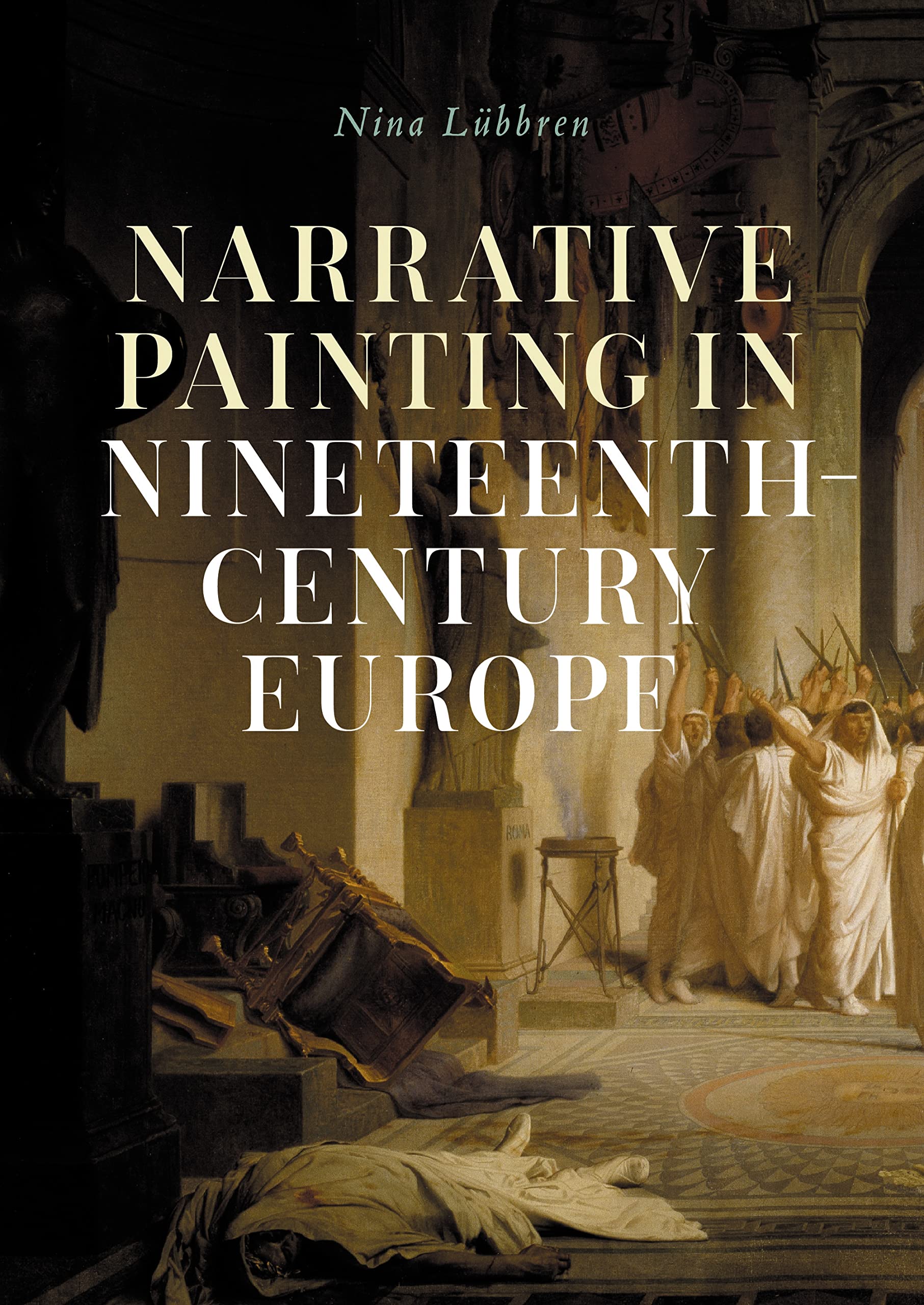



This ground-breaking book presents a critical study of pictorial narrative in nineteenth-century European painting. Covering works from France, Germany, Britain, Italy and elsewhere, it traces the ways in which immensely popular artists like Jean-Léon Gérôme, Karl von Piloty and William Quiller Orchardson used unique visual strategies to tell thrilling and engaging stories. Regardless of genre, content or national context, these paintings share a fundamental modern narrative mode. Unlike traditional art, they do not rely on textual sources; nor do they tell stories through the human body alone. Instead, they experiment with objects, spaces, cause-and-effect relations and open-ended ambiguity, prompting viewers and reviewers to read for clues in order to weave their own elaborate tales. 'Narrative Painting in Nineteenth-Century Europe provides a new lens through which to appreciatively view works that might not have previously seemed worthy of close analysis. It reveals the impressive ingenuity with which artists and critics of the second half of the nineteenth century sought to bring pleasure to viewers and readers hungering for engaging stories. Given that pleasure is not prominent in the earnest academic discourse of the early twenty-first century, it is refreshing to see its pursuit treated as a legitimate topic of research. This is one more reason to be grateful for Nina Lübbren’s well-crafted book.' Nineteenth-Century Art Worldwide , Volume 22, Issue 2
Autumn 2023, Jonathan P. Ribner 'The real achievement of Lübbren’s study, allows us to see narrative painting with fresh eyes, while avoiding the tendentious special pleading that so often accompanies re-readings of neglected art from the period. Thanks to her research, we can now begin to tell a new story about an important, and unjustly overlooked, aspect of nineteenth-century European painting' The Burlington Magazine This ground-breaking book presents a study of pictorial narrative in nineteenth-century European painting. Covering works from France, Germany, Britain, Italy and elsewhere, Nina Lübbren traces the ways in which popular artists like Jean-Léon Gérôme, Karl von Piloty and William Quiller Orchardson used unique visual strategies to tell thrilling and engaging stories. The artists considered produced a dazzling variety of subjects, from spectacles of death and sacrifice to cheerful tales of flirtation and schoolboy pranks. However, regardless of genre, content or national context, these paintings share a fundamentally modern narrative mode that is distinct to its time. Unlike traditional art, these pictures do not rely on textual sources. Nor do they tell stories through the human body alone. Instead, they experiment with objects, spaces, cause-and-effect relations and open-ended ambiguity. In response, viewers and reviewers became adept at reading clues in order to weave their own elaborate tales. Lübbren examines critics’ narrative language and argues that storytelling pictures had a social function, inviting audiences to engage not only with the paintings but also with reviews and each other in lively debates about the depicted plots. Both an eloquent exploration of paintings and critics and an important essay on narratology and reception theory, this revelatory book considers a mode of art that transformed the way we experience visual narrative – a legacy that lives on in mainstream cinema. Nina Lübbren is Associate Professor of Art History and Film at Anglia Ruskin University, Cambridge.
Autumn 2023, Jonathan P. Ribner 'The real achievement of Lübbren’s study, allows us to see narrative painting with fresh eyes, while avoiding the tendentious special pleading that so often accompanies re-readings of neglected art from the period. Thanks to her research, we can now begin to tell a new story about an important, and unjustly overlooked, aspect of nineteenth-century European painting' The Burlington Magazine This ground-breaking book presents a study of pictorial narrative in nineteenth-century European painting. Covering works from France, Germany, Britain, Italy and elsewhere, Nina Lübbren traces the ways in which popular artists like Jean-Léon Gérôme, Karl von Piloty and William Quiller Orchardson used unique visual strategies to tell thrilling and engaging stories. The artists considered produced a dazzling variety of subjects, from spectacles of death and sacrifice to cheerful tales of flirtation and schoolboy pranks. However, regardless of genre, content or national context, these paintings share a fundamentally modern narrative mode that is distinct to its time. Unlike traditional art, these pictures do not rely on textual sources. Nor do they tell stories through the human body alone. Instead, they experiment with objects, spaces, cause-and-effect relations and open-ended ambiguity. In response, viewers and reviewers became adept at reading clues in order to weave their own elaborate tales. Lübbren examines critics’ narrative language and argues that storytelling pictures had a social function, inviting audiences to engage not only with the paintings but also with reviews and each other in lively debates about the depicted plots. Both an eloquent exploration of paintings and critics and an important essay on narratology and reception theory, this revelatory book considers a mode of art that transformed the way we experience visual narrative – a legacy that lives on in mainstream cinema. Nina Lübbren is Associate Professor of Art History and Film at Anglia Ruskin University, Cambridge.