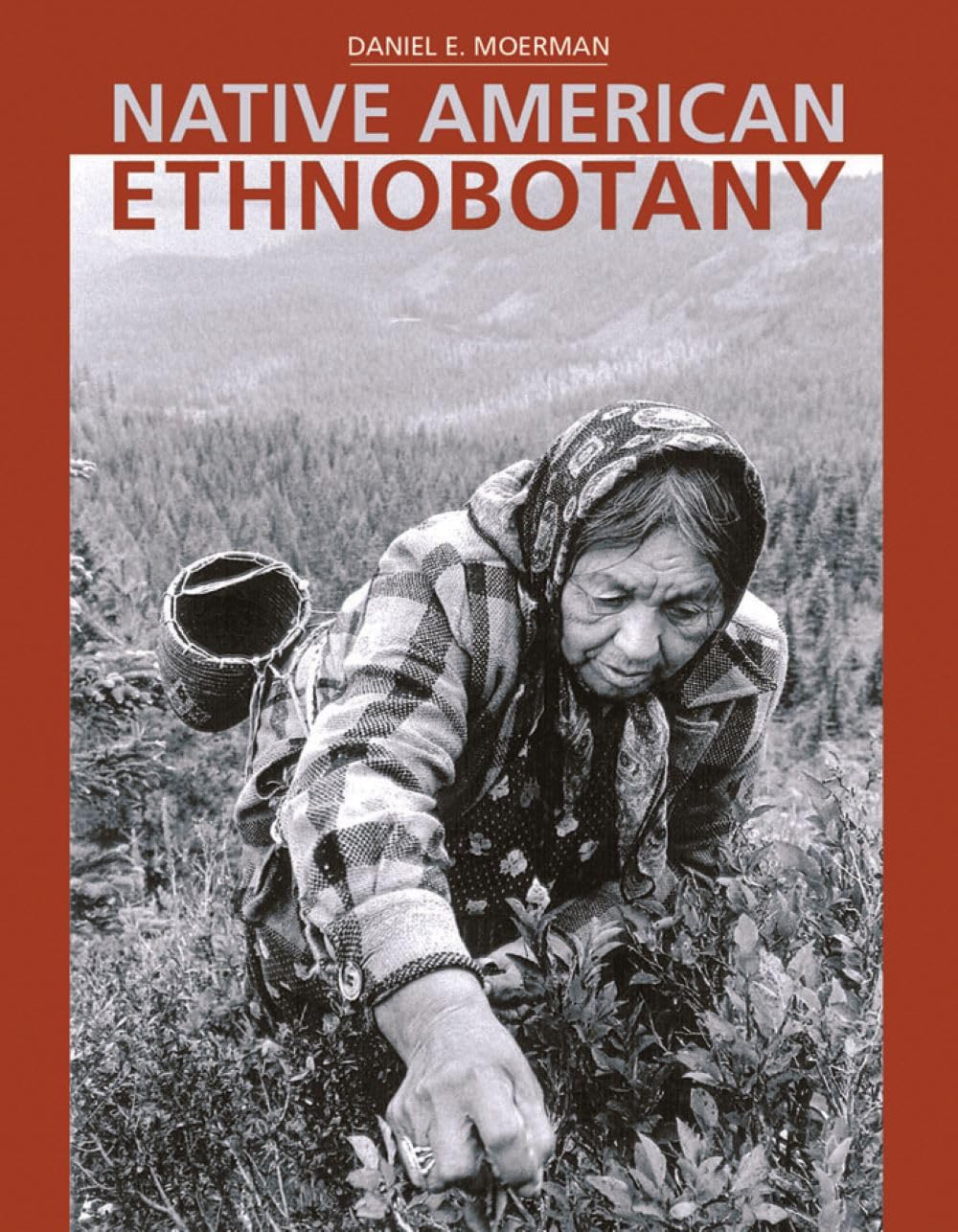



An extraordinary compilation of the plants used by North American Native peoples for medicine, food, fiber, dye, and more. Anthropologist Daniel E. Moerman has devoted 25 years to the task of gathering the accumulated ethnobotanical knowledge on more than 4,000 plants. More than 44,000 uses for these plants by various tribes are documented in this book. This is undoubtedly the most massive ethnobotanical survey ever undertaken, preserving an enormous store of information for the future. “The definitive book on the subject. Covering over 4,000 plants with some 44,000 uses, this represents years of research on the author’s part.” — Washington Daily News “A remarkable body of research. No other single reference book even comes close to it.” — American Survival Guide Magazine “ Native American Ethnobotany is an essential reference for all those interested in the uses of plants.” — Wild Foods Forum “This typographically attractive book presents its data with interest and humor.” — Taxon “An enormous achievement. . . . Fun to browse through it and to discover many exciting details about plant use in North America.” — Journal of Ethnopharmacology “This work is an invaluable resource for ethnobotanists, anthropologists, herbalists, and other researchers.” — Herb Quarterly “An impressive compilation of information on plants used by Native Americans. . . . An important library book.” — Northeastern Naturalist “A monumental work.” — Plants and People “Moerman has done an excellent job of presenting the information in useable form.” — American Biology Teacher “This scholarly and weighty tome contains a stupendous quantity of high-quality information about the use of plants by Native American peoples.” — Edinburgh Journal of Botany “I have no hesitation in recommending this book as a fundamental and highly valuable source of fascinating information on the plants and the peoples of North America.” — Edinburgh Journal of Botany “Congratulations to Timber Press for doing it right.” — Whole Earth “Anyone interested in the economic botany and ethnobotany of indigenous groups of North America needs to have a copy of this book. It is the standard reference on Native American plant uses.” — HerbalGram Daniel E. Moerman teaches anthropology at the University of Michigan-Dearborn. He is widely known as a leading expert in the field of ethnobotany. Dr. Moerman received the Annual Literature Award from the Council on Botanical and Horticultural Libraries and the Distinguished Economic Botanist Award from the Society for Economic Botany. Native American peoples had a remarkable amount of knowledge of the world in which they lived. In particular, they knew a great deal about plants. There are in North America 31,566 kinds (species, subspecies, varieties, and so on) of vascular plants: seed plants, including the flowering plants (angiosperms) and conifers (gymnosperms), and spore-bearing plants, including the ferns, club mosses, spike mosses, and horsetails (pteridophytes). North America is defined here as North America north of Mexico, and Hawaii and Greenland. American Indians used 2874 of these species as medicines, 1886 as foods, 230 as dyes, and 492 as fibers (for weaving, baskets, building materials, and so on). They used 1190 species for a broad range of other purposes as well, classified in this book as Other. All told, they found useful purpose for 3923 kinds of vascular plants. Native American Ethnobotany also contains information on 106 kinds of nonvascular plants (algae, fungi, lichens, liverworts, and mosses). The data for nonvascular plants are much less complete than those for vascular plants, however. Native American Ethnobotany includes information on plant use by Native American people. Most of the plants used are native to North America, but some are not. Some are plants that were introduced into North America — some perhaps in pre-Columbian times and some certainly thereafter — and that became naturalized, growing spontaneously. Other plants are introductions that were kept in cultivation. The information in Native American Ethnobotany documents plant usage no doubt dating back to very early times and passed down through generations as traditional knowledge, as well as innovations in response to much more recent plant introductions ... From Conclusions on Usages There is an enormous amount of real human knowledge contained in Native American Ethnobotany. The earliest evidence we have of human beings using plants for medicine comes from the Middle Paleolithic site of Shanidar in northern Iraq, dated about 60,000 years ago. People have been experimenting with nature since then (and perhaps before), learning what could be eaten, what would stop bleeding or relieve pain, what would make good baskets or colors. People first came to the Americas about 15,000 years ago and have been studying the plants of the two continents ever since. Given that the floras of North Ameri