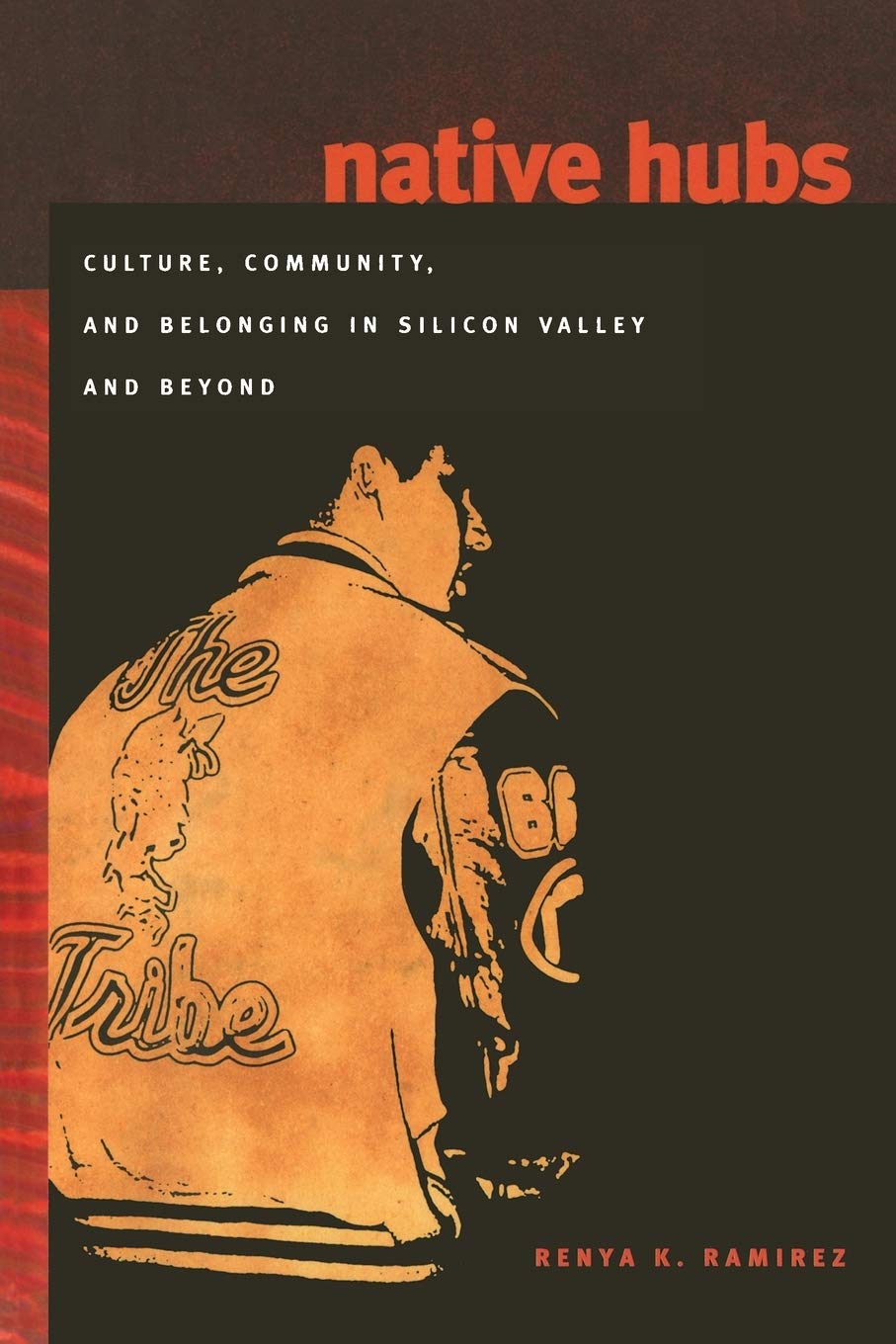
Native Hubs: Culture, Community, and Belonging in Silicon Valley and Beyond
$33.19
by Renya K. Ramirez



Most Native Americans in the United States live in cities, where many find themselves caught in a bind, neither afforded the full rights granted U.S. citizens nor allowed full access to the tribal programs and resources—particularly health care services—provided to Native Americans living on reservations. A scholar and a member of the Winnebago Tribe of Nebraska, Renya K. Ramirez investigates how urban Native Americans negotiate what she argues is, in effect, a transnational existence. Through an ethnographic account of the Native American community in California’s Silicon Valley and beyond, Ramirez explores the ways that urban Indians have pressed their tribes, local institutions, and the federal government to expand conventional notions of citizenship. Ramirez’s ethnography revolves around the Paiute American activist Laverne Roberts’s notion of the “hub,” a space that allows for the creation of a sense of belonging away from a geographic center. Ramirez describes “hub-making” activities in Silicon Valley, including sweat lodge ceremonies, powwows, and American Indian Alliance meetings, gatherings at which urban Indians reinforce bonds of social belonging and forge intertribal alliances. She examines the struggle of the Muwekma Ohlone, a tribe aboriginal to the San Francisco Bay area, to maintain a sense of community without a land base and to be recognized as a tribe by the federal government. She considers the crucial role of Native women within urban indigenous communities; a 2004 meeting in which Native Americans from Mexico and the United States discussed cross-border indigenous rights activism; and the ways that young Native Americans in Silicon Valley experience race and ethnicity, especially in relation to the area’s large Chicano community. A unique and important exploration of diaspora, transnationalism, identity, belonging, and community, Native Hubs is intended for scholars and activists alike. “Renya K. Ramirez makes compelling use of ethnographic interviews to explore broad issues of cultural citizenship and transnational migration. Her analysis of Laverne Roberts’s notion of ‘hubs’ connecting Native people across time and space is a significant contribution to the all too sparse scholarship on urban American Indian communities.”—Susan Applegate Krouse, Director of the American Indian Studies Program, Michigan State University “[ Native Hubs ] will be of interest to those engaged with questions of indigeneity, settler colonialism, gender, political recognition, and historical and contemporary cases of transnationalism. Native Hubs will be of particular interest to those engaged with histories found within (and moving outside of) California. In short, Ramirez has written a ‘breakout’ book in the anthropology of Native North America for the analytics and ethnography that it works with and the terrain that it covers, uncovers, and strives for.” -- Audra Simpson ― American Ethnologist "Renya K. Ramirez makes compelling use of ethnographic interviews to explore broad issues of cultural citizenship and transnational migration. Her analysis of Laverne Roberts's notion of 'hubs' connecting Native people across time and space is a significant contribution to the all too sparse scholarship on urban American Indian communities."--Susan Applegate Krouse, Director of the American Indian Studies Program, Michigan State University Renya K. Ramirez is Assistant Professor of American Studies at the University of California, Santa Cruz. Native Hubs Culture, Community, and Belonging in Silicon Valley and Beyond By Renya K. Ramirez Duke University Press Copyright © 2007 Duke University Press All rights reserved. ISBN: 978-0-8223-4030-0 Contents Acknowledgments, Introduction, 1 Disciplinary Forces and Resistance: The Silicon Valley and Beyond, 2 Gathering Together in Hubs: Claiming Home and the Sacred in an Urban Area, 3 Laverne Roberts's Relocation Story: Through the Hub, 4 Who are the "Real Indians"? Use of Hubs by Muwekma Ohlones and Relocated Native Americans, 5 Empowerment and Identity from the Hub: Indigenous Women from Mexico and the United States, 6 "Without Papers": A Transnational Hub on the Rights of Indigenous Communities, 7 Reinvigorating Indigenous Culture in Native Hubs: Urban Indian Young People, Epilogue, Notes, Bibliography, Index, CHAPTER 1 Disciplinary Forces and Resistance: The Silicon Valley and Beyond This chapter presents a discussion of my ethnographic methodology as well as the historical and demographic contours of Native Americans in California in general, and Silicon Valley in particular. To facilitate a deeper understanding of my ethnographic approach, it may be useful to examine briefly the historical relationship between anthropology and Native Americans. Indeed, this relationship has been fraught and convoluted, influenced by colonization and oppression. The Boasian school grew out of the important work of the anthropologist Fran