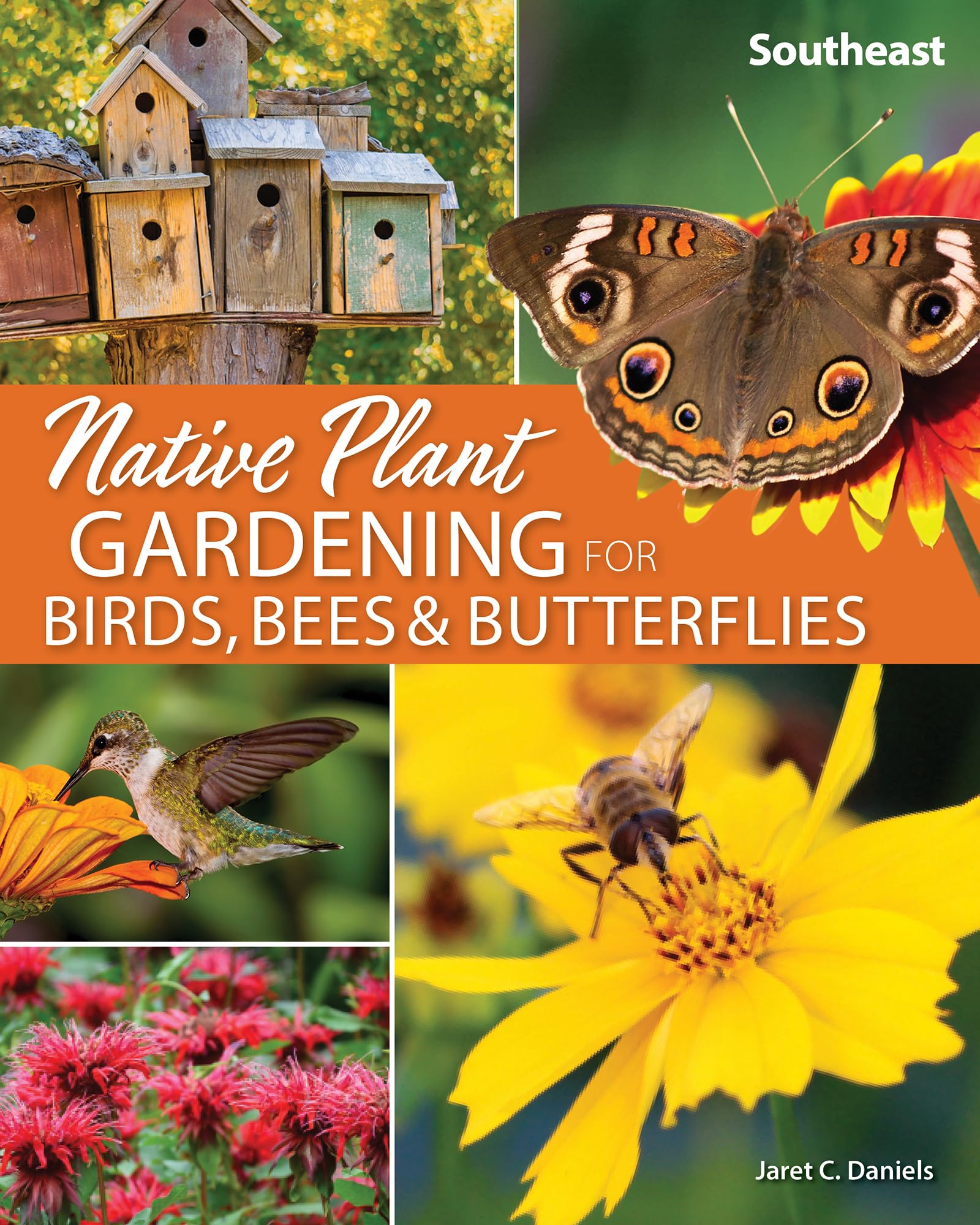
Native Plant Gardening for Birds, Bees & Butterflies: Southeast (Nature-Friendly Gardens)
$16.59
by Jaret C. Daniels



Plan Your Landscape or Garden to Help Beloved Backyard Visitors The presence of birds, bees, and butterflies suggests a healthy, earth-friendly place. These most welcome guests also bring joy to those who appreciate watching them. Now, you can turn your yard into a perfect habitat that attracts them and, more importantly, helps them thrive. Acclaimed author and expert entomologist Jaret C. Daniels provides all the information you need in this must-have guide for northern Florida, Georgia, Kentucky, North Carolina, South Carolina, Tennessee, Virginia, and West Virginia. Learn how to landscape and create pollinator gardens with native plants. The book begins with an in-depth introduction to native pollinators and to birds. It’s followed by a “field guide” section to more than 100 native plants that are widely available to utilize, are easy to care for, and provide great benefit to birds, bees, and butterflies. The species are organized by level of sunlight needed and then by plant types. Each species includes full-color photographs and information about hardiness zones, what they are most likely to attract, soil requirements, light levels, and Jaret’s notes. As an added bonus, you’ll make use of blooming charts, tips on attracting specific species, and more! Plus, the invaluable garden plans and projects show you just what to do and can be customized to suit your own specific interests. Plan, plant, and grow your beautiful garden, with native plants that benefit your favorite creatures to watch and enjoy. Jaret C. Daniels, Ph.D., is an Associate Professor of Entomology at the University of Florida and Director of the McGuire Center for Lepidoptera and Biodiversity at the Florida Museum of Natural History, specializing in insect ecology and conservation. He has authored numerous scientific papers, popular articles, and books on wildlife conservation, insects, and butterflies, including butterfly field guides for Florida, Georgia, the Carolinas, Ohio, and Michigan. He is also the author of Vibrant Butterflies: Our Favorite Visitors to Flowers and Gardens; Backyard Bugs: An Identification Guide to Common Insects, Spiders, and More; and Our Love of Bees. Jaret lives in Gainesville, Florida, with his wife, Stephanie. Purple Passionflower Passiflora incarnata Family: Passifloraceae Plant Characteristics: Perennial twining vine to 15 feet or more in length; large leaves are dark green and have three lobes; solitary lavender flowers are large and highly intricate. USDA Hardiness Zone: 6b–9b Bloom Period: Late spring through early fall Growing Conditions: Full sun or partial shade, average moisture, and well-drained soil Attracts: Butterflies, bees, flies, and other pollinators Notes: Purple passionflower is a must-have for any wildlife garden in the Southeast. It is a fast-growing, twining, spreading vine that can be easily trained up a trellis, fence, or grown as a groundcover. Highly ornamental, the vine features dark-green foliage and sizable, eye-catching fringed flowers that draw in bees, butterflies, and other insect pollinators. It spreads by root suckers, forming small colonies. Also called maypop, plants produce a large, rounded fruit with edible pulp; a different species of passionflower, found in South America, is commercially grown for passion fruit.