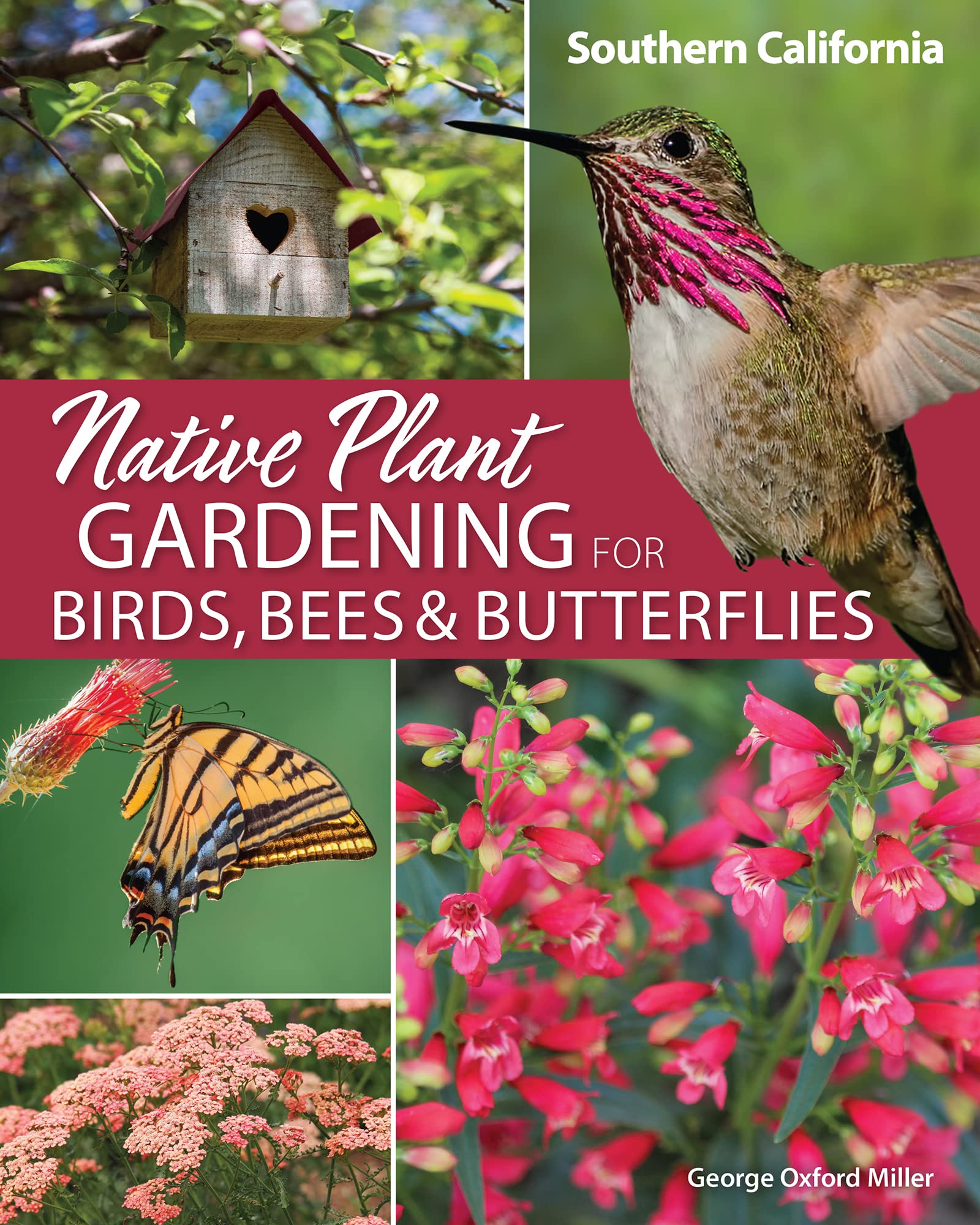
Native Plant Gardening for Birds, Bees & Butterflies: Southern California (Nature-Friendly Gardens)
$16.24
by George Oxford Miller



Plan Your Landscape or Garden to Help Beloved Backyard Visitors The presence of birds, bees, and butterflies suggests a healthy, earth-friendly place. These most welcome guests also bring joy to those who appreciate watching them. Now, you can turn your yard into a perfect habitat that attracts them and, more importantly, helps them thrive. Professional nature photographer and botanist George Oxford Miller provides all the information you need in this must-have guide for Southern California. Learn how to landscape and create pollinator gardens with native plants. The book begins with an in-depth introduction to native pollinators and to birds. It’s followed by a “field guide” section to more than 100 native plants that are widely available to utilize, are easy to care for, and provide great benefit to birds, bees, and butterflies. The species are organized by level of sunlight needed and then by plant types. Each species includes full-color photographs and information about hardiness zones, what they are most likely to attract, soil requirements, light levels, and George’s notes. As an added bonus, you’ll make use of blooming charts, tips on attracting specific species, and more! Plus, the invaluable garden plans and projects show you just what to do and can be customized to suit your own specific interests. Plan, plant, and grow your beautiful garden, with native plants that benefit your favorite creatures to watch and enjoy. Professional nature photographer and botanist George Oxford Miller is a lifelong resident of the West. He has lived in New Mexico, Arizona, and Texas, and he has written six guidebooks to the Southwest, including the best-selling trio Landscaping with Native Plants of the Southwest, Landscaping with Native Plants of Texas, and Landscaping with Native Plants of Southern California. He also wrote Wildflowers quick guides to Arizona & New Mexico, Texas, Southern California, and Colorado. He wrote a “Plant of the Month” column for New Mexico Magazine and is former president of the Albuquerque chapter of the Native Plant Society of New Mexico, where he still conducts workshops and programs on how to create your own backyard pollinator oasis. California Buckwheat Eriogonum fasciculatum Family: Buckwheat, Polygonaceae Plant Characteristics: Naturally rounded shrub; 2–4 feet tall and wide; evergreen, needlelike, gray-green leaves grow in clusters on stems; small flowers form dense, rounded clusters up to 6 inches in diameter on wiry stems; petals are white to pinkish with a red stripe, long stamens have showy red anthers. Deer- and rabbit-resistant. USDA Hardiness Zone: 8b–11a Bloom Period: Spring–fall (March–September) Growing Conditions: Performs best in full sun to partial shade and dry, well-draining soil. This keystone plant is more than a highly ornamental shrub―it forms its own micro-ecosystem with a diverse community of insects and birds. Use this adaptable, drought- and heat-tolerant shrub as a marquee addition to pollinator gardens. Showy flower clusters blanket the shrub and keep butterflies and bees busy spring through summer, but the plant doesn’t stop there. It continues its performance as the flowers fade to red and form attractive rusty-red seed heads, a tasty treat favored by birds. California Buckwheat comes in four natural varieties, and a number of ornamental cultivars have been developed. Beside specimen shrubs, low-growing and groundcover cultivars are often available. Once established, no more than a monthly deep watering in droughts will be needed. Most forms are cold-hardy to 10–20°F. California and Arizona use it as a roadside planting, so you know it’s tough.