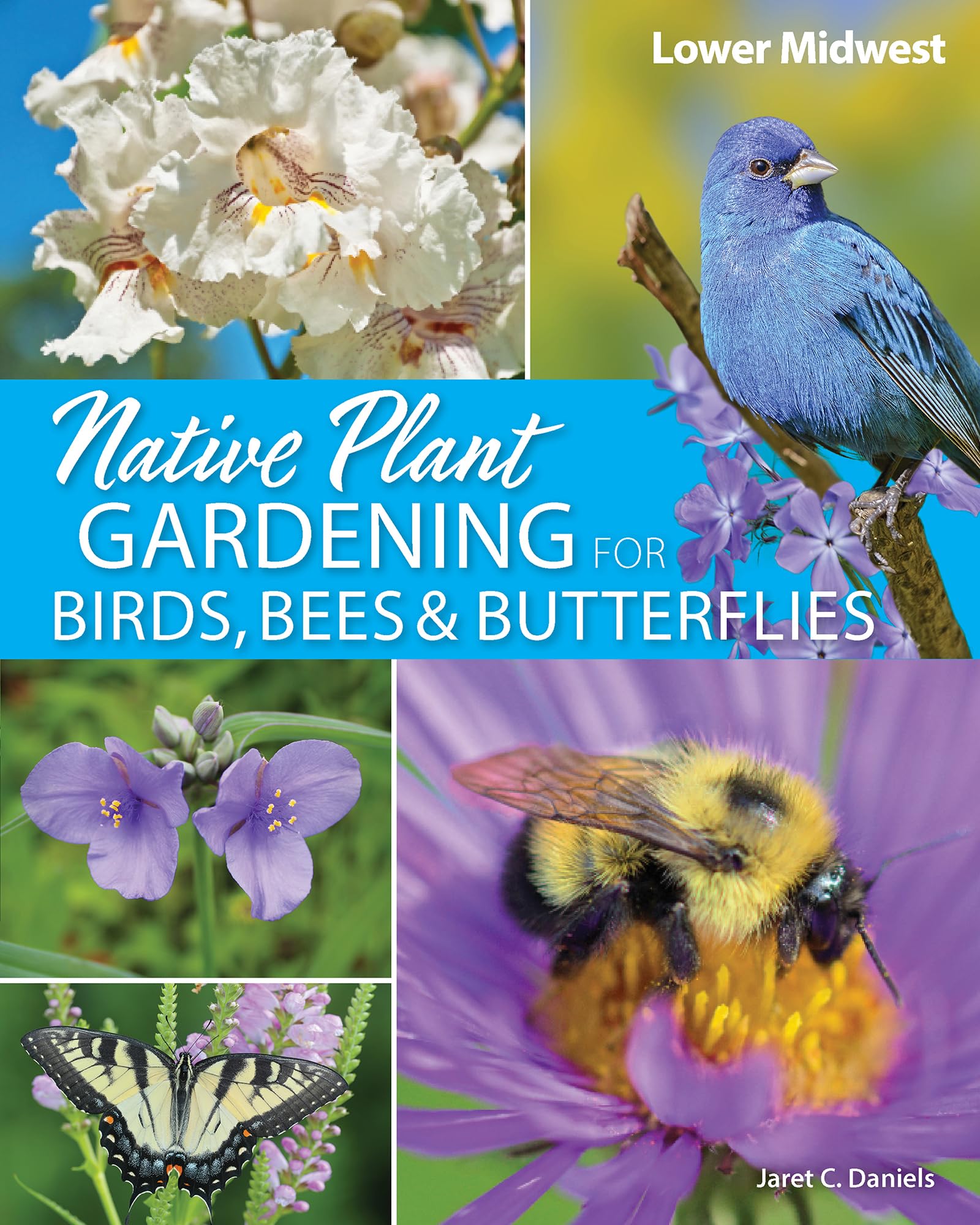
Native Plant Gardening for Birds, Bees & Butterflies: Lower Midwest (Nature-Friendly Gardens)
$18.11
by Jaret C. Daniels



Plan your landscape or garden with more than 100 native plants that benefit birds, bees, and butterflies of the central United States. The presence of birds, bees, and butterflies suggests a healthy, earth-friendly place. These most welcome guests also bring joy to those who appreciate watching them. Now, you can turn your yard into a perfect habitat that attracts them and, more importantly, helps them thrive. Acclaimed author and expert entomologist Jaret C. Daniels provides the information you need in this must-have guide for Kansas, Kentucky, Missouri, Nebraska, Ohio, southern Illinois, and southern Indiana. Learn how to landscape and create pollinator gardens with native plants. The book begins with an in-depth introduction to native pollinators and to birds. It’s followed by a “field guide” section to 115 native plants that are widely available to utilize, are easy to care for, and provide great benefit to birds, bees, and butterflies. Each species includes full-color photographs and information about hardiness zones, what they are most likely to attract, bloom period, growing conditions, and Jaret’s notes. As an added bonus, you’ll make use of the quick-reference chart, garden plans, and more! Inside you’ll find: Overview of native pollinator species in the Lower Midwest - Field guide to 115 native plants, organized by level of sunlight needed - Quick-reference chart to plants, blooming periods, and what animals each plant attracts - Hardiness zone information, weed control tips, and more - BONUS: Garden plans that can be customized to suit your specific interests Plan, plant, and grow your beautiful garden, with native plants that benefit your favorite creatures to watch and enjoy. Jaret C. Daniels is a curator at the Florida Museum of Natural History’s McGuire Center for Lepidoptera and Biodiversity, and he is a professor in the Department of Entomology and Nematology at the University of Florida. Jaret holds a Ph.D. in entomology and specializes in the ecology and conservation of at-risk butterflies and other native insect pollinators. He is a professional nature photographer and author of many successful field guides, gardening books, and general interest titles on butterflies, insects, wildflowers, native plants, and wildlife landscaping, including Butterflies of the Midwest Field Guide; Native Plant Gardening for Birds, Bees & Butterflies: Upper Midwest; Backyard Bugs; Vibrant Butterflies; and Insects & Bugs for Kids. He lives in Gainesville, Florida, with his wife, Stephanie, and their six cats. Purple Coneflower Echinacea purpurea Family: Aster (Asteraceae) Plant Characteristics: Stout, upright, herbaceous perennial to 5 feet in height; conspicuous, coarse green leaves, elliptical to somewhat variable-shaped with mostly toothed margins, alternately attached to stems; single large, pink-to-purple, daisy-like flowers atop robust stems. Hardiness Zones: 3a–7b Bloom Period: Summer (June–August) Growing Conditions: Full sun and moist-to-dry, organically rich, well-drained soil. This popular native wildflower is well suited for everything from small garden spaces to larger naturalized meadows or prairies. The showy and distinctive flowers begin to appear in summer and bloom profusely until early fall. The domed, spiny centers provide a sturdy landing platform for butterflies and other pollinators and easy access to abundant nectar. Although tolerant of poor soil and drought once established, richer garden soil and consistent moisture will enhance overall growth and flower production. Purple coneflower is widely available commercially, and numerous striking cultivars exist in various colors. Regular deadheading of blooms will encourage continued flowering. Spent flower heads provide abundant seed resources for hungry songbirds, including goldfinches, cardinals, and others. Use in perennial beds with other sun-loving, shorter-lived perennials. It’s easily propagated by seed or root division. For a somewhat more delicate-looking alternative, try pale purple coneflower (pg. 217), which grows well in similar conditions and freely self-seeds. Hummingbirds, butterflies, bees, and many other insect pollinators. Songbirds consume the seeds.