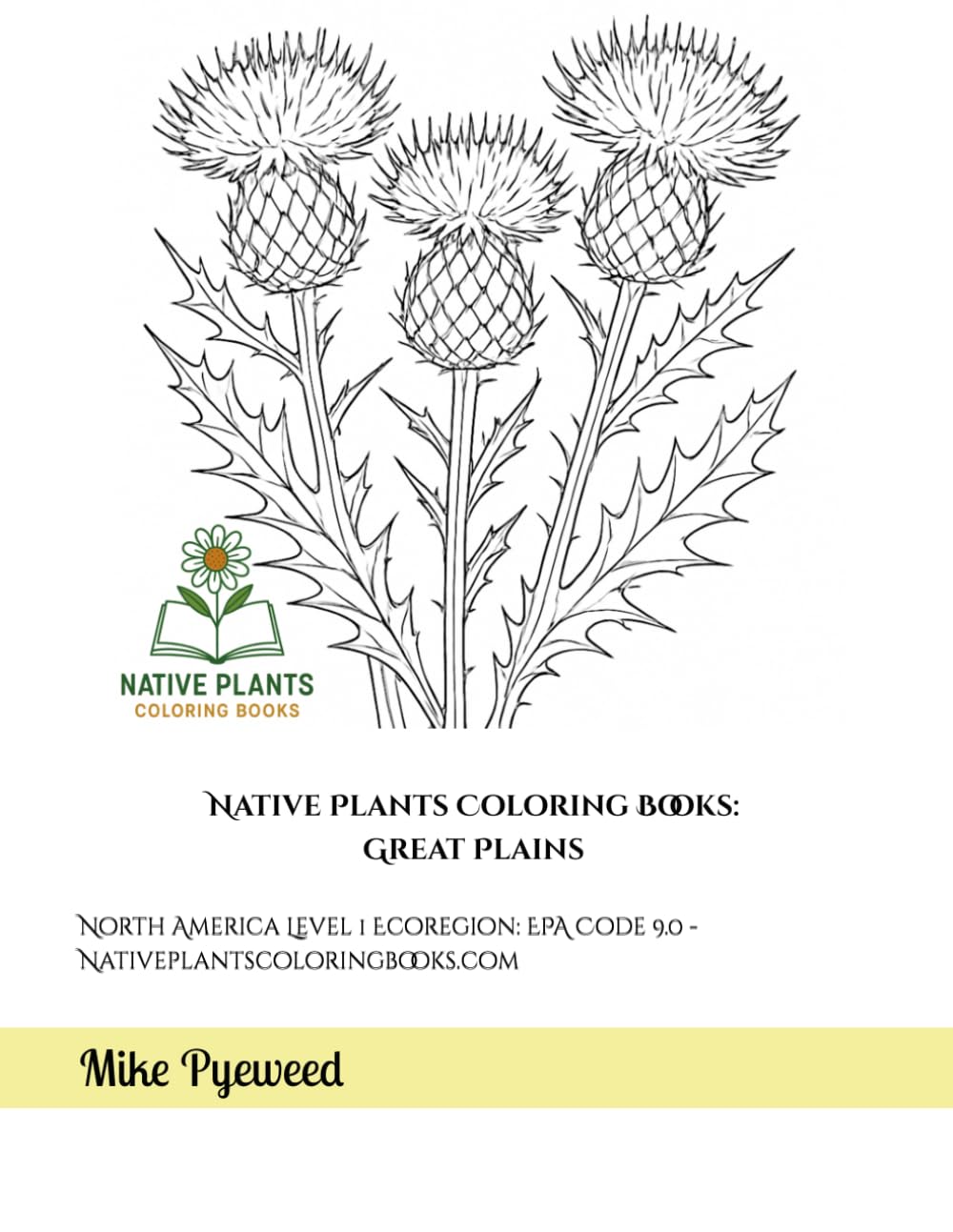
Native Plants Coloring Books: Great Plains: North America Level 1 Ecoregion: EPA Code 9.0
$8.00
by Mike Pyeweed



Ecoregions are broad ecological zones defined by consistent patterns of climate, geology, soils, and biological communities that distinguish them from neighboring areas. The Great Plains Level I ecoregion stretches across central North America, from the Canadian Prairies through the central United States down into northern Mexico. Characterized by expansive grasslands, relatively flat terrain, and a semi-arid to sub-humid climate, the region supports drought-tolerant grasses, sparse trees, and large grazing animals. Its boundaries are shaped by natural transitions—such as the Rocky Mountains to the west and the forested Eastern Temperate Forests to the east—rather than political borders. The Great Plains play a vital role in agriculture, biodiversity, and North America’s hydrologic and carbon cycles. In this coloring book you will see 35 examples of the 4,000ish native plants that call the Great Plains home. The Great Plains Ecoregion (EPA Level I Ecoregion Code 9.0) covers parts of the central United States and includes portions of the following states: Montana - North Dakota - South Dakota - Wyoming - Nebraska - Kansas - Oklahoma - Texas - New Mexico - Colorado