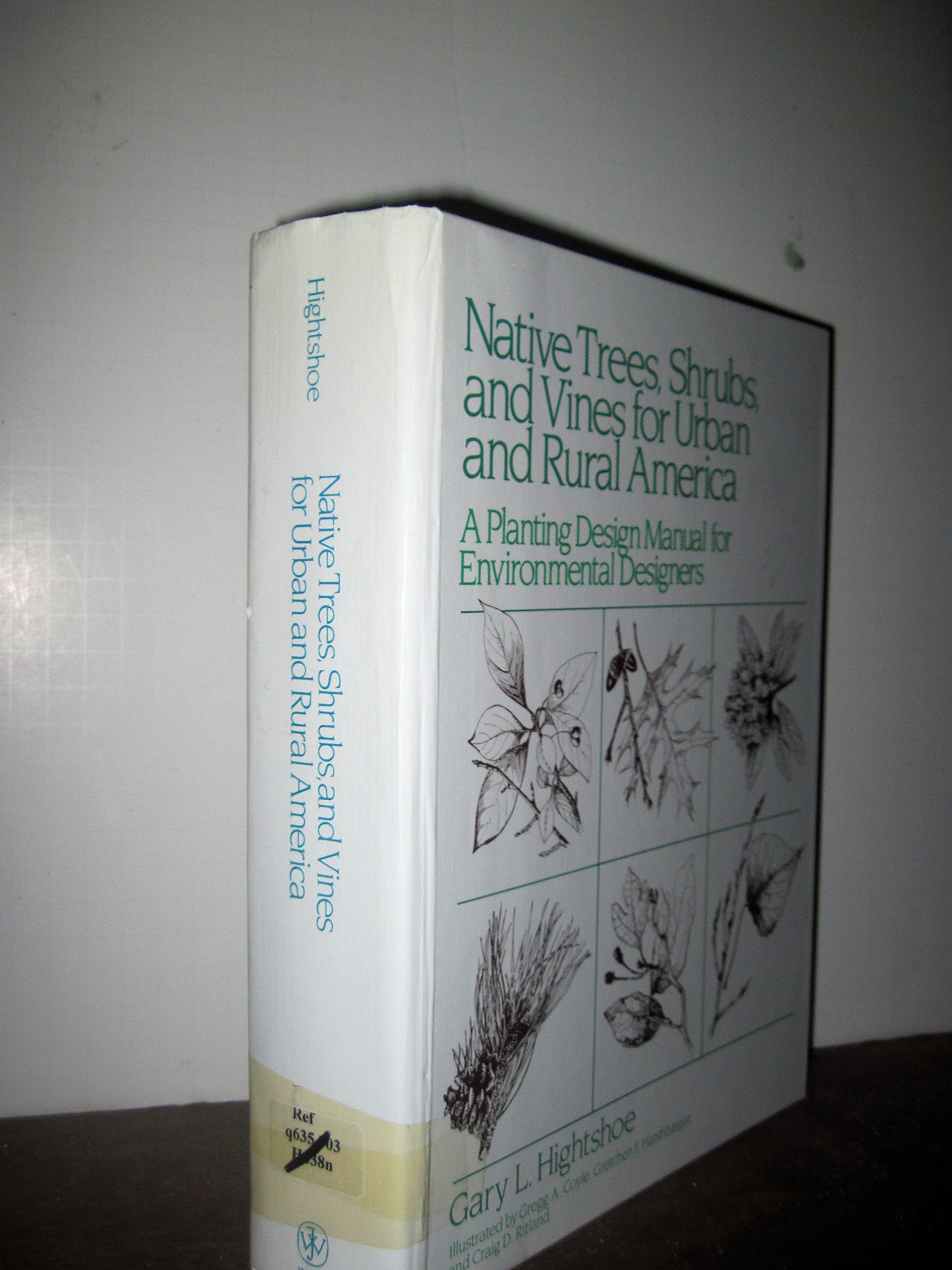
Native Trees Shrubs, and Vines for Urban and Rural America: A Planting Design Manual for Environmental Designers
$115.48
by Gary L. Hightshoe



A basic planting design reference, this book provides the amateur, student, and professional with information that assists in simplifying plant-use decisions where native plants are desired. The characteristics, cultural requirements, and most suitable environmental settings are identified for each plant. Native Trees, Shrubs, and Vines for Urban and Rural America A Planting Design Manual for Environmental Designers Gary L. Hightshoe As environmental designers strive to maintain the ecological context of the landscapes they design, they are turning more and more to native plantings. Native plantings are hardier than more exotic imports, requiring less care. They mesh better with other natural elements of a landscape, such as soils, climate, and wildlife. And, popular misconceptions about their scraggly, disorganized look aside, they can be used to create stunning design effects. Until now, however, landscape designers had to search through many sources to find the native trees, shrubs, and vines appropriate to their particular environmental conditions as well as to the effect they want to achieve. This comprehensive volume puts all the information needed to choose native plantings in one handy reference source. The book is divided into two parts, Trees and Shrubs and Vines, with each part further divided into two sections. The first describes different factors normally considered in selecting plantings, classifying over 250 woody plants by these characteristics. Classifications include: Visual characteristics: form, branching, foliage, flower, fruit - Ecological relationships: most suitable habitats, including flood and shade tolerance - Cultural requirements: soil, hardiness, silvical characteristics, urban conditions, similar and associate species. The second section is an encyclopedia of native woody plants. Each "master plate" includes the plants scientific and common names, plus all of the plants characteristics as described in the first section. Also included are a map showing the plants native regions: a drawing of its twigs, leaves, flowers, and fruits; a photo of its bark, and a photo or drawing of its crown without leaves. Thus, you can find the information you need in one of two ways: you can choose the plant characteristics you want and look them up in the first section to find the plantings that fit your needs. Or you can look up specific plants in the second section to learn if their characteristics are appropriate for your landscape. No other book on native plantings provides as much information, as usefully organized, as this one does. Landscape architects, ecologists, park personnel, botanistsanyone interested in natural landscapingwill find this to be an invaluable reference that greatly assists in choosing and nurturing native trees, shrubs, and vines. Gary L. Hightshoe is professor of Landscape Architecture at Iowa State University, Ames, where he teaches courses in plant materials, planting design, and landscape resource management. He obtained his B.S.L.A. and M.L.A. degrees from Iowa State University. His current research interests include the development of a regional guide to environmental settings and associations of plants for landscape use in the north-central states. He is a strong advocate of the accelerated inventory and preservation of rare and threatened ecosystems.