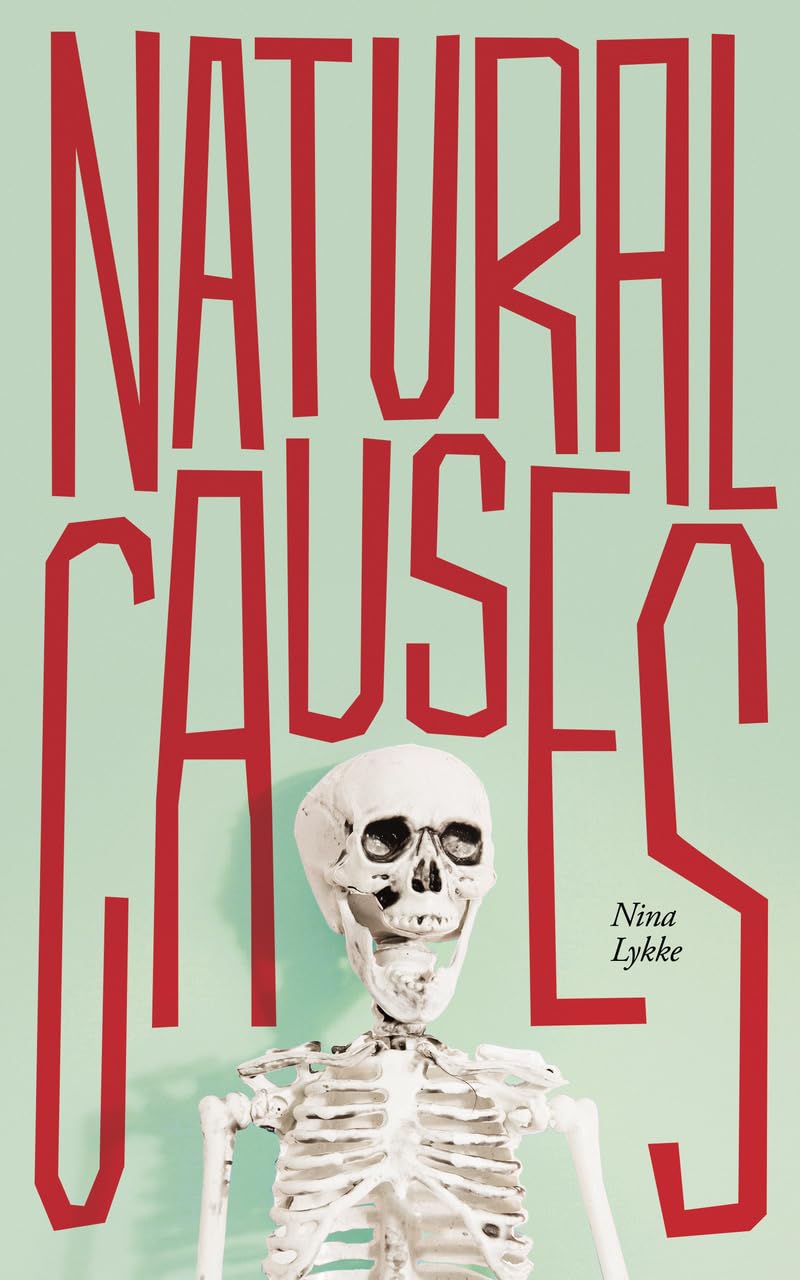



A novel about the curse of self-knowledge and the blessings of denial; a medical romance unlike any other. No one can sense the undercurrents of a populace better than a general practitioner. I have seen it all: gluten free, lactose free, sugar free, every online or newspaper headline attempt to get healthy people to think that if only they stop eating bread or cheese, everything will fall into place. Middle-agers can’t fathom why they’re so tired all the time. It’s because you are starting to get old, I explain, but they think this aging thing doesn’t apply to them, just as death doesn’t apply to them either. They think they are the exception. For two decades, Elin has been a regular general practitioner. For at least as long, she has been married to Aksel. But before Aksel there was Bjørn, who a year ago suddenly reached out to her on Facebook, and who has since turned Elin’s world upside down. She’s moved into her office, where her patients march in, all day long, with all their disgusting little infirmities and ailments. And though she likes spending the extra time in her office—even though she has to sleep on her examination table, bathe in the employee restroom, and hide from the security guard when he makes his rounds at night—Elin feels abandoned and even more disillusioned with life and people than she did before she stumbled into her affair. Nina Lykke’s Natural Causes is a fierce study of people who try to keep going. At the same time, the novel is a sharp, good-natured commentary on a society where wealth and abundance has made us demanding and torpid. Lykke keeps a fine balance between stereotypical exaggeration and uncomfortable, embarrassing recognition. Nina Lykke (1965) is a Norwegian writer. Her first book, The Orgy and Other Stories , was nominated for the Young Readers’ Critics’ Prize. Her novel Disintegration , which followed in 2013, had brilliant reviews and was shortlisted for the P2 Listeners’ Novel Prize. In 2014, Lykke was awarded the Booksellers’ Author Grant. B. L. Crook is a writer and literary translator. In 2010, she founded SAND , an English literary journal, in Berlin. She led creative writing workshops in the Netherlands for two years before returning to the United States. She lives with her family on an island near Seattle. 1 No one can sense the undercurrents of a populace better than a general practitioner. I’ve seen it all, gluten free, lactose free, sugar free, the online or print headlines trying to make healthy people think that everything is going to fall into place if only they’ll stop eating bread or cheese. Middle-agers who don’t get why they’re always so tired. It’s because you’re starting to get old, I tell them, but they don’t think aging applies to them, just as death doesn’t apply to them either. They think they’re the exception. They’re certain their bodies are going to keep on running without a hitch, and they seem genuinely shocked on the day when this is no longer the case. Shocked on the day when their stool stops flowing smoothly, or sleep eludes them, or their muscles refuse to cooperate. Forty-seven isn’t old, my forty-seven-year-old patient tells me. Well, I say, forty-seven is old enough that you can’t keep doing things the way you used to. But they refuse to accept this line of thinking. They want to keep doing things the way they’ve always done them, and so they go out and buy a special juice or green powder online or get tests done to prove they’ve contracted a particular allergy or food intolerance so they’ll be able to keep doing things the way they used to if only they drink the juice or consume the powder or cut out some food product or other or stay away from furry animals. They don’t want to listen to what I have to say, which is that they need to calm down, be content, eat a variety of foods, and keep moving, in that order. I am tired of saying it, and they are tired of hearing it, but it’s the truth, and it is boring. It’s Friday morning, the time is five to eight. In five minutes, all hell will break loose. Send the enemy in , as one of my colleagues puts it. And even now, after all these years, it happens that I am sitting here at my desk at the health clinic, on the third floor of an old building off of Solli Plaza, and suddenly I don’t understand why there are people outside my office waiting to be let in to see me. These people have taken time off from their jobs to come all this way, but why? My head is blank and silent. Some papers are stacked on the desk where there is also a computer monitor, beside it is a stethoscope, and over there a sort of big machine on wheels, but what are they for, all of these things, and what is it that’s supposed to happen here, what is it that’s expected. Why am I here. To the left is a window, behind me a bookshelf holding periodicals and books, posters are on the walls in places, illustrations of human bodies—by all appearances this is a doctor’s office, bu