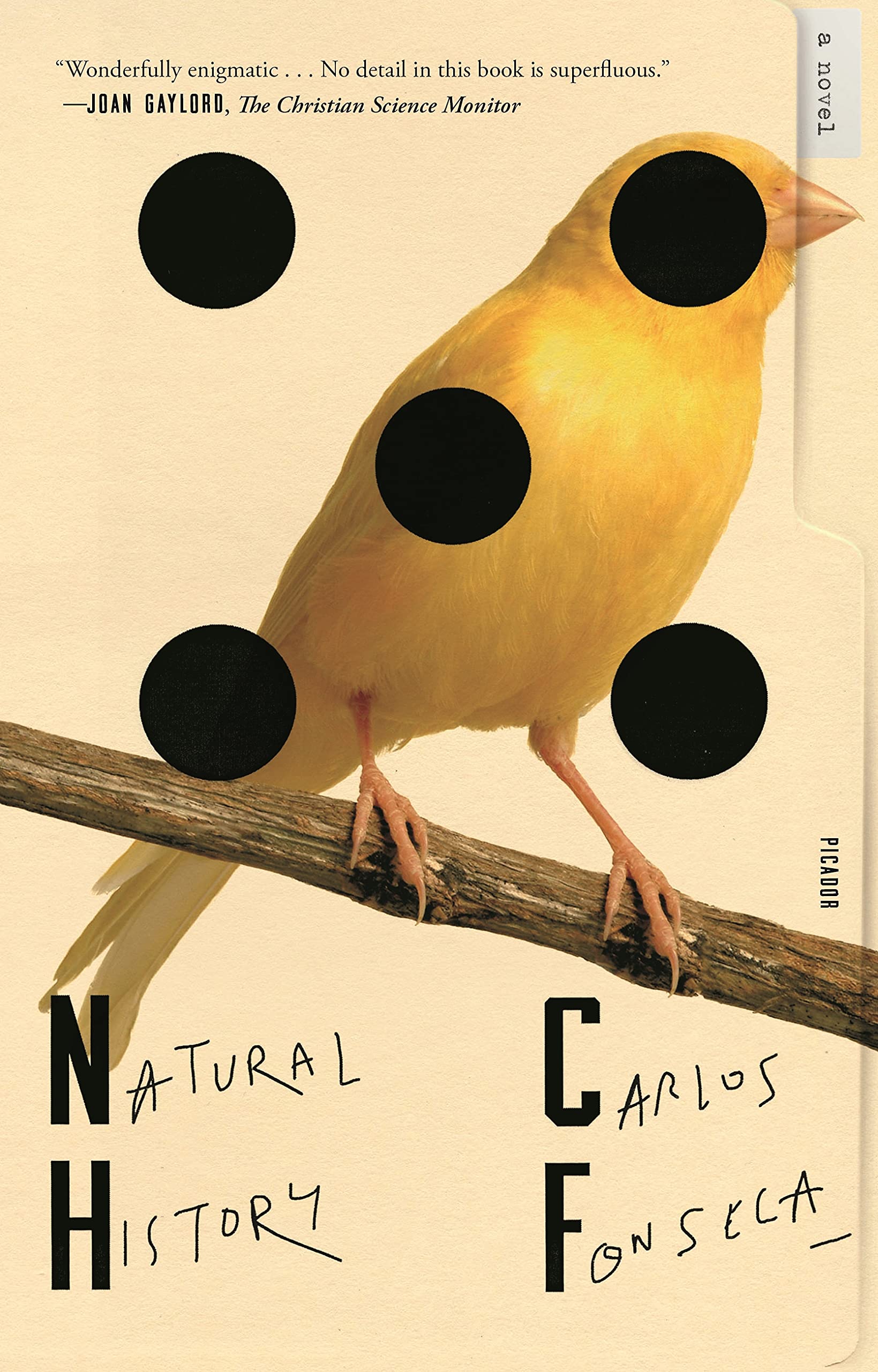



Just before the dawn of the new millennium, a curator at a New Jersey museum of natural history receives an unusual invitation from a celebrated fashion designer. She shares the curator’s fascination with the secrets of the animal kingdom―with camouflage and subterfuge―and she proposes that they collaborate on an exhibition, the nature of which remains largely obscure, even as they enter into a strange relationship marked by evasion and elision. Seven years later, after the designer’s death, the curator recovers the archive of their never-completed project. During a long night of insomnia, he finds within the archive a series of clues about the true history of the designer’s family, a mind-bending puzzle that winds from Haifa, Israel, to bohemian 1970s New York to the Latin American jungles. As he follows this trail, the curator discovers a cast of characters whose own fixations interrogate the unstable frontiers between art, science, politics, and religion. An aging photographer, living nearly alone in an abandoned mining town where subterranean fires rage without end, creates miniature replicas of ruined cities. A former model turned conceptual artist becomes the star defendant in a trial over the very soul and purpose of art. A young indigenous boy receives a vision of the end of the world. Reality is a curtain, the curator realizes, and to draw it back is to reveal the theater of the obsessed. Natural History is a portrait of a world trapped between faith and irony, tragedy and farce. An urgent and impressively ambitious novel in the tradition of Italo Calvino and Ricardo Piglia, it confirms Carlos Fonseca as one of the most daring writers of his generation. 100 Notable Books of the Year, The End of the World Review "[A] wonderfully enigmatic novel . . . [ Natural History ] reaches across continents and decades, touching on political movements and popular culture . . . With lush prose that owes a debt to translator Megan McDowell, Fonseca weaves the fictional threads of Giovanna’s life into a fabric of real history, grounding his story in events ranging from Sherman’s March to the Sea to the legal battle between sculptor Constantin Brâncusi and the American government that redefined ‘art’ at the turn of the 20th century . . . No detail in this book is superfluous.” ―Joan Gaylor, Christian Science Monitor “ Natural History , ably translated from the Spanish by Megan McDowell, appropriates from the great metaphysicians of postmodern fiction. Its plotting and Delphic aura suggest the paranoiac glitter of Don DeLillo, the cosmopolitan dread of Roberto Bolaño and the imaginative elasticity of Ricardo Piglia.” ― Dustin Illingworth, The New York Times Book Review “In a calm and lyrical tone, Carlos Fonseca’s works ambitiously seek to incorporate everything. They flirt with unified theories and take joy in connecting ideas in unexpected ways, his protagonists often losing themselves in beguiling mental labyrinths of their own making . . . It is this very bravery that makes it such a pleasure to read his intellectual thrillers about art, nature, and the quest to remake oneself.” ― Jessica Sequeira, Los Angeles Review of Books “Moving . . . An intellectual puzzle that reminds us that it is also possible to be passionate about ideas . . . Guided by its obsessive characters and their fixations, the book elegantly takes the reader for a tour of Latin America’s labyrinthine contemporary history . . . Deftly translated by Megan McDowell, the mastery, grace, and intelligence of Fonseca’s prose come forth, halfway between the baroque rhythms of Faulkner and the steady pulse of Borges.” ― Gunter Silva, Full Stop "Fonseca is arguably one of the leading Latin American stylists of his generation, and Natural History fundamentally testifies to his belief in writing. At a time of extraordinary accumulation of information, one can think of Natural History as an attempt to redeem the task of writing by placing the creative moment at the center of its polyphony. Is there any greater purpose for literature?” ― Diego Azurdia, Music & Literature “[ Natural History ] often reminds one of Roberto Bolaño’s masterpiece 2666 . . . A conceptual detective fiction in the tradition of Ricardo Piglia or Don DeLillo . . . [Fonseca maintains] a rhythm that keeps us in suspense for the entire length of this singular narrative. . . . Within this complex game of Russian dolls that Fonseca has constructed, nothing remains more fascinating and enthralling than the experience of reading it.” ― Enrique D. Zattara, 3:AM Magazine “ Natural History is more than a story I wish I had written. It is a story I wish I had lived. A fantastic and even phantasmal tale of a quest, a work of art masquerading as a scam, and a contemplation on human lives, the novel is an incisive discussion about the nature and meaning of truth. It is also about the 1960s and their aftermath, the literal and figurative existence of fire, and love f