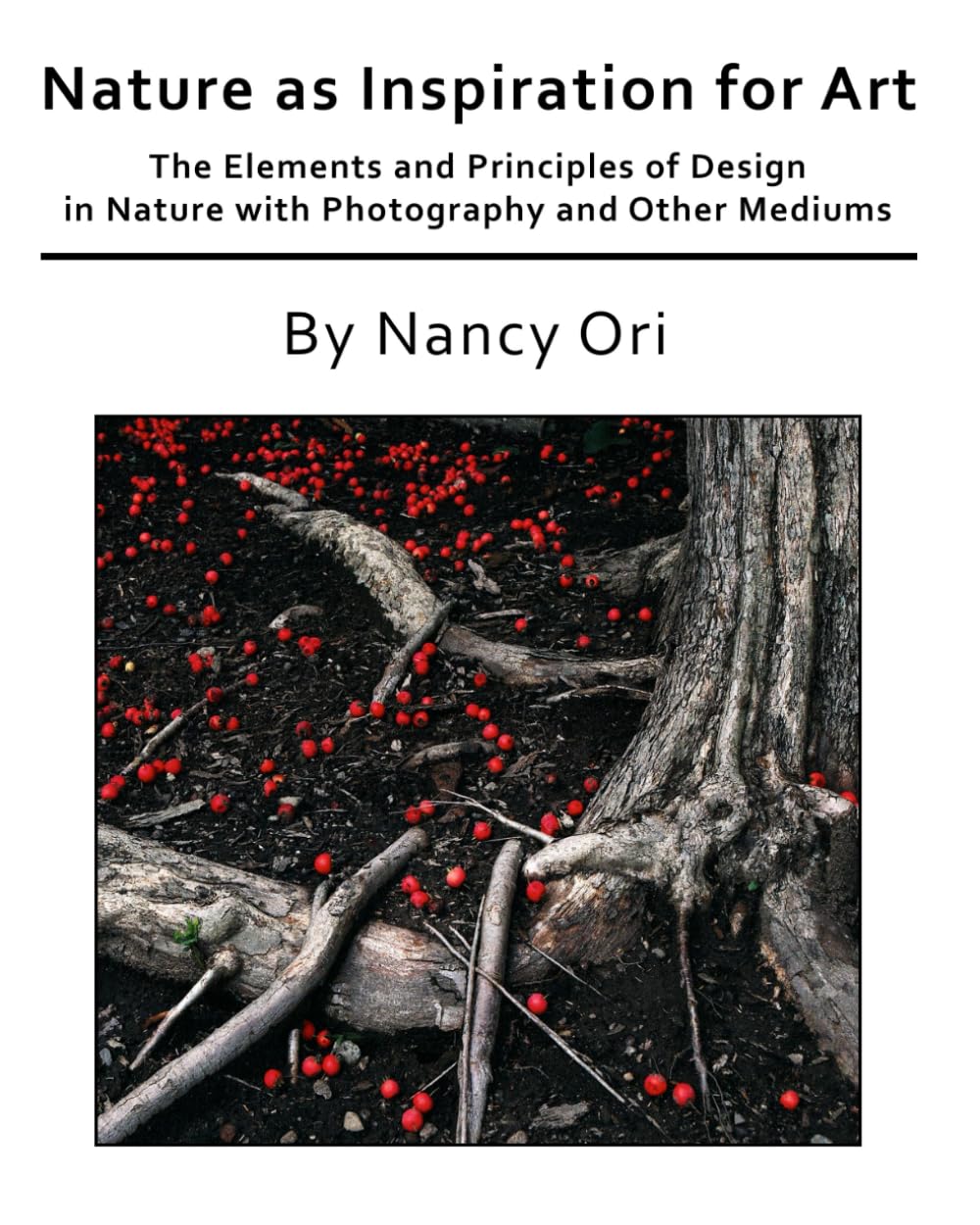



Nature has always been a great inspiration for art - from the earliest cave drawings to contemporary artists working in every medium today. The focus of this book will be on the essential concepts needed to create an expressive image. I will encourage you to slow down and look closely at the details of the natural world and experience how you are being inspired by what you are observing and feeling. The content is designed for beginner through intermediate levels. In order to make better images, you need to understand the value of the elements and principles of design, scene evaluation, visualization, how to use and control light, the importance of shadow, equipment thoughts, and many other tips and ideas. I will push you to think more clearly about the statement that you are trying to make and how it made you feel at the time of capture or initial sketching. Your finishing of the image will need attention to the same clarity of thought and feelings that you had at the time of capture. I will share my thought process for that. Most importantly, this book is an introduction to seeing, feeling, and communicating in new ways with new information and compositional tools. There will be new words to learn along with some new actions. I will demonstrate how I approach an image from start to finish with many examples. Good pictures are not created by waving the camera around and hoping you got something. They are observed, controlled and captured. Light on natural subjects is what inspires me. The use of design combined with light can communicate meaning, so we need to be paying attention to how we use both. The same concepts of a great image exist today as they did when photography first came on the scene. The thought process is the same, only the devices have changed. I will simplify it for you, but you will have to do some work along the way. I have been a professional photographer for my entire life, a photography coach and instructor for hundreds of students for the past 40 years, and an international photography tour leader since 2001. Many years ago, I had the amazing opportunity to learn from Ansel Adams during several workshops and loved it so much that I became part of the teaching staff for 8 seasons. I bring many of Ansel's thoughts and love of the land to both my books and workshops. I love sharing the information that is important and watching students thrive and grow. There are four points that I want to stress as we begin: 1. It is important to have a foundation in design to help support your intuition. 2. Understanding the technical part of your craft is imperative. 3. Contrast has tremendous expressive potential…. juxtaposing natural subjects with conceptual thinking, use of complementary colors, positive and negative space, emphasizing large vs small, or bridging the abstract with realism. 4. Follow your instincts. You know a lot more about photography or painting to create strong compositions than you might realize.