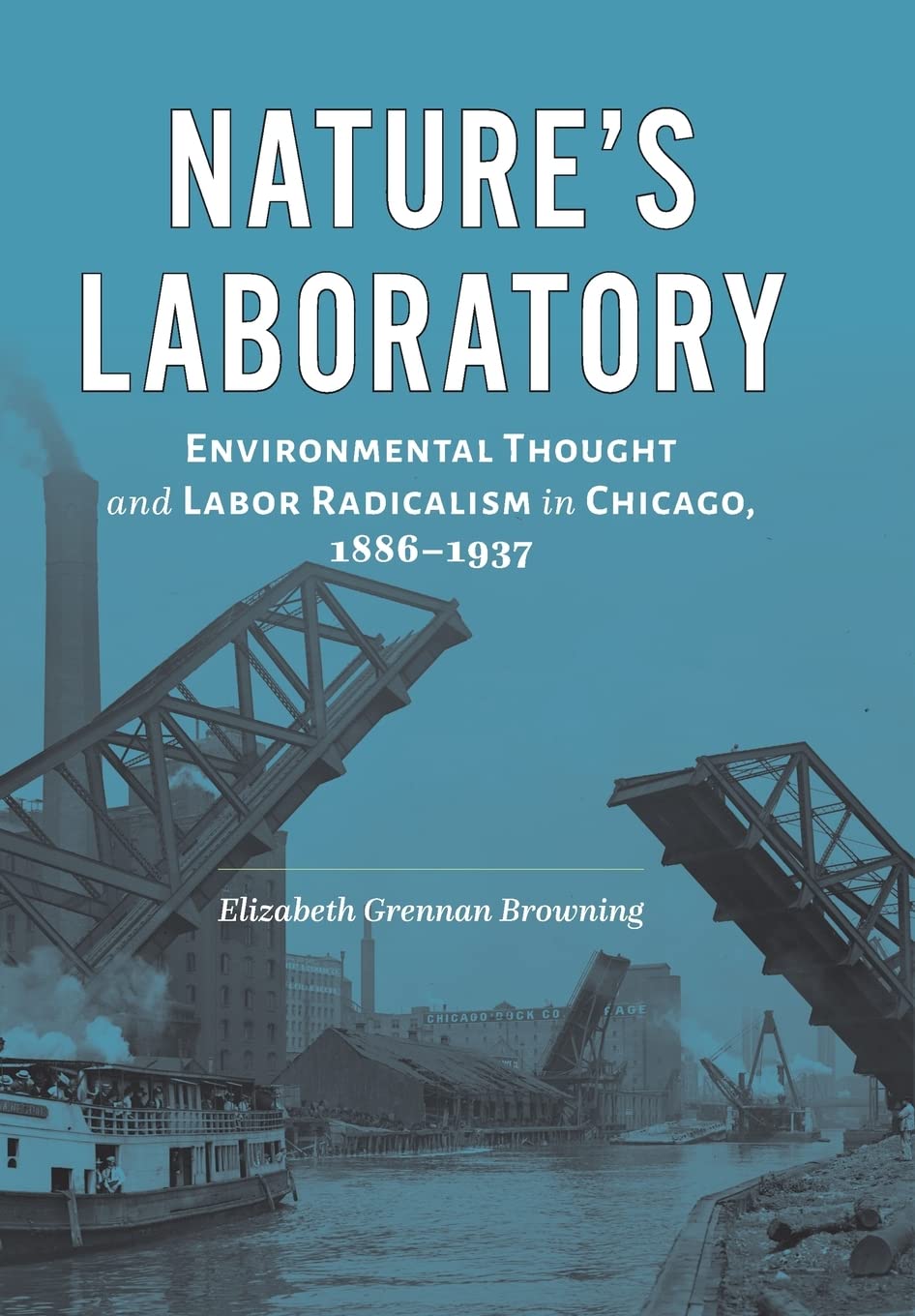
Nature's Laboratory: Environmental Thought and Labor Radicalism in Chicago, 1886–1937
$40.22
by Elizabeth Grennan Browning



The untold history of how Chicago served as an important site of innovation in environmental thought as America transitioned to modern, industrial capitalism. In Nature's Laboratory , Elizabeth Grennan Browning argues that Chicago―a city characterized by rapid growth, severe labor unrest, and its position as a gateway to the West―offers the clearest lens for analyzing the history of the intellectual divide between countryside and city in the United States at the end of the nineteenth century. By examining both the material and intellectual underpinnings of Gilded Age and Progressive Era environmental theories, Browning shows how Chicago served as an urban laboratory where public intellectuals and industrial workers experimented with various strains of environmental thinking to resolve conflicts between capital and labor, between citizens and their governments, and between immigrants and long-term residents. Chicago, she argues, became the taproot of two intellectual strands of American environmentalism, both emerging in the late nineteenth century: first, the conservation movement and the discipline of ecology; and second, the sociological and anthropological study of human societies as "natural" communities where human behavior was shaped in part by environmental conditions. Integrating environmental, labor, and intellectual history, Nature's Laboratory turns to the workplace to explore the surprising ways in which the natural environment and ideas about nature made their way into factories and offices―places that appeared the most removed from the natural world within the modernizing city. As industrialization, urbanization, and immigration transformed Chicago into a microcosm of the nation's transition to modern, industrial capitalism, environmental thought became a protean tool that everyone from anarchists and industrial workers to social scientists and business managers looked to in order to stake their claims within the democratic capitalist order. Across political and class divides, Chicagoans puzzled over what relationship the city should have with nature in order to advance as a modern nation. Browning shows how historical understandings of the complex interconnections between human nature and the natural world both reinforced and empowered resistance against the stratification of social and political power in the city. Nature's Laboratory promises to resurrect the intellectual debates about nature that swirled through Chicago in the Gilded Age and Progressive Era. Social and economic strife sparked these conversations, and debaters turned to the environment for answers to the problems caused by the city. Using an impressive array of sources, from sociological and workplace studies to poetry and architectural design, Browning argues that thinkers returned again and again to the concept of urban nature. This book will appeal to intellectual, environmental, and urban historians, as well as historians of capitalism and Chicagophiles. ―Jon T. Coleman, University of Notre Dame, author of Here Lies Hugh Glass: A Mountain Man, a Bear, and the Rise of the American Nation Well-researched, incisively argued, and beautifully written, Browning delivers a dazzling and pathbreaking synthesis of environmental, urban, intellectual, and labor histories that sheds new light on familiar figures and stories―not just in Chicago, 'nature's metropolis,' but in the nation as a whole. ―Brian McCammack, author of Landscapes of Hope: Nature and the Great Migration in Chicago In a move that turns Cronon's Nature's Metropolis inside out, Browning deftly demonstrates that Chicago's labor and intellectual histories are best read through the environment. From Haymarket through the Memorial Day Massacre, Chicago's reformers, intellectuals, and activists turned to the natural world for authority and for consolation, variably understanding and experiencing nature as a source of knowledge, metaphor, and control. ―Ellen Stroud, author of Nature Next Door: Cities and Trees in the American Northeast In this vivid account of Chicago, Elizabeth Browning illuminates the push-and-pull between city and country, a set of entanglements brought to life through the ideas of charismatic activists, writers, and intellectuals like Lucy Parsons, John Dewey, Jane Addams, and Richard Wright. From the Chicago School of Sociology to the "green" movement, Chicago was at the heart of debates about nature and culture, about the ecology of the urban experience, about a fundamental need to live among others. Browning has given us a major contribution to how we understand Chicago's central place in the fields of environmental, intellectual, and urban history. ―Liesl Olson, Director of Chicago Studies, Newberry Library Nature's Laboratory offers a sophisticated and nuanced history of the meanings of race and nature in American urban development. Deploying rich research, vibrant prose, and profound―often surprising―analysis, Browning interr