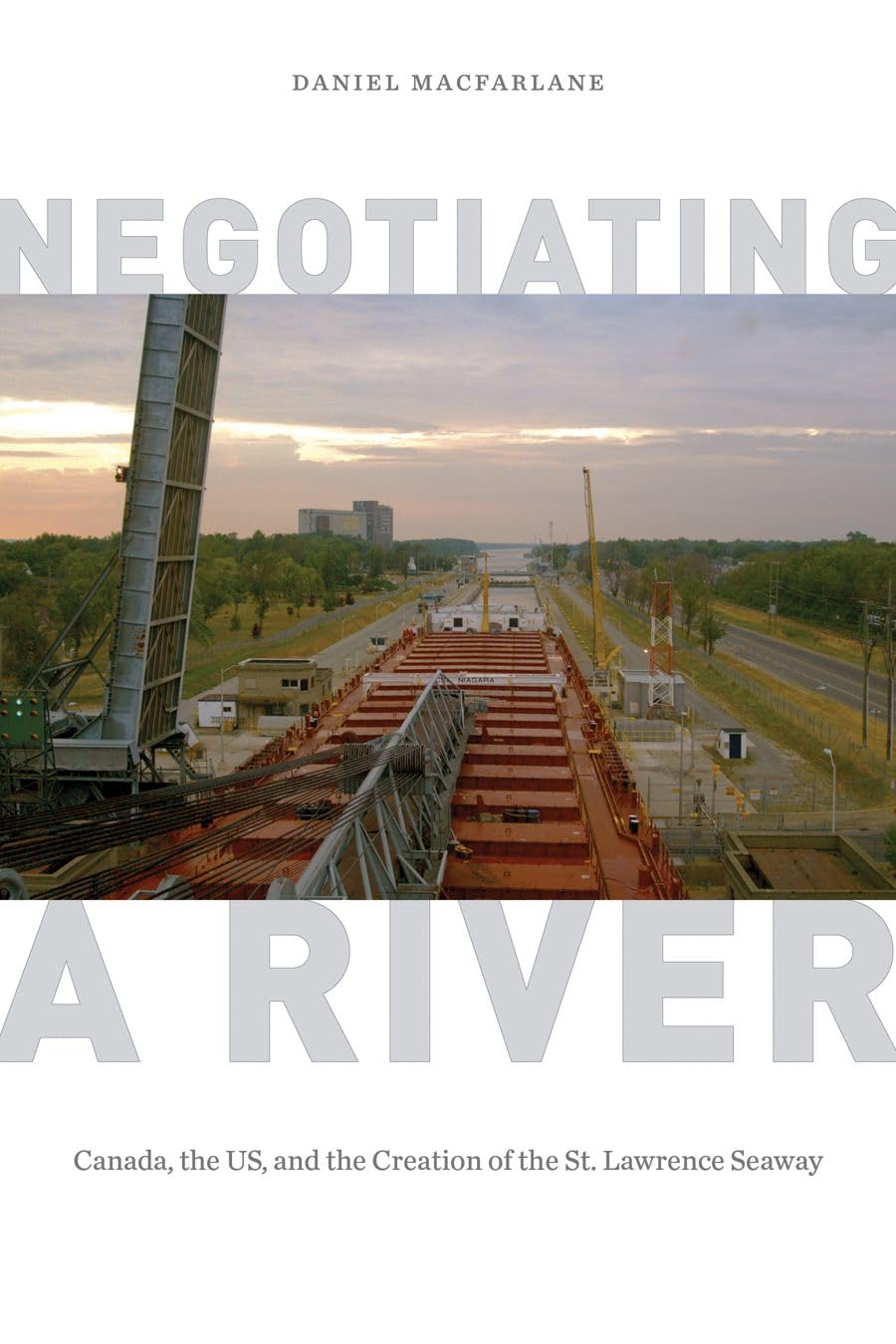
Negotiating a River: Canada, the US, and the Creation of the St. Lawrence Seaway (Nature | History | Society)
$37.95
by Daniel Macfarlane



A megaproject half a century in the making, the planning and building of the St. Lawrence Seaway and Power Project is one of the defining episodes in North American history. Possibly the largest construction undertaking in Canadian history, and one of the most ambitious borderlands projects ever embarked upon by two countries, it also required decades of negotiation and the controversial relocation of thousands of people. Negotiating a River looks at the profound impacts of this megaproject, from the complex diplomatic negotiations, political manoeuvring, and environmental diplomacy to the implications for national identities and transnational relations. Drawing from and speaking to many intellectual constituencies in this remarkably wide-ranging work, Macfarlane deepens our understanding of twentieth-century Canadian history even as he broadens the scope of Canadian environmental historical scholarship and leaves his readers to ponder the illusory boundaries between technologies and environments. -- from the Foreword by Graeme Wynn Daniel Macfarlane combines impressive archival research with a synthetic approach engaging diverse fields, particularly Canada-US relations and environmental history, but also transnational, borderlands, water, hydroelectric, and technological studies. This innovative and often bold book heralds a generation of scholars who will obliterate the lines between subdisciplines and bring Canadian history and historians together. -- Norman Hillmer, professor of history and international affairs, Carleton University and co-author of For Better or For Worse: Canada and the United States into the Twenty-First Century A revealing look at the St. Lawrence Seaway and Power Project -- a megaproject that forever changed both a unique landscape and North American history. Daniel Macfarlane is an associate professor in the Institute of the Environment and Sustainability at Western Michigan University, Kalamazoo. He is also a senior fellow at the Bill Graham Center for Contemporary International History, University of Toronto, and president of the International Water History Association.