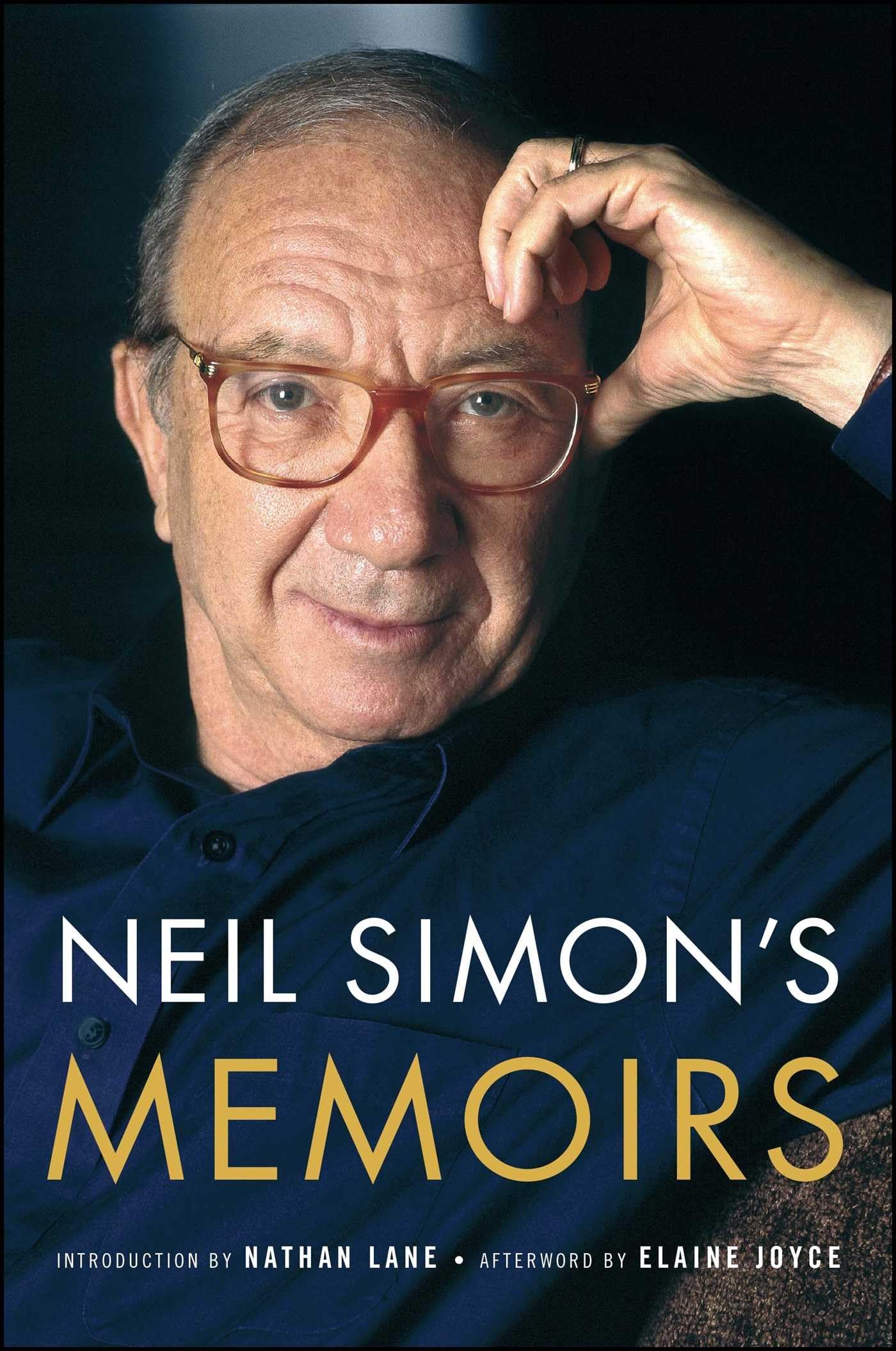



The complete memoirs of Neil Simon, the greatest—and most successful—American playwright of all time, the author of such iconic works as Lost in Yonkers , The Odd Couple , Biloxi Blues , and The Goodbye Girl , now with an insightful Introduction by Nathan Lane. This omnibus edition combines Neil Simon’s two memoirs, Rewrites and The Play Goes On , into one volume that spans his extraordinary five-decade career in theater, television, and film. Rewrites takes Simon through his first love, his first play, and his first brush with failure. There is the humor of growing up in Washington Heights (the inspiration for his play Brighton Beach Memoirs ) where, despite his parents’ rocky marriage and many separations, he learned to see the funny side of family drama, as when his mother thought she saw a body on the floor in their apartment—and it turned out to be the clothes his father discarded in the hallway after a night of carousing. He describes his marriage to his beloved wife, Joan, and writes lucidly about the pain of losing her to cancer. The Play Goes On adds to his life’s story, as he wins the Pulitzer Prize and reflects with humor and insight on his tumultuous life and meteoric career. “Neil Simon’s terrific memoirs are worth revisiting” ( New York Post ). Now, with the whole story in one place, he traces the history of modern entertainment over the last fifty years as seen through the eyes of a man who started life the son of a garment salesman and became the greatest—and most successful—American playwright of all time. Neil Simon is the writer of more than forty Broadway plays, including Barefoot in the Park, The Odd Couple, The Out-of-Towners, and Lost in Yonkers , which won the Pulitzer Prize. Neil Simon’s Memoirs THE HORN BLOWS 1 IN THE SPRING OF 1957, I was unhappily in California working on a television special. I was thirty years old and knew that if I didn’t start writing that first Broadway play soon, I would inevitably become a permanent part of the topography of the West Coast. The very thought of it jump-started me to my desk. I sat at the typewriter and typed out “O N E S H O E O F F,” all in caps and putting a space after each letter and a double space after each word, trying to picture what it would look like up on a theater marquee. Four spaces down, in regular type, came “A New Comedy.” I sat back and studied it. Not a bad start for a first play. Then I suddenly wondered: when they wrote together, did George S. Kaufman type this out or did Moss Hart? No, it must have been Hart. He was the eager young writer poised behind the trusty old Royal machine while Kaufman, the seasoned old pro, would be lying across a sofa in his stockinged feet munching on his handmade fudge, bored by such prosaic labors as manual typing. Kaufman had probably put in enough time punching the keys back in the old days when he was drama critic for The New York Times. How I envied young Moss Hart being in the same room with the great Kaufman, knowing he would be guided through the pitfalls of playwriting much as any cub reporter would feel the security of marching behind Henry M. Stanley as he guided his pack-bearers across the African plain in search of the great missionary, and then, upon finding him, having the coolness and gift of a great journalist to put quite simply and memorably, “Dr. Livingstone, I presume?” . . . But, I had no Henry M. Stanley to teach me the impact of brevity in great moments. As a matter of fact, I had no George S. Kaufman, no fudge, no nobody. I had me. Not only had I not written a play before, I had never written anything longer than twelve pages, which was all that was required for a TV variety sketch back in the mid-1950s. Even that was a major step up from the one-liners I used to write with my brother, Danny, when we were earning our daily bagels working for stand-up comics and sit-down columnists. Now I was faced with 120 pages to feed, complete with characters, plots, subplots, unexpected twists and turns, boffo first-act curtain lines, rip-roaring second-act curtain lines, and a third act that brought it all to a satisfying, hilarious, and totally unexpected finish, sending audiences to their feet and critics to their waiting cabs, scribbling on their notepads in the darkness, “A Comic Genius Hit New York Last Night.” . . . At least Lindbergh had the stars to guide him. I didn’t even know how to change the typewriter ribbon. Nevertheless, I pushed on. I was about to jump four spaces down to write the simple word “by,” no caps, this to be followed by my name a little farther down the page, when it suddenly occurred to me that of the only two lines I had written so far, one of them was inordinately stupid. “A New Comedy” . . . I had seen this printed in the theater section of the Times for eons, seen it on billboards and marquees all over New York, and it never hit me until just now . . . “A New Comedy”? Was this to make it clear to the audiences they sho