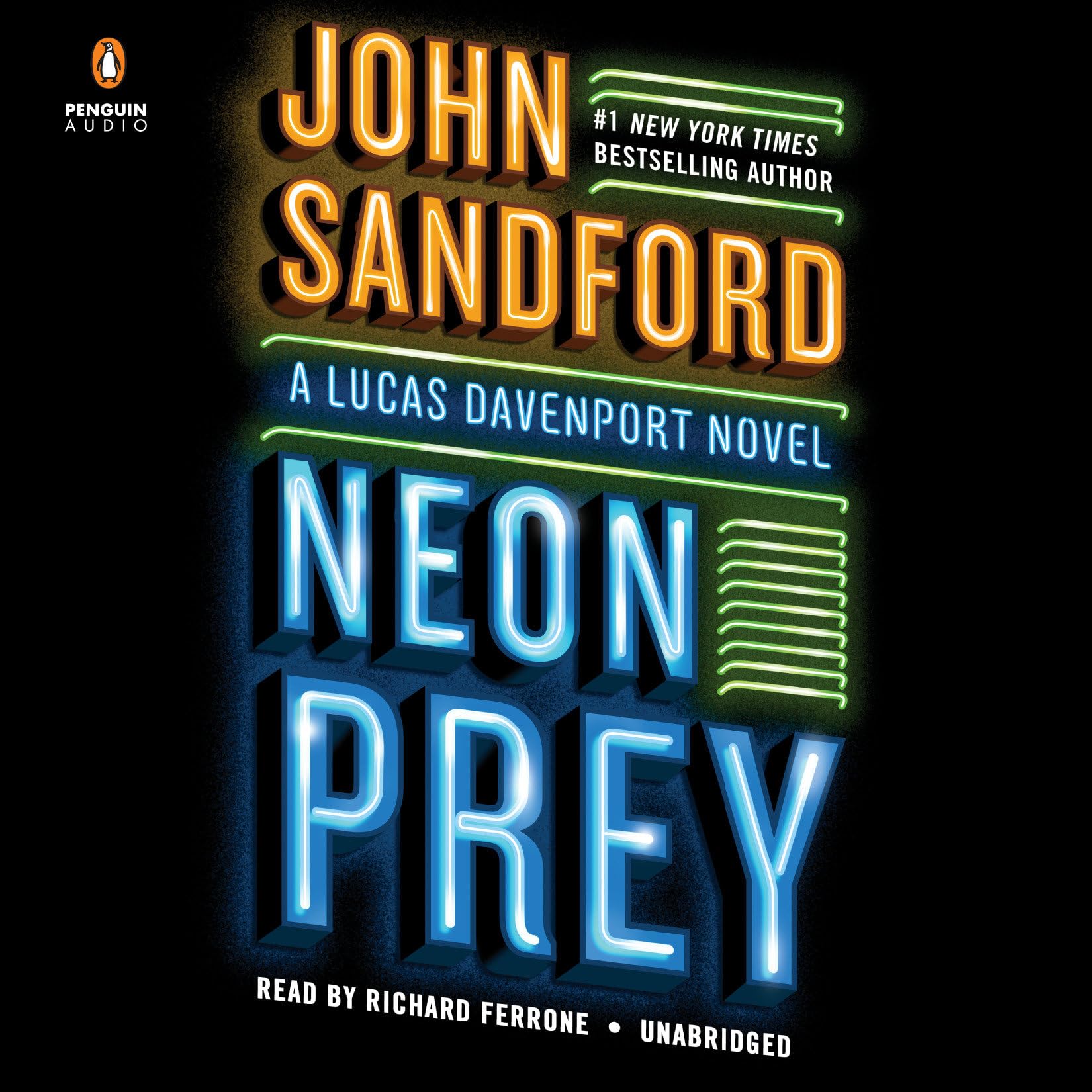



Lucas Davenport tracks a prolific serial killer in this nail-biting #1 New York Times -bestseller from John Sandford. Clayton Deese looks like a small-time criminal, muscle for hire when his loan shark boss needs to teach someone a lesson. Now, seven months after a job that went south and landed him in jail, Deese has skipped out on bail, and the U.S. Marshals come looking for him. They don't much care about a low-level guy--it's his boss they want--but Deese might be their best chance to bring down the whole operation. Then, they step onto a dirt trail behind Deese's rural Louisiana cabin and find a jungle full of graves. Now Lucas Davenport is on the trail of a serial killer who has been operating for years without notice. His quarry is ruthless, and--as Davenport will come to find--full of surprises . . . “[Sandford is] his usual entertaining self in this hard-core adventure....Davenport is an inspired creation.”—Marilyn Stasio, The New York Times Book Review “The Prey novels are wildly entertaining with their clever plotting, mordant humor, and smart-ass dialogue. This one doesn't break the pattern.”— Booklist Praise for John Sandford’s Prey Novels “Relentlessly swift...genuinely suspenseful...excellent.”— Los Angeles Times “Sandford is a writer in control of his craft.”— Chicago Sun-Times “Excellent...compelling...everything works.”— USA Today “Grip-you-by-the-throat thrills...a hell of a ride.”— Houston Chronicle “Crackling, page-turning tension...great scary fun.”— The New York Daily News “Enough pulse-pounding, page-turning excitement to keep you up way past bedtime.” —Minneapolis Star Tribune “One of the most engaging characters in contemporary fiction.”— Detroit News “Positively chilling.”— St. Petersburg Times “Just right for fans of The Silence of the Lambs .”— Booklist “One of the most horrible villains this side of Hannibal.” —Richmond Times-Dispatch “Ice-pick chills...excruciatingly tense...a double-pumped roundhouse of a thriller.” —Kirkus Reviews John Sandford is the pseudonym for the Pulitzer Prize-winning journalist John Camp. He is the author of twenty-eight Prey novels; four Kidd novels; ten Virgil Flowers novels; three YA novels coauthored with his wife, Michele Cook; and three other books. Chapter One Deese was a thin man. He was fast, with ropy muscles, and mean, like an aggressive orangutan. His face was a skull, tight, sly, except where a half dozen wrinkles crossed his sunburnt forehead. He had black eyes and a nose that had been broken into angles like a lump of shattered pottery. He had a red-and-blue tattoo, on one shoulder, of a wolf with a biker's head in its jaws, and, on the other, a witchy Medusa in black ink, with spitting cobras for hair. Smart? Smart enough for the job anyway. People who got close to him usually stepped back: Deese smelled bad. He didn't know it, and people didn't tell him because . . . well, because he was Deese. His boss told one of his associates that Deese smelled like ferret shit; and the boss would know, because he kept a pair of ferrets as pets. Like a lot of Southerners, Deese was big on barbecue and wanted it done right. He brushed the meat lightly on both sides with extra virgin olive oil, seasoned with kosher salt, from the Louisiana salt mines, and coarse black pepper. He added a sprinkling of fil, a powder made of ground sassafras leaves and mostly used with gumbo; but it worked on barbecue, too. He cooked the steaks over peach charcoal, brought by a Georgia peckerwood to the Red Stick Farmers Market in Baton Rouge. He'd take the tenderloins out of the refrigerator, slice them vertically to get two long, thin steaks. He'd cover the steaks with a pie tin and leave them on the kitchen counter, protected from the flies, while the grill got right. He wanted high heat, and then he'd lay the meat down close to the charcoal and let it go for about four minutes, which would get it done medium rare. His old man probably would have slapped him on the face if he'd seen him putting Heinz 57 Sauce on his dinner plate, and while it was true that too much sauce could flat ruin a steak, all Deese wanted was a tiny dab per bite. Every once in a while, he'd get a fresh liver, slice it and cook it with onions in his oven, crispy, then pile on the ketchup. Cooking was a form of meditation for Deese, though heÕd never think of it that way; meditation was for hippies and nerds and people you pushed off the sidewalk. On this night, as he went through his routine, he thought about the man heÕd been hired to hurt. Not kill, but hurt. Hurting was harder than killing. When he was hired to kill somebody, he'd walk up and do it with a street gun, which he threw in the nearest sewer. Most of the time, he left the body where it landed. In some cases, where the target had to disappear, there was more planning involved, but usually not a struggle. He'd hit the guy,