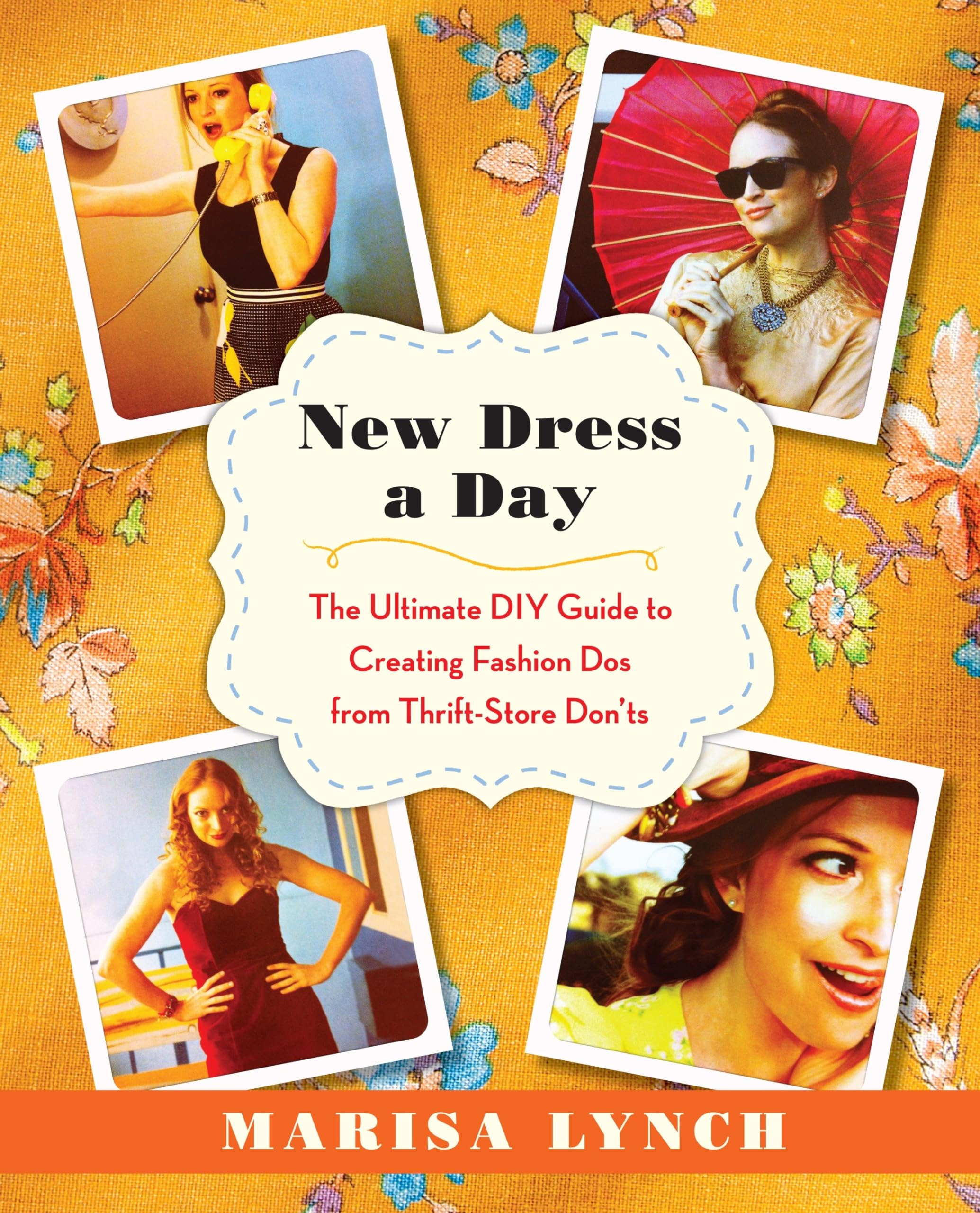
New Dress a Day: The Ultimate DIY Guide to Creating Fashion Dos from Thrift-Store Don'ts
$20.00
by Marisa Lynch



GO FROM THRIFT-SHOP CHEAP TO RUNWAY CHIC EACH AND EVERY DAY! Based on her wildly popular blog of the same name, guerrilla seamstress Marisa Lynch shows you how to easily (and affordably!) transform your wardrobe from frumpy to fabulous! With just a snip here and a stitch there, your basement bargains will rival anything in designer collections. Yes, with a little imagination—and DIY tools like needles, thread, and safety pins—you too can update an outdated castoff. Inside you’ll discover how to • ace the sewing basics (remember: safety first!) • create DIY designer look-alikes • cut Flashdance -inspired sweatshirts • make an old, tired muumuu a smashing must-have • give bridesmaid dresses a second life • dye your way to a vibrant new wardrobe • whip up accessories in seconds • style the same dress seven different ways Complete with colorful before-and-after photos, fun sidebars, and even a groovy sewing song playlist to get you in the zone, New Dress a Day proves that you don’t need a sewing machine or a big budget to turn unfashionable trash into stylish treasure. Marisa Lynch is a fashion blogger, consultant, and founder of the blog New Dress a Day. A graduate of the University of Southern California, she is a frequent guest on E! Entertainment Television and has appeared on The Early Show and been featured in the Los Angeles Times , Time , and Bust , among other publications. She lives in Los Angeles. chapter one sewing 101 hese are sewing’s basic moves, moves I learned in middle school while hammering out a teal sweatshirt (yes, teal) and humming Boyz II Men (“Although we’ve come . . . to the end of the rooooad . . . ”). In practicing these basics, grab your needles and thread and make sure you’ve got lots of light (and a good playlist on in the background) (see p. 123). Working at a desk or dining room table where you can set out your needles and spools of thread is ideal; however, you can couch it as long as you don’t have butterfingers! Hidden needles in the upholstery are nobody’s picnic. (Tush + needles = a bloodcurdling scream rivaling Janet Leigh’s in Psycho.) hand sewing If you’re one of those people who say, “but I can’t even sew a button,” prepare to remove that excuse from your vocabulary. With just some needles, a little bit of thread, and the ability to tie a knot, you can hand sew your little heart out! There are a bunch of different kinds of stitches that you can learn, but we’ll begin with the easiest and most useful (in my humble opinion)—the top three I use all the time. Running stitch: Prepare to master this basic stitch in no time—easy, breezy, and doable for anyone. 1. Grab a piece of thread. I usually trim thread longer than necessary because it’s better to have too much than not enough and run out before you’re done. A good amount to keep in mind is about 1.5 to 2 times the length of the piece you need to stitch. Tie a knot at one end and take the other end and thread it through the eye of a needle. 2. Bring the needle up through the underside of the fabric (the knot will let you know when to stop). Bring the needle back down about 1⁄8 inch away from your first point. 3. Begin stitching from right to left, with evenly spaced stitches. The spacing between these stitches should be small, technically, but you can eyeball about 1⁄8 inch between stitches—do what works for you and the piece. 4. Repeat Steps 2 and 3 until a seam is finished, a hole is mended, or you want to take a snack break to Yogurtland. Backstitch: This stitch is one of the strongest, great at keeping seams together—meaning you won’t have to worry about your pants tearing at the seam again when you drop your phone for the hundredth time. This happened to me and I didn’t have anything to tie around my waist. Two words. Epic. Fail. I think of this stitch as drawing an ocean wave—it goes forward, then back a little, then forward more, and back a little more. 1. Bring a threaded needle up through the underside of the fabric. Bring the needle back down 1 inch forward from where the needle came through. 2. Bringing your needle backward through the underside of the fabric in the middle of the stitch that was made, go another inch forward and bring the needle back down through the fabric. 3. Now bring your needle backward through the underside of the fabric again (in the middle of the last stitch) and make another stitch forward. 4. Continue this forward, backward, forward, backward movement until the seam has been stitched up. Overcast stitch: There’s nothing foggy about this stitch, (insert drum badump-ump here,) which is perfect for sewing appliqués or fabric on tank tops. The zigzaggy overcast stitch is my favorite for putting patches or felted shapes on outfits because it gives a total handmade look. 1. Bring the needle through the underside of the fabric and bring it back down about 1⁄2 inch through the top of the fabric, on a slant. 2. Bring the needle ba