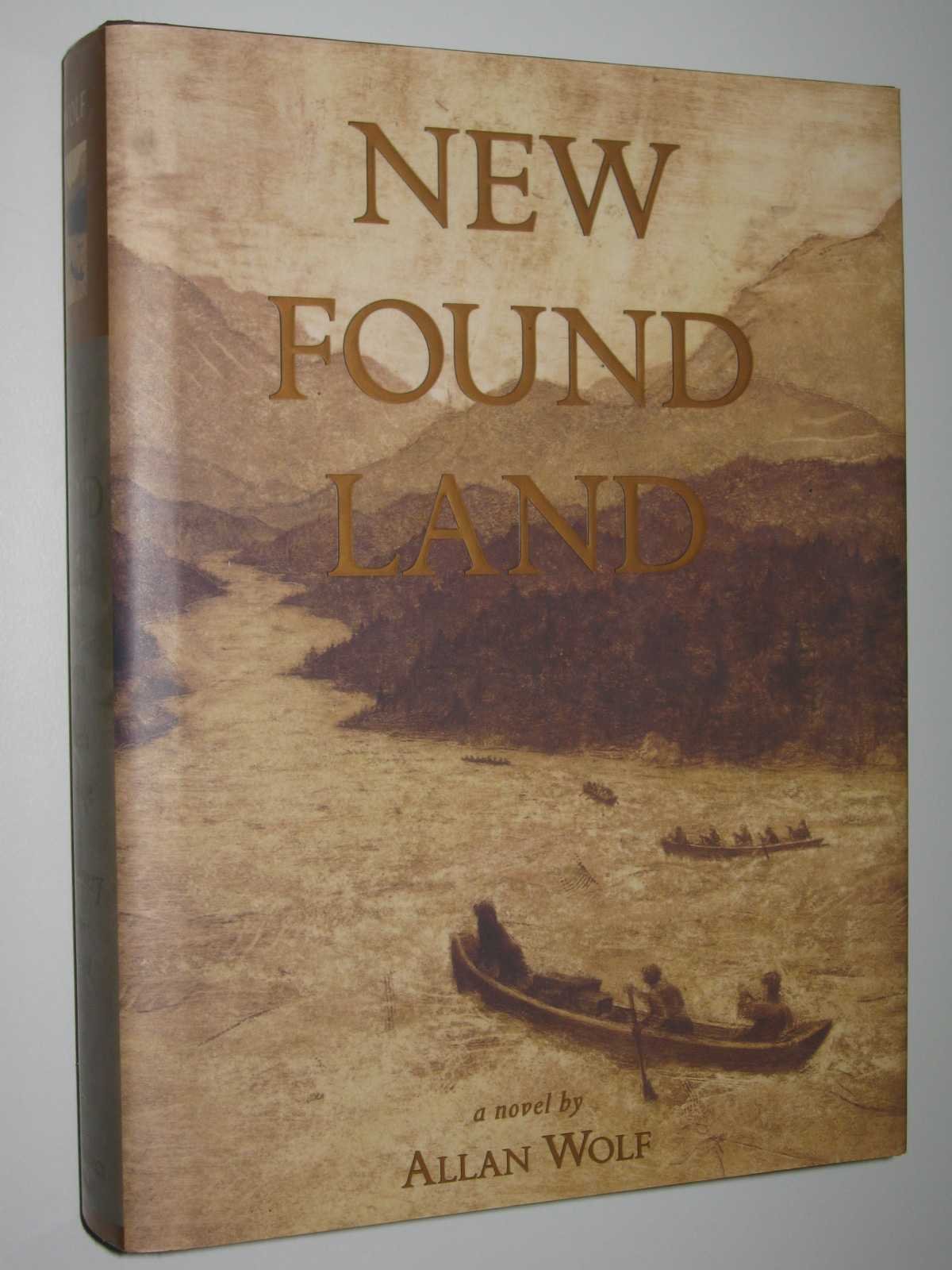



Follow Lewis and Clark and their crew on a perilous trek through the uncharted West in this extraordinary debut novel. I mean to tell you this story the only way I know how. That is to say, I will tell it like a river. It may meander here and there, but in the end it will always find its way to the sea. Two hundred years ago, Meriwether Lewis and William Clark launched their wooden boats up the Missouri River in search of the illusory Northwest Passage, a journey that would capture the American imagination and help forge a young nation's identity. Now, in a riveting debut novel, Allan Wolf tells the story of this extraordinary voyage through the eyes of not only the famed pair but also several members of their self-named Corps of Discovery. Here, in powerful, lyrical language, is a medley of voices from a surprisingly diverse crew — from the one-eyed French Indian fiddler who pilots the boats to Clark's African American slave; from the young Shoshone woman who has a baby en route to Lewis's Newfoundland dog, a "seer" whose narrative resonates long after the book is closed. Grade 7 Up–This amazing work presents the exciting adventure of the Lewis and Clark expedition through the eyes of its participants. Using poetic form, Wolf tells the story in alternating narratives by a dozen of the human participants and Seaman, the Newfoundland dog belonging to Meriwether Lewis. The dog, called Oolum here, supposedly his private name, serves as the omniscient narrator. His prose entries provide a running description of and commentary on the events. Factual details abound, reflecting the intense research on which the book is based. But Wolf has managed to give intriguing, well-developed personalities to the Corps of Discovery members who tell this tale. The disparate group included educated men, adventurers, traders, a captured teenage Shoshone girl, and a slave belonging to William Clark. Talk of freedom from different points of view is enlightening as is Clark's rationalization for slavery. The dramatic effects of the expedition on the participants come to life as they share their experiences and thoughts with readers. The mind-boggling reality of what these people went through to explore and expand this nation instills appreciation for their sacrifices and accomplishments. In notes following the novel, Wolf describes the limited literary liberties he took with some of the details. For example, Thomas Jefferson's closing narrative includes reminiscences of a fictitious boyhood relationship with Lewis. This is an extraordinary, engrossing book that would appeal most to serious readers, but it should definitely be added to any collection. –Renee Steinberg, formerly at Fieldstone Middle School, Montvale, NJ Copyright © Reed Business Information, a division of Reed Elsevier Inc. All rights reserved. This book, which is based on extensive historical research, uses nontraditional narrative formats to successfully re-create the period and convey the excitement and anxiety of venturing into the unknown. It also puts distinct human faces on famous and not-so-famous names. Wolf's primary narrator is Lewis' dog, Seaman. Thirteen other voices, ranging from President Jefferson and Captains Lewis and Clark to drinker Hugh Hall, and York, Clark's slave, relate the events from their perspectives. These diverse voices reveal in free verse the class structure of the expedition, as well as historical attitudes toward African Americans, Indians, and women. A novel that willl enrich American History studies and stimulate classroom discussion. Linda Perkins Copyright © American Library Association. All rights reserved SACAGAWEA THE BIRD WOMAN After my eleventh winter I was kidnapped by our enemies and made to be their slave. My people, the Shoshone, were in hiding in the Shining Mountains at the place where three rivers become one. In times of war, we never left the camp unescorted. That day the young brave Split Feather watched over my cousin and me. Split Feather kept lookout from atop his horse while we two girls crouched by a creek mashing pah-see-goo roots with a heavy stone. We were filled with hope. Spring had arrived. We would soon return to the plains to hunt the buffalo. Soon there would be skins to cover our tepees. Soon there would be meat to fill our stomachs. I was yet a young girl, but a strong one. Cousin was older and due to marry Split Feather soon. They brought joy to each other and their union was a blessing to our family. Long ago my father had promised me to Sitting Hawk, an important Shoshone scout. I was to become his wife, but not until I reached womanhood. Despite our hunger, Cousin and I were always laughing. That day was no different. She held her basket, filled with roots, against her stomach. "Look, Watches the Sky," she said, joking. "I am pregnant with many small children." Even serious Split Feather cracked a smile. Suddenly we heard the sound of t