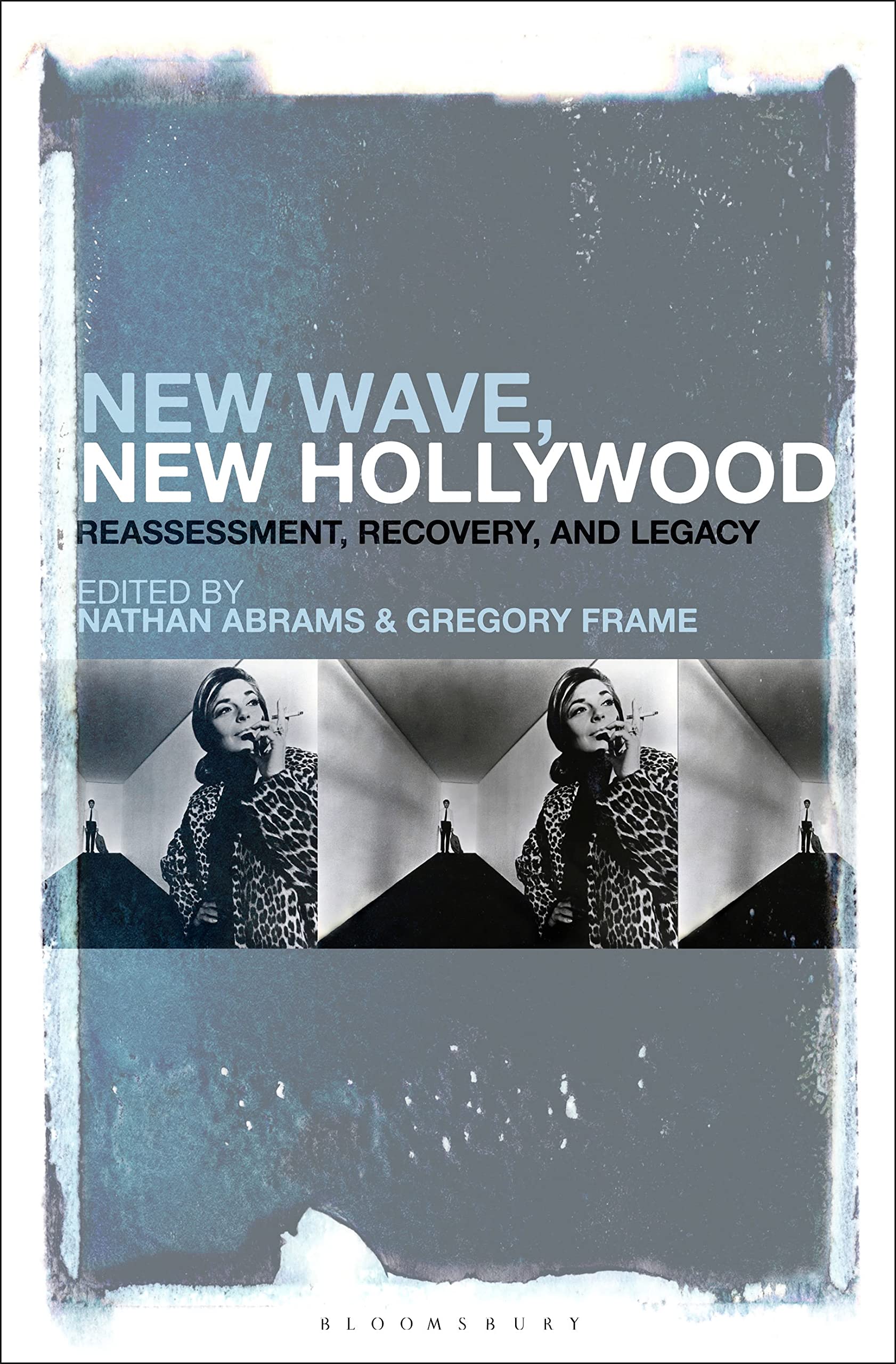



As a period of film history, The American New Wave (ordinarily understood as beginning in 1967 and ending in 1980) remains a preoccupation for scholars and audiences alike. In traditional accounts, it is considered to be bookended by two periods of conservatism, and viewed as a (brief) period of explosive creativity within the Hollywood system. From Bonnie and Clyde to Heaven’s Gate , it produced films that continue to be watched, discussed, analysed and poured over. It has, however, also become rigidly defined as a cinema of director-auteurs who made a number of aesthetically and politically significant films. This has led to marginalization and exclusion of many important artists and filmmakers, as well as a temporal rigidity about what and who is considered part of the ‘New Wave proper’. This collection seeks to reinvigorate debate around this area of film history. It also looks in part to demonstrate the legacy of aesthetic experimentation and political radicalism after 1980 as part of the ‘legacy’ of the New Wave. Thanks to important new work that questions received scholarly wisdom, reveals previously marginalised filmmakers (and the films they made), considers new genres, personnel, and films under the banner of ‘New Wave, New Hollywood’, and reevaluates the traditional approaches and perspectives on the films that have enjoyed most critical attention, New Wave, New Hollywood: Reassessment, Recovery, Legacy looks to begin a new discussion about Hollywood cinema after 1967. “New Wave, New Hollywood is an engaging and fresh approach to the preexisting scholarship that opens a myriad of critical potential. Its emphasis on diversity and the questioning of the parameters of how we define the New Wave will hopefully generate new conversations that look first to the more neglected film artists.” ― Film Matters “This essay collection would serve all readers interested in the complex history of Hollywood in the 1970s ... cogent and important; the editors have created a valuable collection that can shed new light on a time period that has had more than its fair share of critical attention.” ― Journal of American Culture “A fascinating array of essays aimed at revising our understanding of the Hollywood New Wave of the 60s and 70s.” ― Robert P. Kolker, Emeritus Professor of English, University of Maryland, USA “A wide-ranging re-appraisal of the 'New Wave', which both underlines and questions its enduring significance for American film scholarship, and serves to reshape its parameters in important and timely ways. Essential reading for anyone wanting to understand this era and its vexed legacy.” ― James Lyons, Associate Professor in Screen Studies, University of Exeter, UK Nathan Abrams is Professor of Film Studies at Bangor University, UK. He is the founding co-editor of Jewish Film and New Media: An International Journal . He is the author and editor of a number of books and articles, including most recently The New Jew in Film: Exploring Jewishness and Judaism in Contemporary Cinema (2012). He is currently editing a collection entitled Hidden in Plain Sight: Jews and Jewishness in British Film, Television, and Popular Culture (forthcoming). Gregory Frame is Teaching Associate in Film and Television Studies at the University of Nottingham, UK. He is the author of The American President in Film and Television: Myth, Politics and Representation (2014). He has published articles about the politics of American film and television in Journal of American Studies , New Review of Film and Television Studies , and Journal of Popular Film and Television .