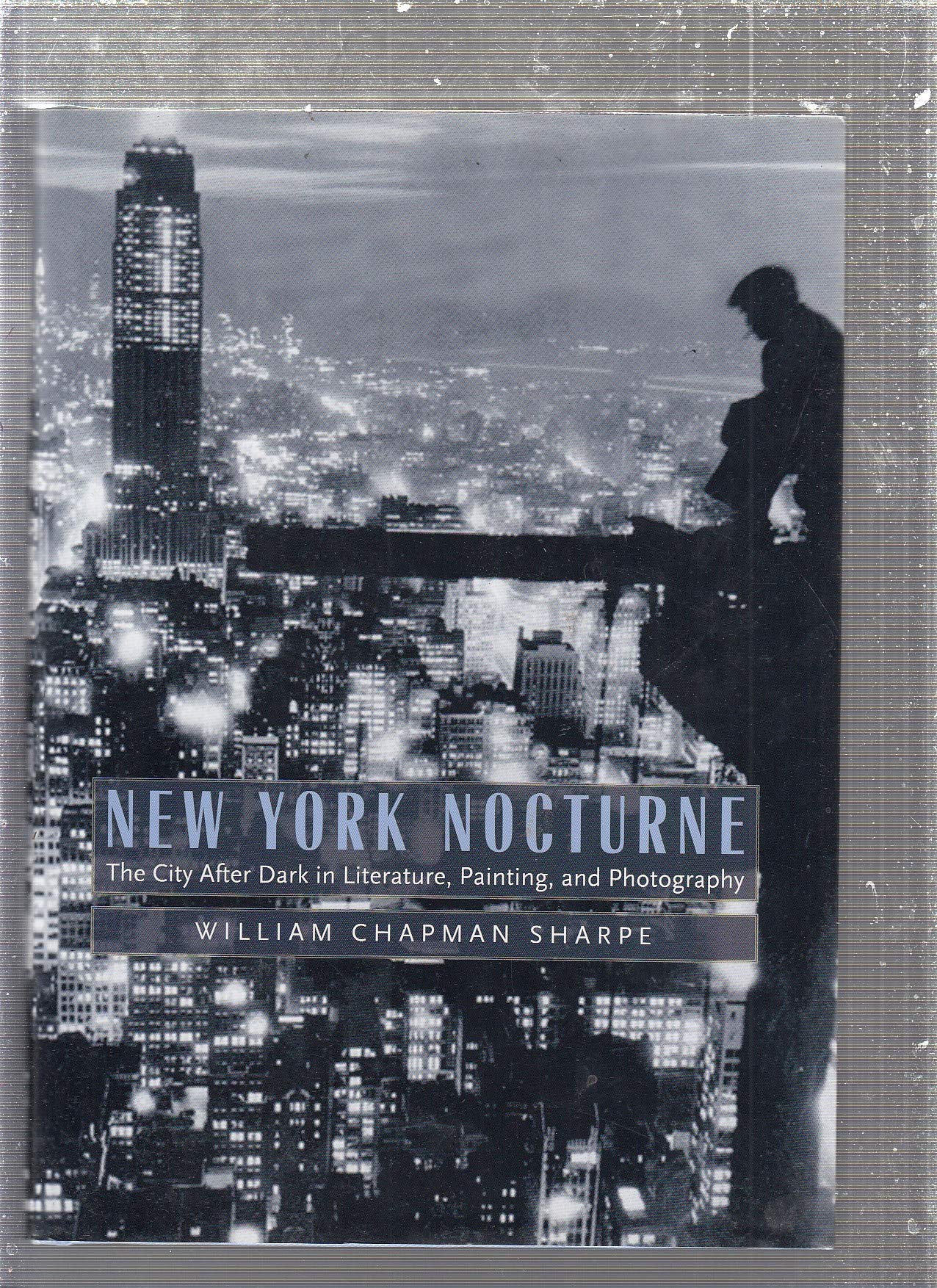
New York Nocturne: The City After Dark in Literature, Painting, and Photography, 1850-1950
$37.65
by William Chapman Sharpe



As early as the 1850s, gaslight tempted New Yorkers out into a burgeoning nightlife filled with shopping, dining, and dancing. Electricity later turned the city at night into an even more stunning spectacle of brilliantly lit streets and glittering skyscrapers. The advent of artificial lighting revolutionized the urban night, creating not only new forms of life and leisure, but also new ways of perceiving the nocturnal experience. New York Nocturne is the first book to examine how the art of the gaslit and electrified city evolved, and how representations of nighttime New York expanded the boundaries of modern painting, literature, and photography. Exploring the myriad images of Manhattan after dark, New York Nocturne shows how writers and artists took on the city's nocturnal blaze and transformed the scintillating landscape into an icon of modernity. The book traces key metaphors of the nighttime city: a seductive Babylon in the mid-1850s, a misty fairyland colonized by an empire of light in the early twentieth century, and a skyscraper-studded land of desire that became a stage for the voyeurism and violence of the 1940s and 1950s. The epilogue suggests how these themes have continued to shape our vision of nighttime New York ever since. Abundantly illustrated, New York Nocturne includes original readings of works by Whitman, Poe, Whistler, Riis, Stieglitz, Abbott, O'Keeffe, Stella, Hopper, Weegee, Ellison, Jacquette, and many others. Collectively, they tell a fascinating story about the relationship between night, art, and modern urban life. "Winner of the 2009 Peter C. Rollins Award, Northeast Popular Culture/American Culture Association" "Winner of the 2009 MSA Book Prize, Modernist Studies Association" "Sharpe says that the 'first dark glimmer' for his book came as he was looking at work by the expatriate American painter James Abbott McNeill Whistler. . . . Sharpe shows how the aesthetics of [Whistler's] 'nocturnes' abroad shaped paintings and photographs of night in New York, including work by such figures as John Sloan, Arthur Stieglitz, and Edward Steichen. The nocturne form, he says, helped photography claim status as an art. Beyond words, the book offers nearly 150 often haunting and sometimes touching images." ---Nina C. Ayoub, The Chronicle of Higher Education "By now an archetypal image, the New York skyline at night captures the excitement and beauty of a city still humming long after bedtime. . . . William Chapman Sharpe offers an academic tour through a landscape that was transformed by gaslight and the advent of electricity. . . . Artists such as Joseph Stella, Georgia O'Keeffe, Edward Hopper and Faith Ringgold were drawn to the new glow, and writers from Joseph Conrad to Ralph Ellison came to investigate urban life after dark. Sharpe's examination of nocturnal art and storytelling tracks the ways illumination changed city life forever." ---Patrick Huguenin, New York Daily News "New York City claimed the title 'capital of the 20th century' not owing to its magnitude and energy but for its hold on the imagination of people around the world. While we wait to see what will succeed it as capital of the 21st, Columbia University Professor of English William Chapman Sharpe provides a brilliant look back in New York Nocturne . . . . Ranging freely between the literary and visual arts, Sharpe seeks the roots of American modernism in nighttime city life. He has something involving and informative to say about every topic he touches." ---Kenneth Baker, San Francisco Chronicle "Night has long been the frontier of the urban world, a place where crime is an omnipresent danger, where sexual violence or fulfillment hides just around a darkened corner, and where loneliness triumphs over human connectedness. For a society that has grown up taking electricity for granted, New York Nocturne is illuminating. . . If electricity has transformed, if not completely solved the mysteries of the night, Sharpe skillfully interprets how artists have approached the meanings of darkness and, in a Melvillean touch, of light itself." ---D. Schuyler, Choice "In this gorgeous, erudite book, [Sharpe] examines the myriad ways that writers, painters, and photographers have represented New York nightlife, beginning in the mid-19th century, when works by Herman Melville, Walt Whitman, and Edgar Allan Poe dramatized the moral perils of the artificially lit city. . . . Sharpe, whose own affection for the city is charmingly apparent here, insists throughout that artists and writers haven't simply reacted to the changes in urban existence; rather, they have 'helped turn the unscouted terrain of the urban night into a legible part of contemporary life.'" ---Barbara Spindel, Barnes and Noble.com "My favorite book of the year. New York Nocturne is a chronicle in words, photographs and paintings of New York City at night. . . . Although this is a book about New York City, it's also a book about artists, w