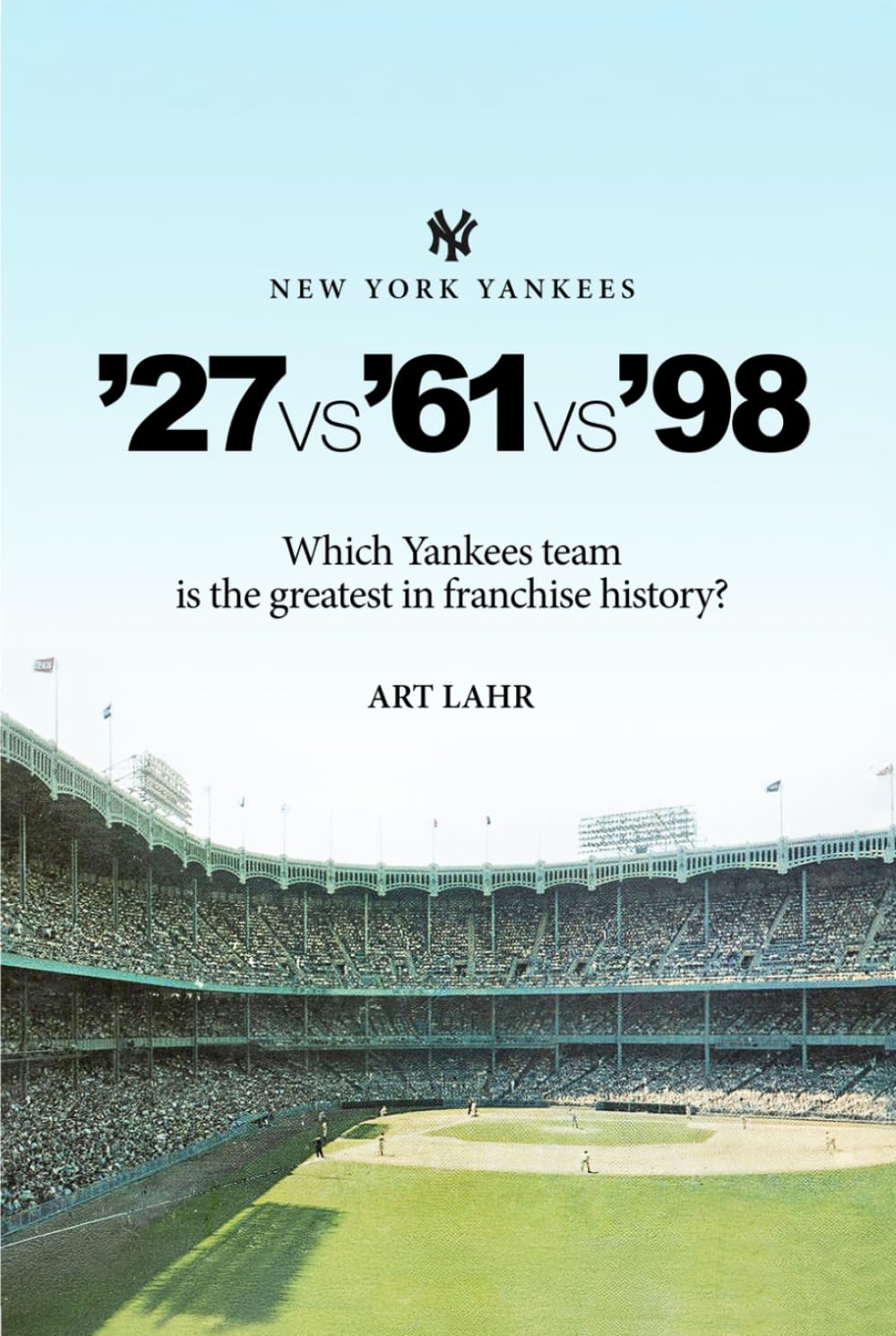



Baseball has always been a game of arguments—the kind that stretch across generations, across barstools, across boroughs. And no argument is more enduring, more electric, or more impossible to settle than this: which team stands as the greatest in the storied history of the New York Yankees? Is it the thunderous dominance of the 1927 New York Yankees, powered by the mythic presence of Babe Ruth and Lou Gehrig? The relentless, record-chasing force of the 1961 New York Yankees, where Roger Maris and Mickey Mantle captivated the world in a home run race for the ages? Or the modern juggernaut of the 1998 New York Yankees, a machine of precision, depth, and dominance led by Derek Jeter? New York Yankees '27 vs '61 vs '98 doesn’t just revisit these legendary teams—it puts them on trial. This is not a surface-level comparison or a nostalgic stroll through box scores. This is a deep, immersive exploration that blends hard statistics with vivid storytelling. Every roster is dissected. Every player is brought to life through detailed biographies. Every season is relived through the lens of performance, pressure, and legacy. But what elevates this book beyond numbers is its sense of place and time. Step into the roaring energy of New York City in 1927, when Ruth’s home runs symbolized excess and optimism. Feel the tension of 1961, a city and a nation on edge as Maris chased history under a relentless spotlight. Then move into 1998, where baseball—and the Yankees—became a global brand of excellence in a rapidly changing world. The book doesn’t shy away from the larger picture either. It examines the evolving landscape of Major League Baseball across these eras—how the game changed, how competition shifted, and how greatness itself must be measured differently depending on the time. And that’s where the real intrigue lies. Because greatness isn’t just about numbers—it’s about context. It’s about dominance relative to competition. It’s about pressure, expectations, and the ability to define an era. This book arms you with everything you need—data, context, and compelling narrative—to form your own conclusion. But don’t expect an easy answer. The deeper you go, the more the debate intensifies. In the end, New York Yankees '27 vs '61 vs '98 does something rare: it doesn’t just revisit history—it challenges it. And long after the final page, one question will stay with you: Who really was the greatest