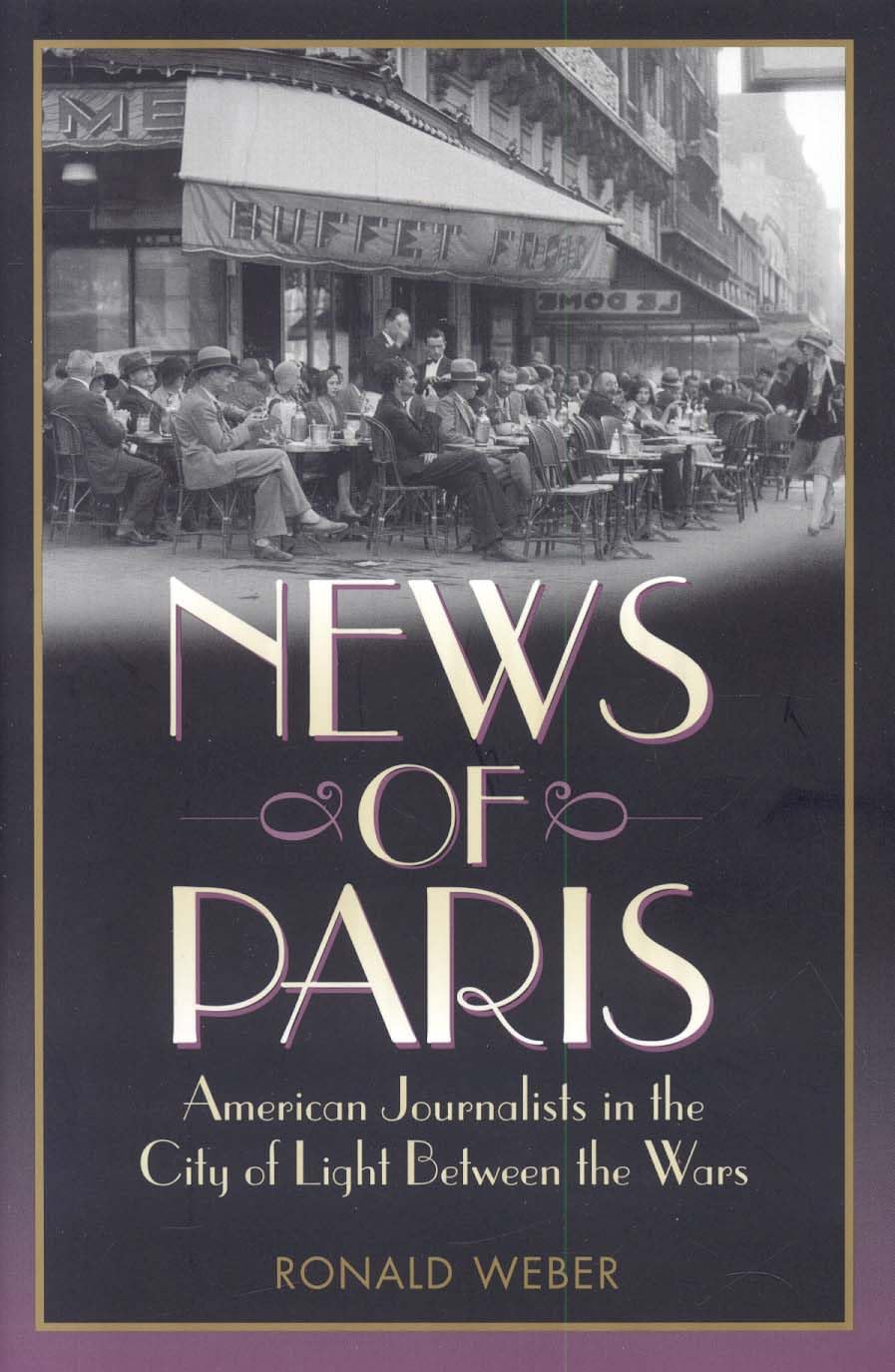
News of Paris: American Journalists in the City of Light Between the Wars
$16.01
by Ronald Weber



A bumptious narrative history of American newspapermen in Paris in the 1920s and 1930s, a time when serious journalism still went hand in hand with relative poverty, good times, and a carefree spirit cultivated by eccentric personalities. An absorbing and delightful book. Lured by the romance and low cost of life in Paris after World War I, aspiring writers and journalists joined the throngs of American expatriates living in the City of Light. Drawing on memoirs, letters, and writings of Al Laney, William L. Shirer, Eric Sevareid, Harold Stearns, and others, Weber recalls a time and place that offered freedom from the rigidity of a nation that looked askance at sex and alcohol and a host of other diversions and ideas. Liberated from American social conventions of the time, Paris sparked the careers of literary luminaries including Ernest Hemingway, Gertrude Stein, F. Scott Fitzgerald, John Dos Passos, Henry Miller, e. e. cummings, Hart Crane, and Archibald MacLeish. Weber focuses on those writers who plied the trade of journalism, working for newspapers, magazines, and news services, providing news for readers on both sides of the Atlantic hungry for broader perspectives on the world. Readers interested in American journalism as practiced abroad in the 1920s and 1930s will enjoy this engaging book. Vanessa Bush Copyright © American Library Association. All rights reserved “What fun! News of Paris evokes the romantic in those of us who wish we had been there. Listen carefully, and you can hear Gershwin's 'American in Paris' in the background.” ―Terence Smith, Special Correspondent, Newshour With Jim Lehrer “Ronald Weber gives us an odd and intriguing look at a rarely explored corner of cultural history. Aging journalists will love it, and so will just about everyone else.” ―Tony Hillerman “Weber has found and entertainingly explored one of the Lost Generation's lost corners in this engagingly readable history.” ―Richard Schickel “What a treat this book is.” ―Morley Safer, E son du grisli “Faces frozen in...b&w photos become animated in this superb history, thanks to Weber's fluid, detailed writing and flair.” ― Publishers Weekly “ News of Paris is one of those agreeable books that make you wish you could have lived then and done that.” ―Roger K. Miller, Pittsburgh Tribune-Review “Readers interested in American journalism as practiced abroad in the 1920s and 1930s will enjoy this engaging book.” ―Vanessa Bush, Booklist “A useful reminder that the American presence in Paris...was larger and more varied than is usually understood.” ―Jonathan Yardley, The Review of Higher Education “It was a memorable period, and this is a memorable book.” ―Norman Rowlinson, The Buffalo News “A vivid account.” ― Kirkus Reviews “Weber's book is an old war chest full of stories...these journalists are fun to spend time with.” ―Marc Weingarten, International Herald Tribune “Captures the vitality and verve of Paris in the interwar years.” ―Marie Marmo Mullaney, Library Journal “Most accessible to readers who understand the cultural and political environment of Europe between the wars.... Recommended.” ― Choice Reviews “This is a good-old-days kind of book....Rich entertainment.” ― Columbia Journalism Review “It was...a community with a delightfully high tolerance for eccentric behavior, and, er, ingenuity, which Weber...details with verve.” ―Robert Whitcomb, The Weekly Standard “Hemingway is here, but the colorful lesser lights make for even better copy.” ― Santa Barbara News-Press “This is a richly anecdotal history of the American newspaper people-Ernest Hemingway and Henry Miller among them-who flocked to Paris during the 15 years after the armistice that ended World War I.” ― San Juan Star “One of those agreeable books that makes you wish you could have lived then and done that....writing is solid.” ― Arkansas Democrat Gazette “The book's writing is solid.” ― Janesville Gazette “This book makes an important and lively contribution to the scholarship on the period.” ― American Historical Review “An old war chest full of stories about this intoxicating period in journalism.” ―Marc Weingarten, The New York Times Used Book in Good Condition