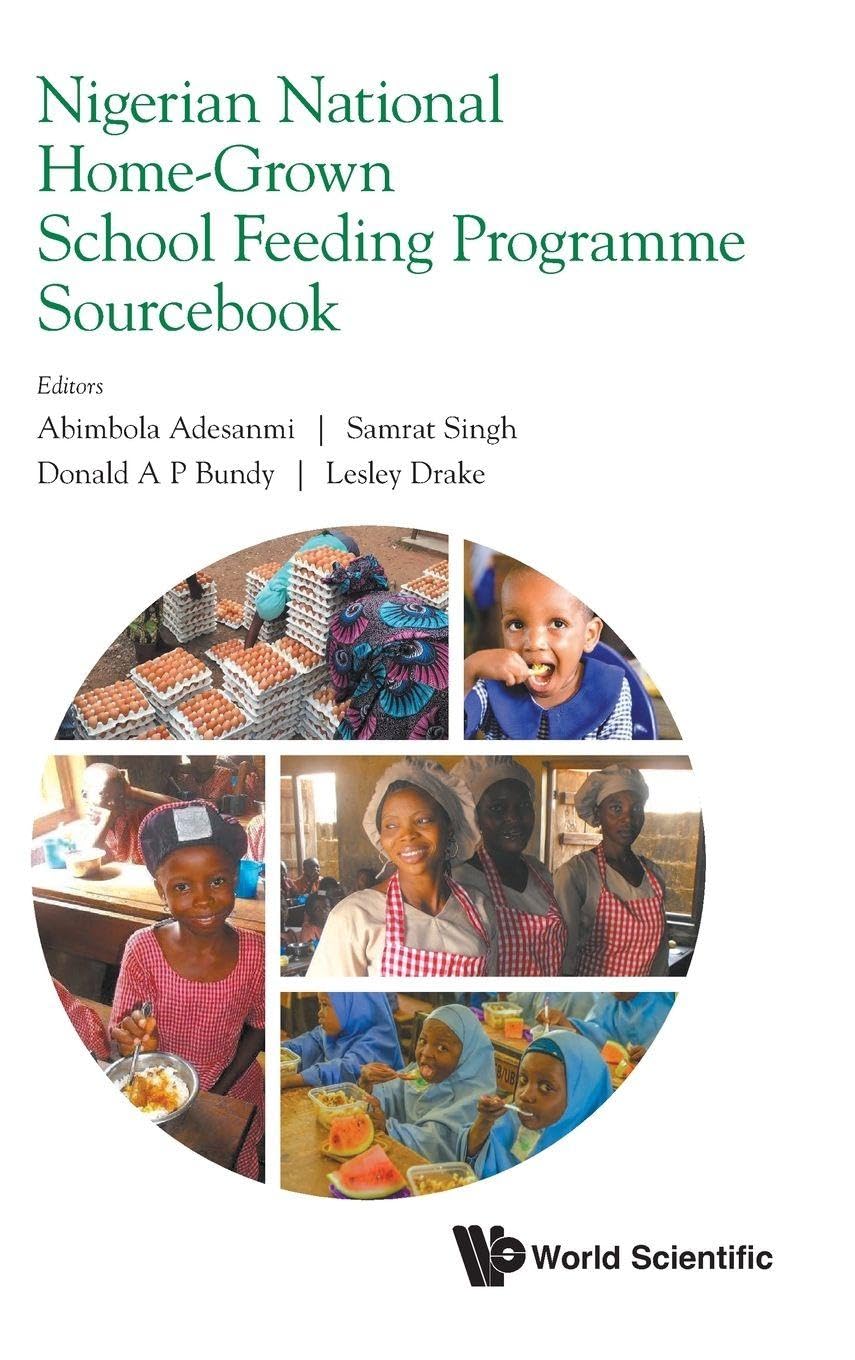
Nigerian National Home-grown School Feeding Programme Sourcebook
$98.00
by Abimbola Adesanmi



School feeding is the world's most extensive safety net programme, with nearly one in two primary school children receiving a meal every school day. Over the last decade the coverage has doubled in Africa to 65.9 million school children, with the fastest rate of growth in Nigeria, up from 1.05 million in 2017 to around 10 million in 2022. Nigeria implements one of the largest school meal programmes in Africa, designed around four key principles: transparency, equity, efficiency, and sustainability. Besides providing nutritious daily school meals, the programme has created 106,000 jobs, mainly for women, and provides reliable output support for over 200,000 local farmers. It also supports the local food economy across sectors such as poultry and aquaculture by sourcing over 7.6 million eggs and 98 metric tonnes of fish products weekly. This sourcebook provides critical insights into the development, governance, and implementation of this large and complex safety net programme, led by multiple state governments and the federal government. The book, launched on 1 March 2023 at the African Union Summit on the African Day of School Feeding in Addis Ababa, is essential reading for researchers, implementing agencies, and policymakers. The editors of this book were privileged to be part of the growth of this exceptional national programme. "The Nigeria National School Feeding Sourcebook is a great resource for both the communities and SF practitioners. It's easy to read and thus the information therein very accessible. Since the SB was developed in a collaborative, inclusive manner, many users can relate to it and own the content. This is testament to the fact that if SF programmes are developed with a multisectoral lens in check, the right level of coordination and dedication, they can deliver the desired results to the learners." --Boitshepo Bibi Giyose, Head of Nutrition, AUDA-NEPAD "Nigeria's HGSF programme represents a model of exemplar good practice with many lessons learned for other countries to call upon. The case studies showcased in this excellent Sourcebook highlight that HGSF can be a real driving force in enhancing a country's socioeconomic development, food security and nutrition and beyond. The findings and reflections are timely, not only for other countries promoting HGSF, they also contribute to the future rethinking and practice on how HGSF can be better designed and implemented as a key driver for food system transformation while helping to achieve global climate, food and biodiversity goals." --Danny Hunter, Principal Scientist, Alliance of Biodiversity International and CIAT Abimbola Adesanmi is an experienced food security and nutrition specialist with over 15years' experience in nutrition, food security, school and public health nutrition programming that includes driving defined development through programmes. As the Country Director, Partnership for Child Development in Nigeria, she was seconded to serve the Government of Nigeria as Program Manager of National Homegrown School Feeding Program and then the Senior Special Assistant to the President of the Federal Republic of Nigeria on Home Grown School feeding domiciled in the Office of the Vice President (VP), in that role she led the implementation of the National Home-Grown School Feeding (HGSF) Programme one of the largest school feeding programs in Africa and was responsible for development of frameworks and structures, that align with global HGSF standards, strengthening the school health, nutrition, and agricultural value chains. She provided guidance, and brought consistency between the different levels of government, ministries, and development partners. Abimbola holds a post-graduate degree in Public Health Nutrition from the University of Ibadan, a certificate in Global Health from Imperial College London as well as a certificate in behavioural insights in public policy from Harvard Kennedy School of Government. Samrat Singh is based in the School of Public Health, Imperial College London. He is the head of programmes in Partnership for Child Development. He is also a consultant with UN World Food Programme and World Bank. Samrat leads work on nutrition, food policy and agriculture, primarily in the context of food systems and public health. He focusses on operational research and technical assistance projects. Samrat has undertaken projects in over 20 countries in Asia and sub-Saharan Africa, with national and local governments and has contributed to the development of national policies and systems. He has contributed to many publications including World Bank's Disease Control Priorities and Africa Agriculture Status reports. Samrat hold degrees in law, development studies, public health and environmental sciences. Donald Bundy is Professor of Epidemiology and Development at the London School of Hygiene & Tropical Medicine. He has worked for more than 30 years on the role of school health and nutrition programmes in th