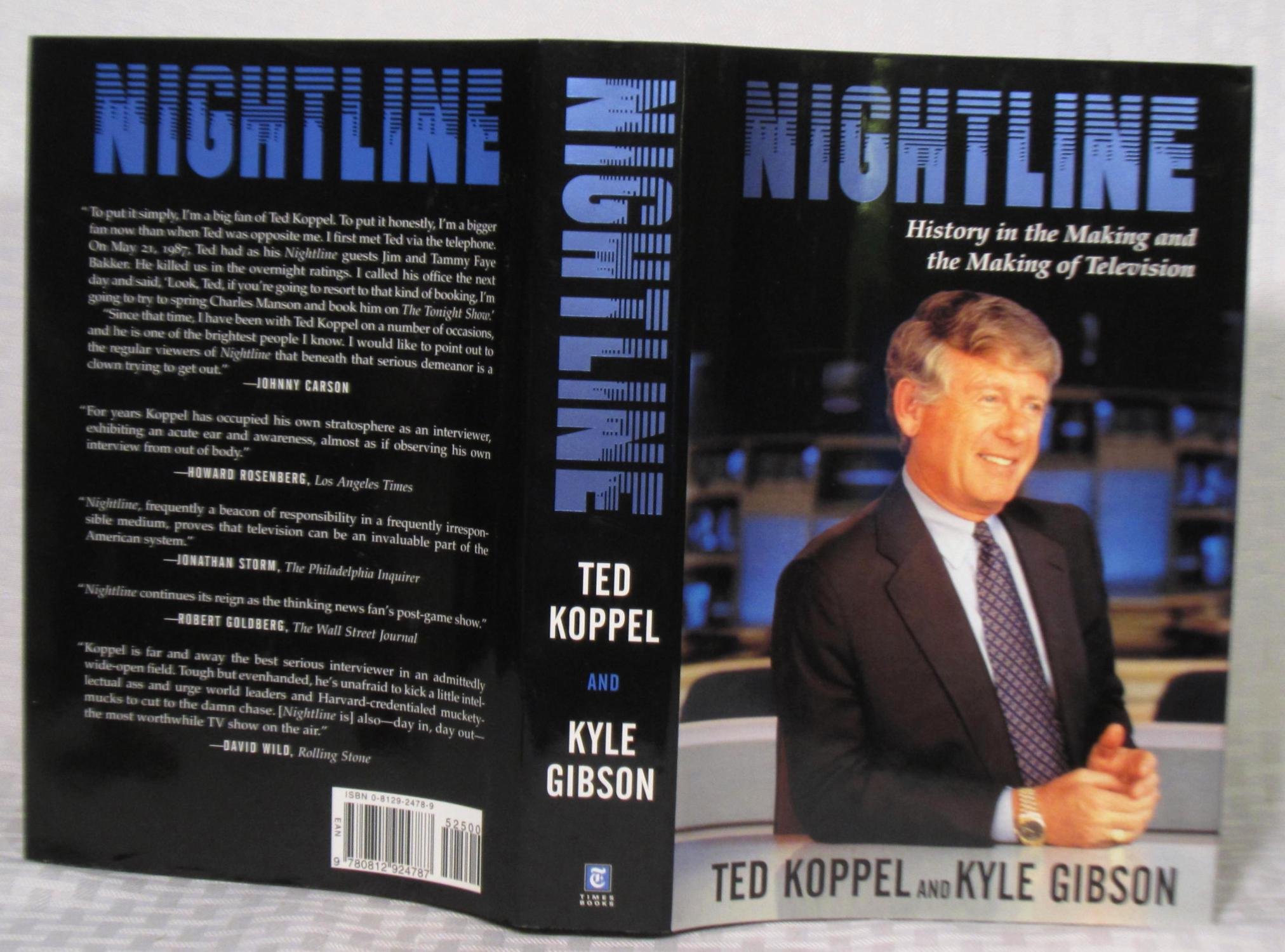



Since its premiere in 1980, Nightline has become an American institution, watched by more than 25 million people five times a week. This highly readable history of the program takes readers behind the scenes of the making of the show and looks at the profound revolution now shaking the information industry. Photos. For millions of Americans, 'Nightline' is as much a part of the bedtime ritual as brushing their teeth. At the show's 1980 debut, Ted Koppel's detached but approachable style immediately marked him as a serious journalist, and disgruntled TV viewers sat up and took notice. Since then Koppel has continued to revolutionize the art of the television interview with his intelligence and low-key authority. With Kyle Gibson, a former 'Nightline' producer, he has authored a remarkable memoir of the show's first 16 years. Gibson, a former producer for Nightline who became an ABC correspondent and a freelance writer, supplies the narrative here; Koppel's off-camera "voice" appears in a long chapter on conducting live TV interviews and in the introduction and "final thoughts." But the on -camera words of Koppel and his Nightline guests pervade this retrospective: chapters full of excerpts from transcripts explain how and why Nightline got on the air and how it works, discuss the technological and stylistic innovations that have allowed the show to expand its journalistic envelope, and examine big stories where Nightline broke new ground (e.g., South Africa, the Mideast, AIDS, the Philippines, and the collapsing Soviet Union). The book includes "Tales from the Bookers' Vaults" and an overview of the program's town-meeting format, plus the chapter "Shows We Wish You Had Never Seen." News junkies who keep Nightline 's ratings strong will relish this volume's inside scoop and savor its stroll down memory lane. Mary Carroll A charming anecdotal account of how a group of ABC execs parlayed an international incident into a news show that redefined late-night television and made little-known anchorman as popular as Johnny Carson. ``The show brought to you by the Ayatollah Khomeini,'' as it was jokingly referred to, Nightline evolved 16 years ago from the series America Held Hostage, ABC's response to their viewers' seemingly insatiable interest in the Iranian hostage crisis. The crisis, which had been expected to be short-lived, dragged on for months, and by then America Held Hostage had broken the Tonight show's monopoly over late-night. The opportunity was ripe for a new show, but what form would it take? Ted Koppel thought that there was no reason to mess with success. He envisioned a continuation of the America Held Hostage series, with an eventual expansion into other serious news topics, and he saw himself as the host. He had been anchoring for much of the hostage crisis and had proved himself an highly intelligent and adept interviewer, one who was quick on his feet. ABC, however, began courting the likes of Dan Rather, Tom Brokaw, and Roger Mudd. We all know who won that round. Koppel and former Nightline producer Gibson provide hilarious behind-the-scenes stories of the chaos inherent in a show that chooses in the morning its topic for that night, only to change it later in the day to cover a breaking story. They also present highlights and lowlights from the show's history, all featuring, of course, Koppel: interviewing, sans translator, a Russian cosmonaut who couldn't speak English; telling Senator Edward Kennedy that he was fat; rudely grilling vice presidential candidate Geraldine Ferraro on foreign policy. Despite the pompous subtitle, a lighthearted look at life inside the one late-night show that takes the world seriously. (TV satellite tour) -- Copyright ©1996, Kirkus Associates, LP. All rights reserved. emiere in 1980, Nightline has become an American institution, watched by more than 25 million people five times a week. This highly readable history of the program takes readers behind the scenes of the making of the show and looks at the profound revolution now shaking the information industry. Photos.