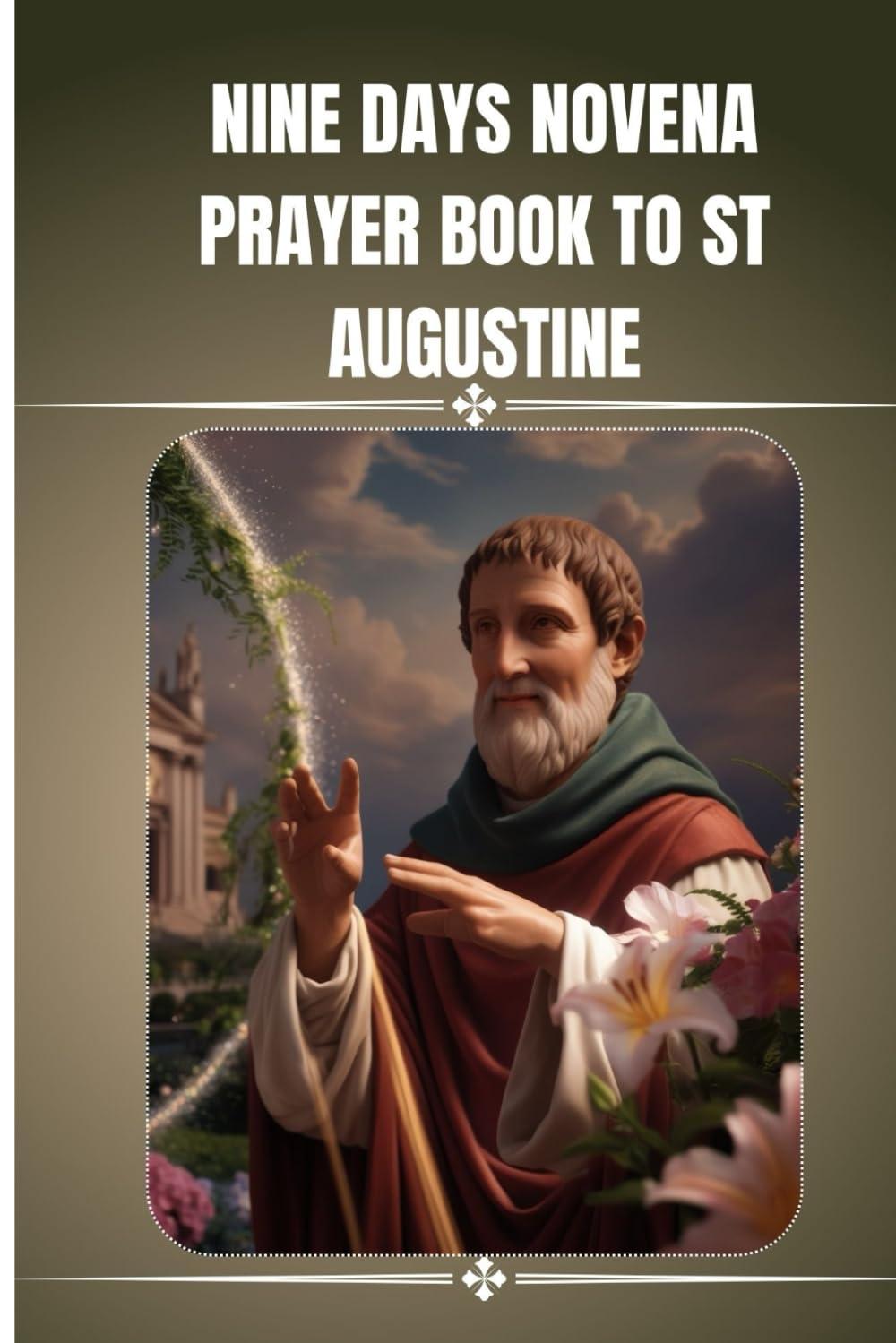
Nine days novena prayer book to St Augustine: The Catholic novena prayer book to St Augustine (Catholic Novena Prayers)
$7.99
by Bro Raymond Mary



St. Augustine of Hippo (354–430 AD) is one of the most influential theologians and philosophers in Christian history. Born in what is now modern-day Algeria, Augustine was raised by his devout Christian mother, Monica, but his early life was marked by a pursuit of worldly pleasures and intellectual pride. His father was a pagan, and Augustine’s early years were filled with a search for meaning that led him through various philosophical and religious beliefs. Augustine’s life changed dramatically when, at the age of 31, he experienced a profound spiritual awakening. After years of living in sin, he converted to Christianity, largely through the prayers of his mother and the influence of St. Ambrose, the Bishop of Milan. Baptized in 387 AD, Augustine’s life took a dramatic turn toward holiness. He went on to become the bishop of Hippo (modern-day Annaba, Algeria), where he became an outspoken advocate for Christian doctrine and an ardent defender of the faith against heresies. Augustine’s writings, especially Confessions, The City of God, and On Christian Doctrine, shaped much of Western Christianity and influenced Christian theology for centuries. St. Augustine’s legacy as a teacher, bishop, and theologian remains influential to this day. He is known for his deep insights into the nature of grace, the human soul, and the relationship between faith and reason. His feast day is celebrated on August 28th, and he is regarded as a Doctor of the Church.