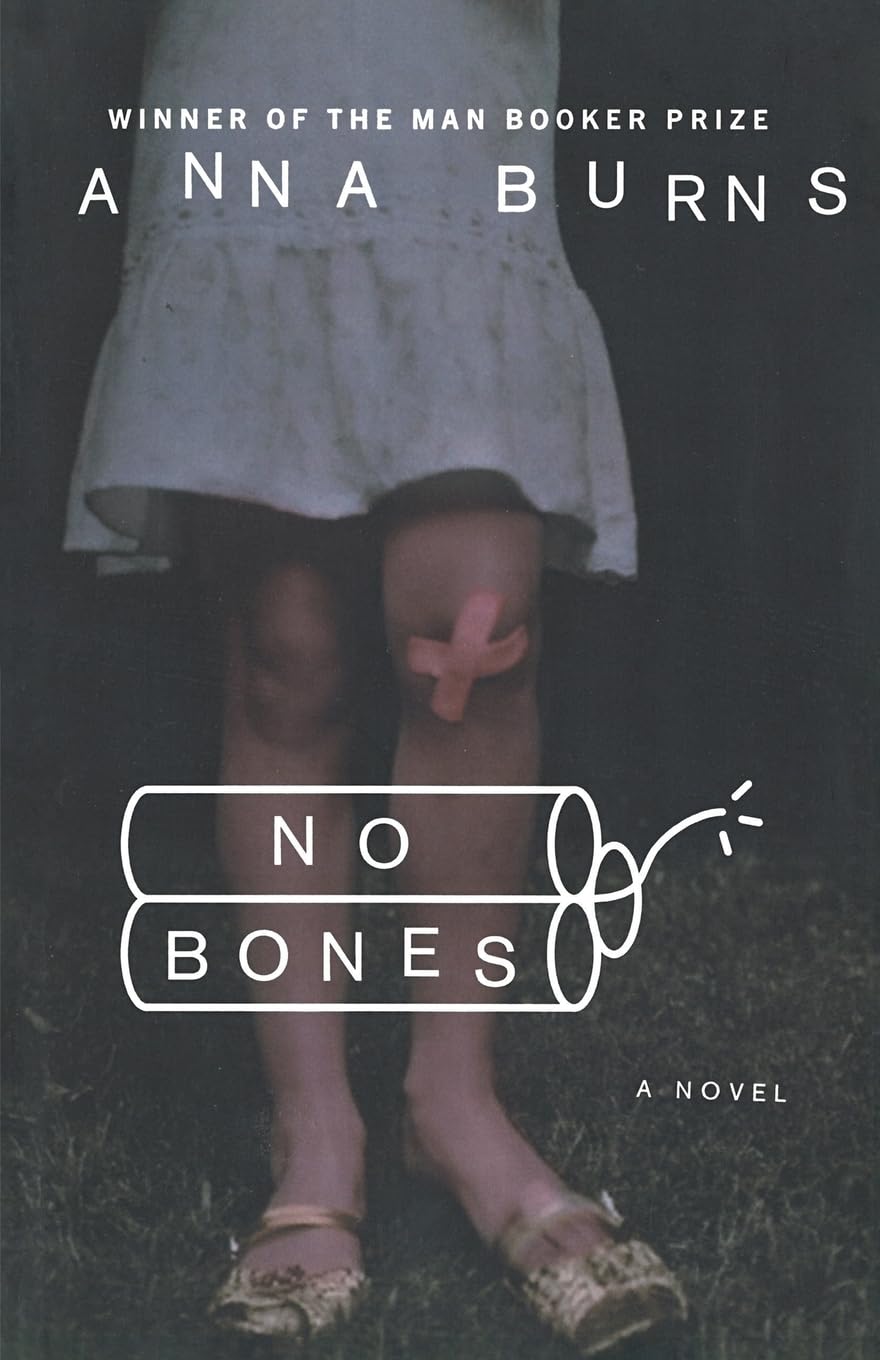



The shattering and darkly funny debut novel from the author of Milkman , winner of the Man Booker Prize. No Bones is a book about feelings, family, sex, and Ireland―but don't tell Amelia that. She's the one growing up in the mad family, in the mad society, who doesn't want to know what's going on. But things are going on: eight-year-olds collecting very peculiar treasure; babies who might be, or might not be, bombs; schoolgirls bringing guns into schoolyards; and, of course, lots of food and bad, bad sex. If Amelia is to live she needs to change. Can she, though, in a place where people don't know how to look after themselves, and so wouldn't know how to look after one another? Shortlisted for the Women's Prize for Fiction. No Bones , Anna Burns's magnificent debut, is a heartbreaking but astonishingly funny account of growing up in Belfast during the "Troubles." Without meaning to diminish this wonderful and inventive work, it's possibly more accurate to describe it as a series of interlocking stories rather than a novel. At its center is Amelia Lovett, a naïve, sensitive girl who matures, although never losing her youthful incredulity, as the book progresses. Her often tragic life story is recounted through an array of characters, vernacular voices, and episodes that with mordant humour track the sheer brutality of the era. Burns unflinchingly portrays the casualness, even banality, of the violence. The 9-year-old Amelia easily drifts from collecting buttons to plastic bullets; teenage girls shoot each other in the playground; wayward youths are kneecapped, and even a walk home from a disco can result in a "protracted, grisly and truly awful end." What Burns manages to capture, through comic exaggeration, is a real sense of how fragile the boundaries of normality are. The sectarian killings are matched by equally senseless domestic feuds and conflicts. Amelia's mother's observation that "she could see that beating the crap out of her sister was one thing; kicking an IRA man to death or nearly was another" offers a measure of just how distorted their values have become. Amelia reacts to the madness around her by internalizing the violence, choosing to harm herself rather than others: first by becoming an anorexic and then an alcoholic. Burns has produced a compassionate, bitterly acute, witty portrait of the darkest days of Northern Ireland's history. No Bones could well emerge as Belfast's Dubliners . --Travis Elborough, Amazon.co.uk This bloody but brilliant first novel about Amelia, a Belfast native growing up during the Troubles, tackles so many issues senseless violence, anorexia, incest, rape, mental illness, and hopelessness, not to mention Catholics vs. Protestants that it makes the McCourt boys' battles with poverty and alcoholism seem simple in comparison. Yet Burns's description is so believable that one desperately hopes this novel is not autobiographical. Scene after scene is dead-on, such as when the ranting Miss Hanratty instructs Amelia's class to write a poem about peace and threatens to "multiple-slap anybody who didn't get it right." Later, when Amelia is stalked by schoolgirl toughs, she reviews her mother's rules for fighting and realizes that the rules don't work for her. In a final episode, Amelia and her friends, now in their 30s, attempt a day trip away from their violent but sheltered neighborhood and are completely unable to function as normal people enjoying a day off. This stunning novel may not appeal to everyone but comes highly recommended. Christine Perkins, Jackson Cty. Lib. Svcs., Medford, OR Copyright 2002 Cahners Business Information, Inc. This slightly surreal debut novel follows Amelia Lovett from her childhood in Belfast in 1969 ("The Troubles started on a Thursday. At six o'clock at night") through her adulthood in London in 1994. Sensitive and somewhat dreamy, Amelia is ill equipped to deal with her boisterous, often violent family. Her father does not give a fig about politics--he'll fight with anyone, Catholic or Protestant. Her childhood diversions consist of collecting rubber bullets from the British Army in her beloved treasure box and playing guessing games about which neighborhood landmark will blow up next. Inured to violence and the loss of childhood friends to bombs and worse, Amelia develops a serious drinking problem, then straightens herself out and moves to London, where she promptly suffers a breakdown. The novel ends with a hilarious day trip taken by Amelia and her childhood chums to the peaceful countryside, which only makes the Belfasters more nervous. Burns' enigmatic prose amplifies her gritty story, which offers a powerful depiction of war as seen through the eyes of a child. Joanne Wilkinson Copyright © American Library Association. All rights reserved "Burns never once winces or loses control of her material in this mordant, wry, unforgiving tale of the loss of innocence, for a girl and her country." ― Kirkus Reviews "Anna Bu