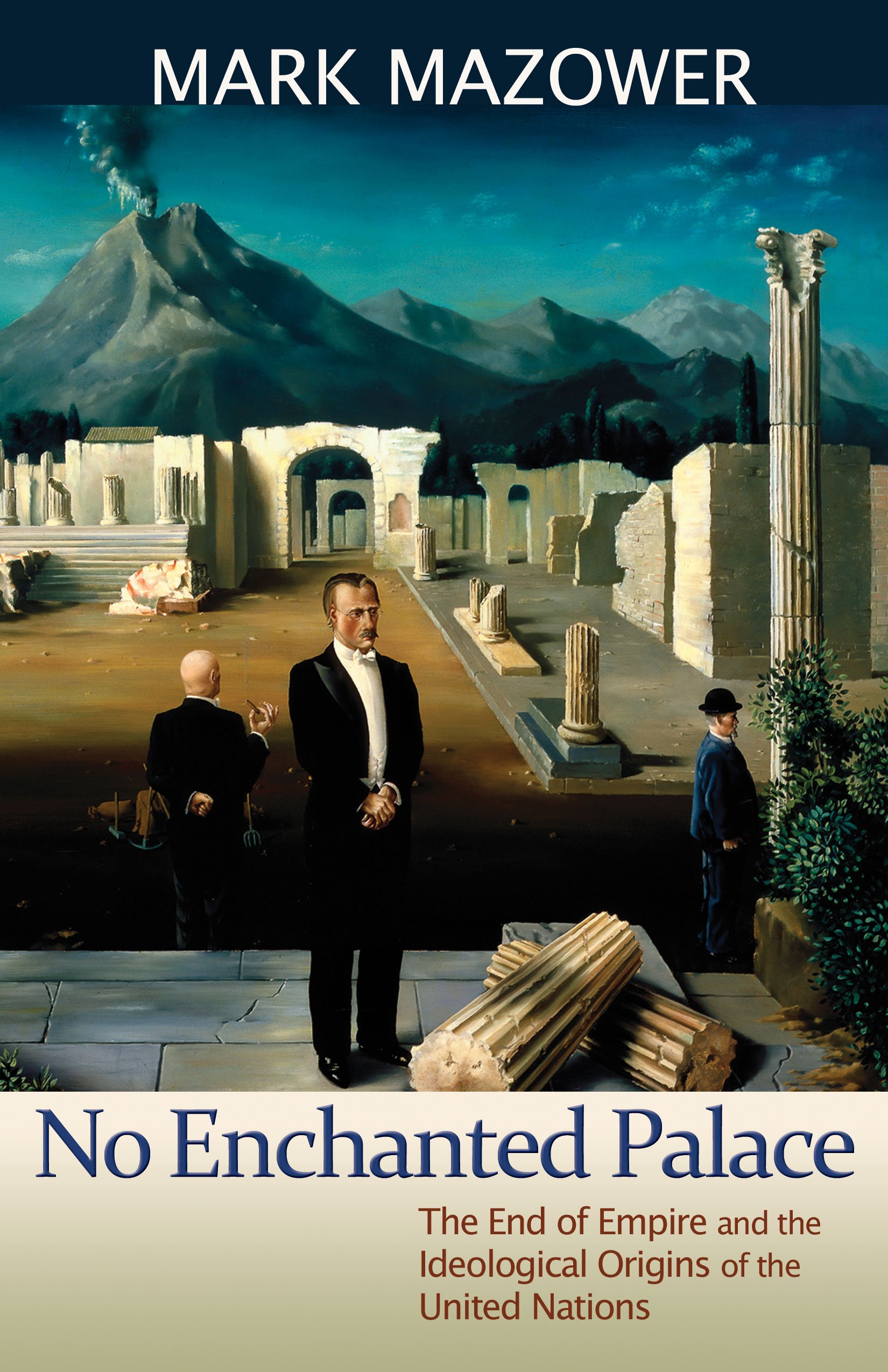
No Enchanted Palace: The End of Empire and the Ideological Origins of the United Nations (The Lawrence Stone Lectures)
$27.96
by Mark M. Mazower



A groundbreaking interpretation of the intellectual origins of the United Nations No Enchanted Palace traces the origins and early development of the United Nations, one of the most influential yet perhaps least understood organizations active in the world today. Acclaimed historian Mark Mazower forces us to set aside the popular myth that the UN miraculously rose from the ashes of World War II as the guardian of a new and peaceful global order, offering instead a strikingly original interpretation of the UN's ideological roots, early history, and changing role in world affairs. Mazower brings the founding of the UN brilliantly to life. He shows how the UN's creators envisioned a world organization that would protect the interests of empire, yet how this imperial vision was decisively reshaped by the postwar reaffirmation of national sovereignty and the unanticipated rise of India and other former colonial powers. This is a story told through the clash of personalities, such as South African statesman Jan Smuts, who saw in the UN a means to protect the old imperial and racial order; Raphael Lemkin and Joseph Schechtman, Jewish intellectuals at odds over how the UN should combat genocide and other atrocities; and Jawaharlal Nehru, India's first prime minister, who helped transform the UN from an instrument of empire into a forum for ending it. A much-needed historical reappraisal of the early development of this vital world institution, No Enchanted Palace reveals how the UN outgrew its origins and has exhibited an extraordinary flexibility that has enabled it to endure to the present day. "[Mazower] has identified a gigantic contradiction in the United Nations' very DNA that may explain how the ambitious, well-intentioned body evolved into Mess-on-East River." ---Marc Tracy, New York Times Book Review "One of the most distinguished historians of his generation." ― New York Review of Books "In tracing the intellectual and ideological threads that went into the creation of both organizations, Mazower's main theme is the importance of British imperial tradition and policy." ---Brian Urquhart, New York Review of Books "The finest historian of twentieth-century Europe." ---Jonathan Keates, Times Literary Supplement "Mark Mazower sets out to challenge two notions: first, that the UN's creation in 1945 was uncontaminated by association with the League; and second, that it was above all an American affairs. . . . This book offers interesting glimpses of the UN's origins." ---Adam Roberts, Times Literary Supplement "Provocative. . . . Mazower argues that the United Nations, like the League of Nations before it, did not emerge from a pristine liberal vision of universal rights." ---G. John Ikenberry, Foreign Affairs "Mazower offers a scholarly review of the origins of the UN and a timely reminder that those origins need not shape its future. The UN should not be judged for what it is not." ---Harvery Morris, Financial Times "Mark Mazower warns in his elegantly written intellectual history of the organization, the U.N. is not--and has never been--quite what it seems. In their rush to portray liberal internationalism as the height of human achievement, too many historians have forgotten what Mazower regards as the real ideological impulse behind the U.N.'s creation: preservation of the British Empire and white rule over Europe's colonial possessions." ---Sasha Polakow-Suransky, American Prospect "A slim yet provocative volume that reveals the UN's origins in colonial imperialism." ---Anna Mundow, Boston Globe "Mark Mazower's stimulating and insightful book casts new light on the organization's ideological prehistory, and in the process offers a corrective to previous, somewhat uncritical accounts of the UN's formation. . . . This book is an illuminating contribution to the debate about the United Nations." ---Kirsten Sellars, International Affairs "Historian Mark Mazower takes a whack at the prevailing perception of the U.N.'s founding fathers as a band of farsighted idealists seeking to mold a truly universal institution out of the ruins of the World War II. . . . Mazower examines the darker side of the U.N.'s creation, highlighting a handful of influential figures who participated in drafting the U.N. Charter." ---Colum Lynch, Foreign Policy " No Enchanted Palace is essentially an exercise in demystification, which aims to strip the UN of the halo of piety that surrounds it. But it is also a work of historical investigation, and Mazower brings to light many neglected details of the UN's formation and development." ---John Gray, Harper's Magazine "An important book and a good example of the way history can inform current debates." ---Bernard Porter, History Today "Opens some novel perspectives. . . . Mazower offers a disturbing picture of the ambiguous ideological foundations of this great sacred cow of post-war international institutions." ---Sunil Khilnani, Outlook In