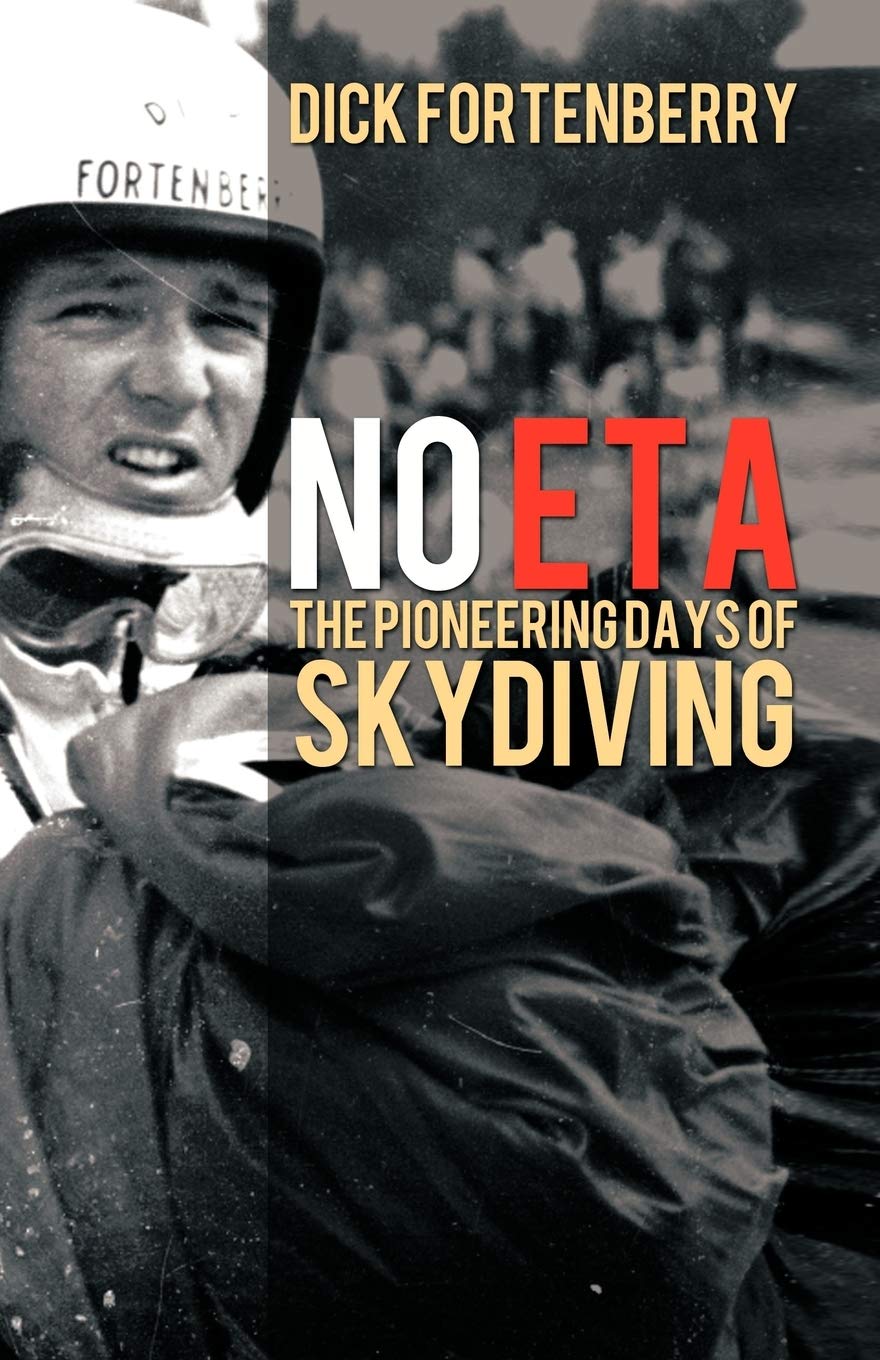



Why would anybody want to jump out of a perfectly good, functioning airplane? Ask any sport parachutist in the world that question and you may find a different answer every time. For Dick Fortenberry, his love of parachuting began long before he joined the US Army at age eighteen and attended jump school with the 77th Special Forces Group. In his fascinating memoir about his journey to eventually becoming one of the original members of the Golden Knights, Fortenberry describes the rigorous training that led up to his first jump and to receiving the coveted silver wings on his chest, the parachute patch on his hat, and "Airborne" on his shoulders. As Fortenberry chronicles the details of how he rapidly excelled in the sport of skydiving, he offers an exciting glimpse of what it was like to feel the wind in his hair, the adrenaline as he quickly approached the ground, and the fear when his parachute malfunctioned. No ETA: The Pioneering Days of Skydiving shares the intriguing personal story of one man's journey in the early days of sport parachuting that ultimately led to three world championships and an appearance on the cover of Sports Illustrated. NO ETA THE PIONEERING DAYS OF SKYDIVING By Dick Fortenberry iUniverse, Inc. Copyright © 2011 Dick Fortenberry All right reserved. ISBN: 978-1-4620-2642-5 Chapter One "Holy shit, what now?" I would find that this phrase would follow me around like a wounded water buffalo and play a big part in my next two careers. It covers such areas as "What the ...! Where the ...!, Why the ...!, and How the ...!, and is usually uttered when, in aviation terms, you run out of airspeed, altitude and ideas all at the same time. Only one other phrase emits more total frustration and in some cases, finality, and that's "Oh Shit!" But on this day, December 28, 1960, I was trying to figure out why my parachute was tilting so badly and why I was hanging at a 45 degree angle in the harness! Just a few seconds before, I had been filming Danny Byard in a 120 mph freefall over Sicily Drop Zone, Fort Bragg, North Carolina with an 8 millimeter movie camera strapped to my helmet. At 2,200 feet, I pulled my ripcord to open the parachute. Instead of the normal, steady, 3 to 4 "g's" we experienced during the opening shock, I felt two separate jolts. Now I was watching, with some concern, as my parachute was going through stages of opening and closing. I figured that I had a 50/50 chance (a lot of things I do don't add up) of hitting the ground during the open phase. I also figured that this meant I had a 50/50 chance of hitting the ground like a sack of you know what. I didn't like the odds! What led up to this predicament occurred about three months prior when Loy Brydon, a fellow member of the Special Warfare Center Sport Parachute Club, and myself, found out that the Air Force had 300 B-12 type survival parachutes that they were going to cannibalize. Loy and I got in his pickup, hired a U-HAUL trailer and headed for Augusta, Georgia where this dastardly deed was to take place. We convinced these Air Force cannibals that we had a thousand uses for the outdated parachutes at Fort Bragg, and "No Sir, we would never consider jumping them!" So we loaded up our booty and headed back for Bragg, arriving exhausted but ready to start our "unauthorized" research and development program. There were three Sport Parachute Clubs at Fort Bragg; the Special Warfare Center, which was mostly Special Forces, the 18th Airborne Corps and the 82nd Airborne Division. The sport was in its infancy with very little governing as nobody knew what the hell we were doing, including us. What was normal procedure or policy had probably been discovered that day. We were hungry for adventure, thirsty for knowledge, Gung Ho and rearing to go and we had 300 beautiful, outdated, obsolete and illegal parachutes to do it with. And of course, Loy and I being the straight shooters we were, divided the bounty equally between the other two clubs, 75 parachutes for each of them and the rest for us! So much for straight shooters, this was a golden opportunity and we were not going to let it pass. The B-12 survival parachute was the mainstay for the Air Force and the Army in the early 1960's. It was made up of a #8 nylon webbing harness, nylon pack tray with thin steal ribs inside and four flat bungee cords on the closing flaps. The canopy was 28 feet in diameter with 28 suspension lines attached to four 3 foot risers that connected the whole thing to the harness by two cape wells. The nylon material between the suspension lines were called gores and went from the skirt, or bottom, of the canopy to the apex. To get a basic idea of how it worked, the gores were neatly folded, the skirt evened up (this was critical), the canopy was then folded into a long fold, (which was the width of the pack tray), the suspension lines were then stowed into the pack tray with rubber bands, and the canopy accordion folded on