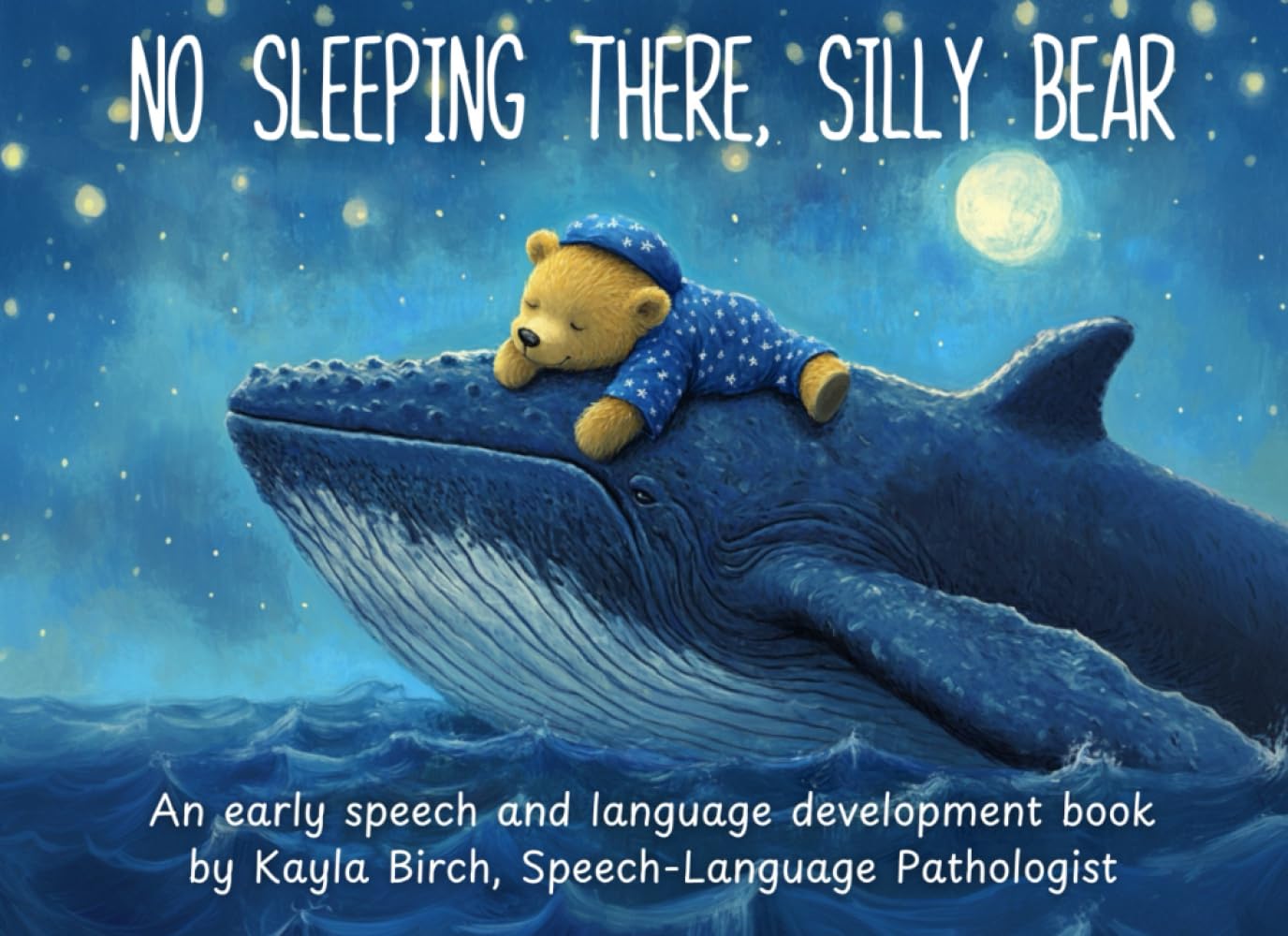
No Sleeping There, Silly Bear: An Early Speech And Language Development Book
$12.99
by Kayla Birch



"No Sleeping There, Silly Bear!" An Early Speech and Language Development Book for Babies and Toddlers Written by Kayla Birch M.A. SLP Check out a Kids Read Aloud version of this book on YouTube! https://youtu.be/kxKYN4UAvpw From sleeping on the slide to curling up next to a dinosaur, Bear tries all the silliest spots to catch some rest. Will he find the coziest place just in time for his big winter sleep? Snuggle up and follow along to find out! About the Book: "No Sleeping There, Silly Bear!" is a playful and interactive book created for babies, toddlers, and preschoolers, written by Kayla Birch, a Speech-Language Pathologist specializing in early childhood speech and language development. Children often imitate gestures and actions before they start speaking. This book uses easy, fun-to-say phrases paired with gestures, and includes a page for caregivers with more techniques they can use while reading to boost their child's speech and language! This book also focuses on increasing vocabulary by introducing important prepositions like 'on', 'in' and 'next to,' helping children understand spatial relationships and expand their language skills in a playful way. Each page features short, predictable sentences that encourage children to anticipate and participate, allowing them to practice language skills naturally. The book incorporates tips and techniques for parents to use during reading, such as expectant wait time —pausing to give your child the opportunity to imitate or say the next word—and pairing gestures with words , such as wiggling your finger while saying, “No no no!” These techniques are designed to make reading time interactive and to promote speech and language development. About the Author: Kayla Birch is a Speech-Language Pathologist working with preschoolers with special needs, including developmental delays, autism, and other disabilities. Why This Book is Important: "No Sleeping There, Silly Bear!" isn’t just a fun story—it’s also a tool for parents, teachers, and therapists. The repetitive language patterns, paired with interactive techniques like gestures and expectant wait time, help children build vocabulary and learn key early language skills. It’s an ideal resource for both typically developing children and children with special needs, offering a supportive, enjoyable way to foster language development.