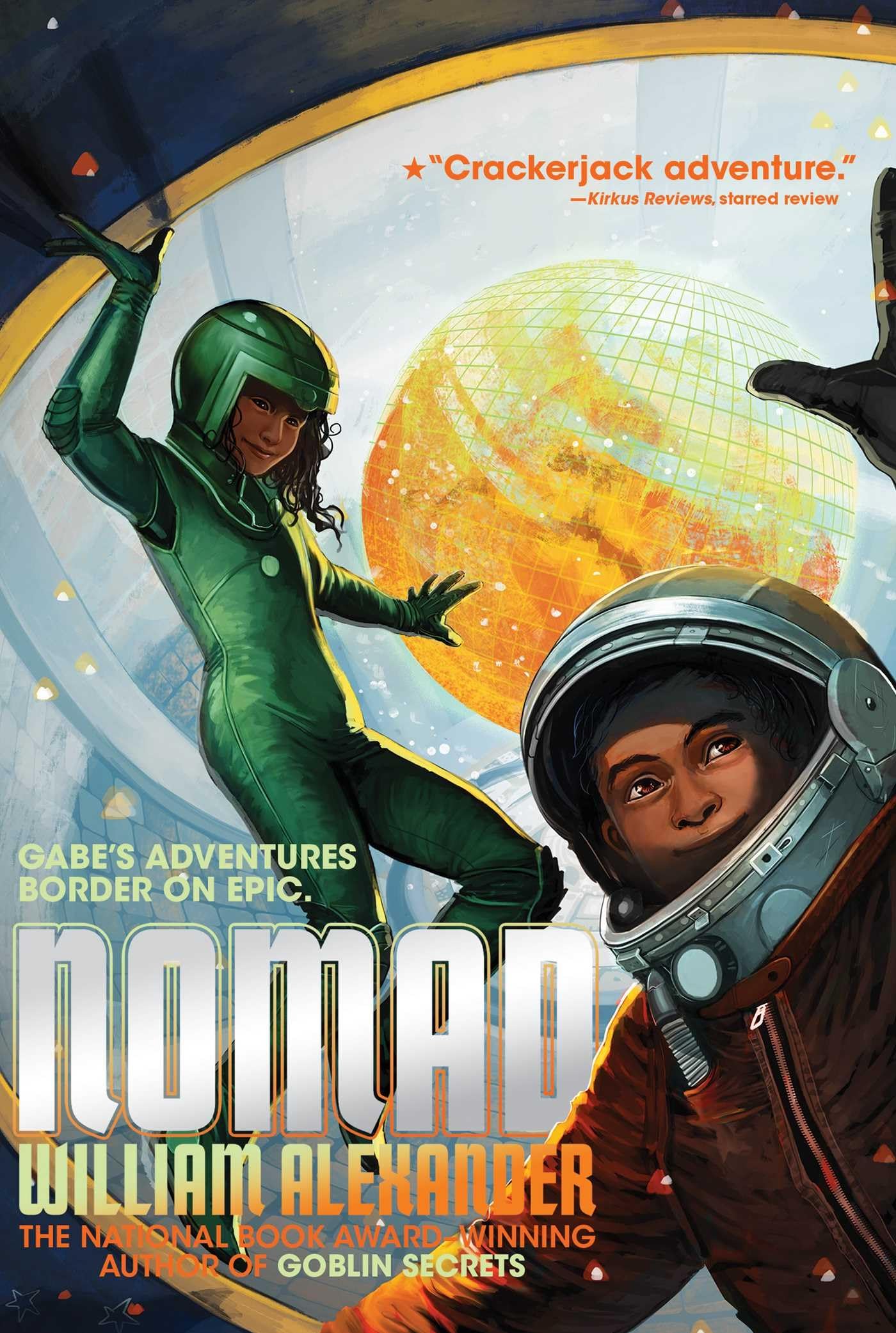



Gabe Fuentes is in a race against time—and aliens—in this intergalactic sequel to Ambassador , which Booklist called “an exciting sci-fi adventure, perceptively exploring what it means to be alien,” from National Book Award winner William Alexander. When we last left Earth’s Ambassador, Gabe Fuentes, he was stranded on the moon. And when he’s rescued by Kaen, another Ambassador, things don’t get better: It turns out that the Outlast— a race of aliens that has been systematically wiping out all other creatures—are coming. And they’ve set their sights on Earth. Enter Nadia. She was Earth’s Ambassador before Gabe, but left her post in order to stop the Outlast. Nadia has discovered that the Outlast can conquer worlds by travelling fast through lanes created by the mysterious Machinae. No one has communicated with the Machinae in centuries, but Nadia is determined to try, and Gabe and Kaen want to help her. But the three Ambassadors don’t know that the Outlast have discovered what they are doing, and have sent assassins to track them down. As Nadia heads deeper into space to find the Machinae, Gabe and Kaen return to Earth, where Gabe is trying to find another type of alien—his father, who was deported to Mexico, and who Gabe is desperate to bring home. From a detention center in the center of the Arizona desert to the Embassy in the center of the galaxy, the three Ambassadors race against time to save their worlds in this exciting, funny, mind-bending adventure. "[A] crackerjack adventure." ― Kirkus Reviews, starred review "Filled with a Heinleinesque sense of wonder, National Book Award–winner Alexander's depictions of life in space pave the way for unlimited possibilities." ― Publishers Weekly William Alexander writes unrealisms for readers of all ages. His work has won the National Book Award, the Eleanor Cameron Award, the Librarian Favorites Award, the Teacher Favorites Award, two CBC Best Children’s Book of the Year Awards, and two Junior Library Guild Selections. As a small child he honestly thought that his Cuban American family came from the lost island of Atlantis. Nomad 1 Zvezda Lunar Base: 1974 Nadia Antonovna Kollontai, the ambassador of her world, was not on her world. She went walking on the moon. Sunlight bounced off the gray stone around her. She felt intense warmth through her bulky orange suit. The reflected glare blotted out all other stars. It turned the sky into absolute darkness. That felt close and comforting rather than infinite, as though Nadia had hidden both herself and the moon underneath a very thick blanket. She looked forward to throwing that blanket aside. “Nadia?” Her radio crackled and sputtered. “Zvezda base to Ambassador Nadia . . .” “Hello, Envoy,” she said. “By my count your oxygen is running low.” The Envoy spoke Russian, and sounded exactly like her uncle Konstantine. It had borrowed Uncle’s voice to seem familiar, familial, and comforting. It did sound familiar, but not especially comforting. Uncle Konstantine and Aunt Marina had had many practical virtues between them, but neither one of them had ever learned how to be comforting. “Probably,” she said, as though she didn’t care how much air she had left. This wasn’t actually true. She had kept careful tabs on her oxygen. “Please cut short your unnecessary moonwalk and come back inside.” “On my way,” she said, but she circled back the long way around to give herself more room to run. Nadia took huge and sailing lunar leaps, gaining speed. She felt like she could push herself clear of the moon entirely if she only kicked hard enough. She felt like she could fly through space as her own ship. She took several smaller steps to slow down when the Zvezda base came back into view. Gray-and-beige modules of the station lay half-buried in lunar dirt. The dirt was supposed to protect the modules from radiation and small meteors, and maybe it did protect the half that was actually covered, but the robotic shovel had broken before finishing the job. Now it looked like a ruin, a relic of some ancient space age rather than the cutting, rusting edge of Soviet engineering. Nadia tried not to be cynical about it. The moon base functioned well enough. She lived there. She breathed and ate there. But Nadia was from Moscow, and asking a Muscovite kid to be anything other than cynical about grand Soviet accomplishments was like asking fish to have eyelids. Besides, Aunt and Uncle had designed most of this place (though only Uncle actually got credit for it), so even though Nadia was proud of their astroengineering, she had also overheard enough dinnertime grumblings about shoddy shortcuts to know that Zvezda barely held itself together with string and spit. And Nadia loved sarcasm. She loved how it could make any word mean both itself and its opposite. “Nadia?” the Envoy asked, borrowed voice crackling over the radio. She imagined it peering through curved window glass in one of the unburied base mo