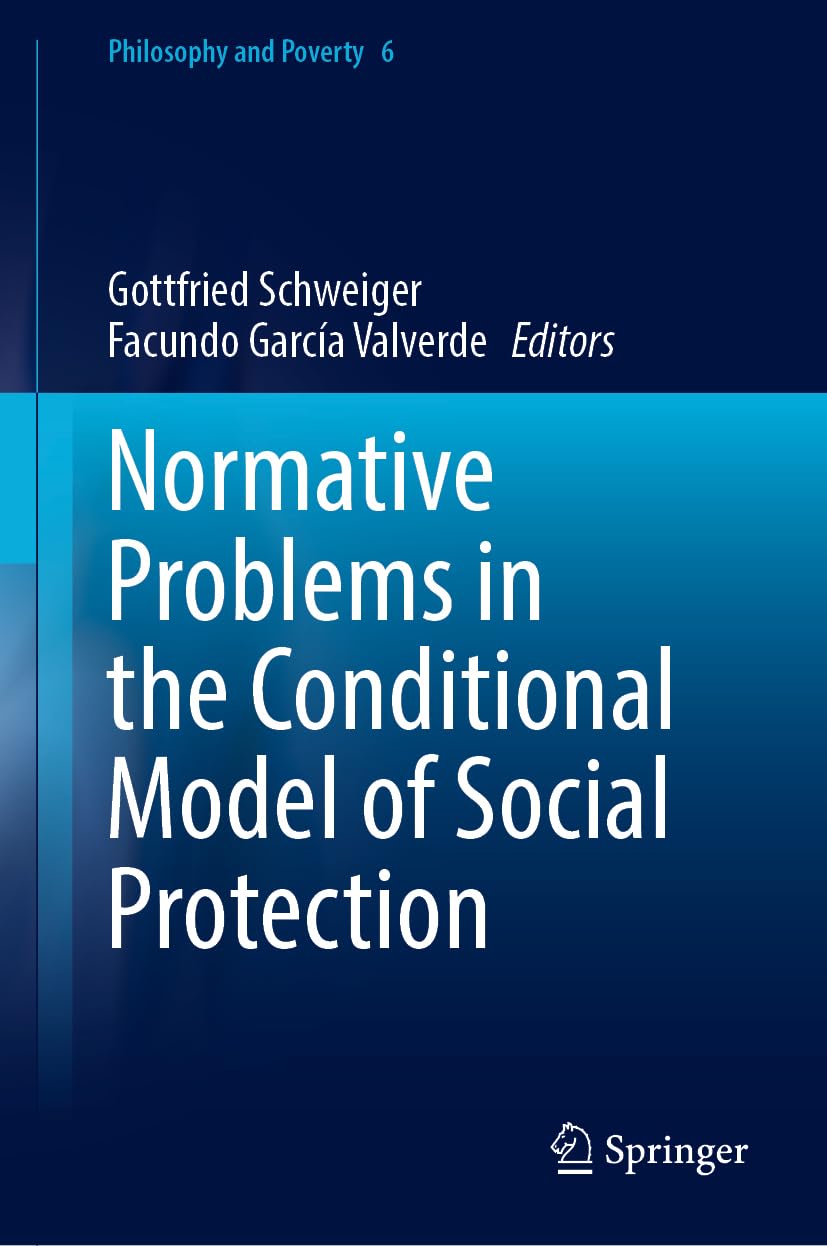
Normative Problems in the Conditional Model of Social Protection (Philosophy and Poverty, 6)
$129.99
by Facundo García Valverde



This book discusses conditionality in social policy from normative, ethical, and philosophical perspectives. It brings together researchers from a variety of disciplines and parts of the world, opening new perspectives for the reader. Conditional social benefits are widespread and controversial: for supporters, they express that the state can expect something in return for its services and that self-responsibility is thereby strengthened. For critics, conditionality is synonymous with control and subjugation. This book discusses and investigates both views on conditionality, allowing the reader to get more in-depth knowledge of this topical and important aspect of social policy and political philosophy. This book discusses conditionality in social policy from normative, ethical, and philosophical perspectives. It brings together researchers from a variety of disciplines and parts of the world, opening new perspectives for the reader. Conditional social benefits are widespread and controversial: for supporters, they express that the state can expect something in return for its services and that self-responsibility is thereby strengthened. For critics, conditionality is synonymous with control and subjugation. This book discusses and investigates both views on conditionality, allowing the reader to get more in-depth knowledge of this topical and important aspect of social policy and political philosophy. Gottfried Schweiger is Senior Scientist at the Centre for Ethics and Poverty Research of the University of Salzburg. He published widely in political philosophy. Facundo García Valverde is a researcher in philosophy at the National Research Center of Argentina (CONICET) and is Professor of the University of Buenos Aires. He has published widely in political philosophy and, specifically, in the normative foundations of social protection.