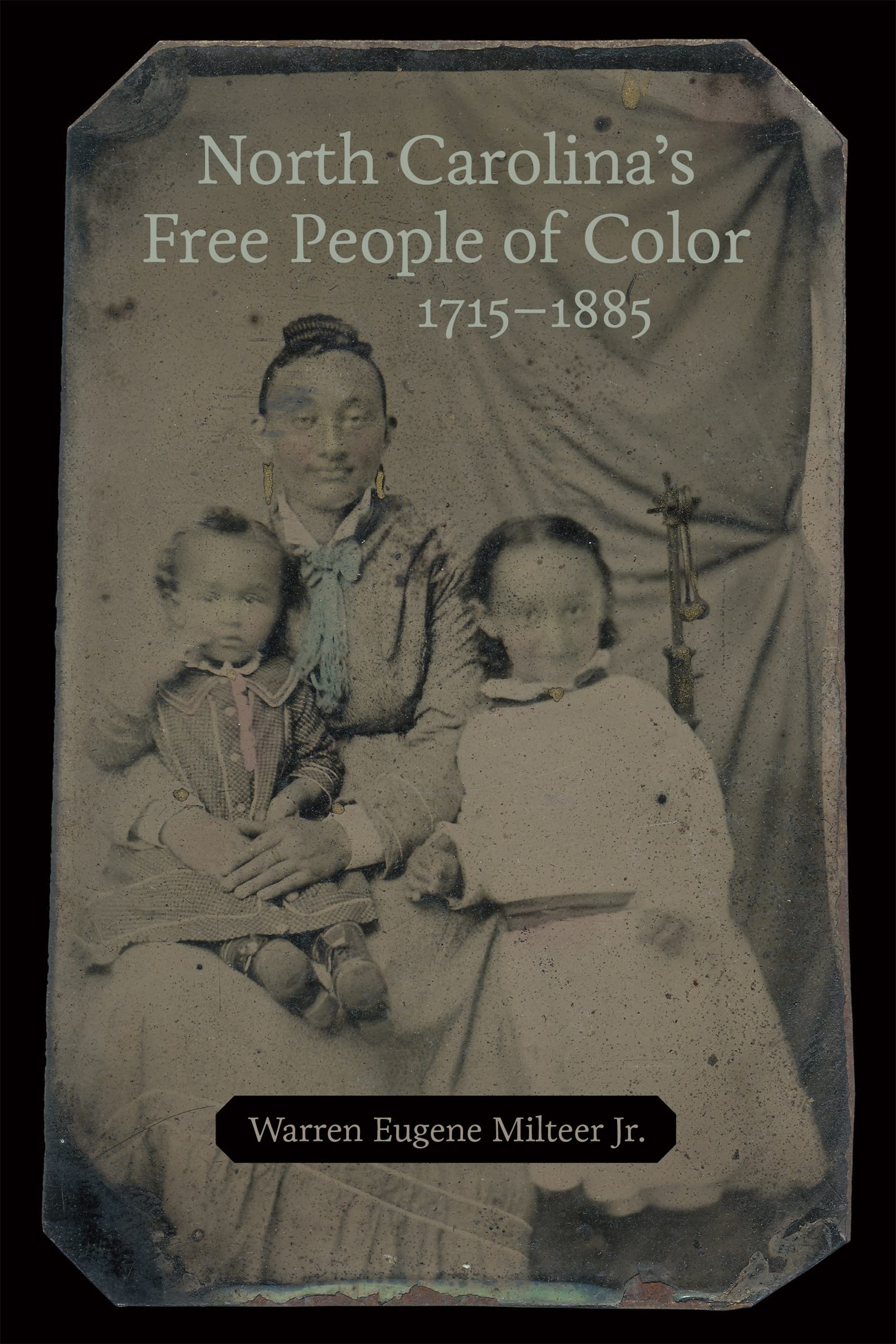



In North Carolina’s Free People of Color, 1715–1885, Warren Eugene Milteer Jr. examines the lives of free persons categorized by their communities as “negroes,” “mulattoes,” “mustees,” “Indians,” “mixed-bloods,” or simply “free people of color.” From the colonial period through Reconstruction, lawmakers passed legislation that curbed the rights and privileges of these non-enslaved residents, from prohibiting their testimony against whites to barring them from the ballot box. While such laws suggest that most white North Carolinians desired to limit the freedoms and civil liberties enjoyed by free people of color, Milteer reveals that the two groups often interacted―praying together, working the same land, and occasionally sharing households and starting families. Some free people of color also rose to prominence in their communities, becoming successful businesspeople and winning the respect of their white neighbors. Milteer’s innovative study moves beyond depictions of the American South as a region controlled by a strict racial hierarchy. He contends that although North Carolinians frequently sorted themselves into races imbued with legal and social entitlements―with whites placing themselves above persons of color―those efforts regularly clashed with their concurrent recognition of class, gender, kinship, and occupational distinctions. Whites often determined the position of free nonwhites by designating them as either valuable or expendable members of society. In early North Carolina, free people of color of certain statuses enjoyed access to institutions unavailable even to some whites. Prior to 1835, for instance, some free men of color possessed the right to vote while the law disenfranchised all women, white and nonwhite included. North Carolina’s Free People of Color, 1715–1885 demonstrates that conceptions of race were complex and fluid, defying easy characterization. Despite the reductive labels often assigned to them by whites, free people of color in the state emerged from an array of backgrounds, lived widely varied lives, and created distinct cultures―all of which, Milteer suggests, allowed them to adjust to and counter ever-evolving forms of racial discrimination. " North Carolina's Free People of Color is a well-researched and well-written narrative suited for history lovers, scholars, and the graduate seminar. Moreover, Milteer provides an important corrective for scholars who have too often lumped the varied experiences of free people of color together and paid little attention to the rights that free people of color were able to retain." - Journal of the Civil War Era "Milteer makes a significant contribution to our understanding of racial categorization and free people of color in North Carolina through the era of Reconstruction. His book is a thoroughly researched study based on a variety of primary sources, including county court minutes, manuscript collections, apprenticeship bonds, state legislative records, and newspapers." - North Carolina Historical Review "Warren Milteer's carefully researched and closely argued book on North Carolina's Free People of Color from the proprietary period to Reconstruction has surprises on every page." - North Carolina Genealogical Society Journal Warren Eugene Milteer Jr. is associate professor of history at the George Washington University.