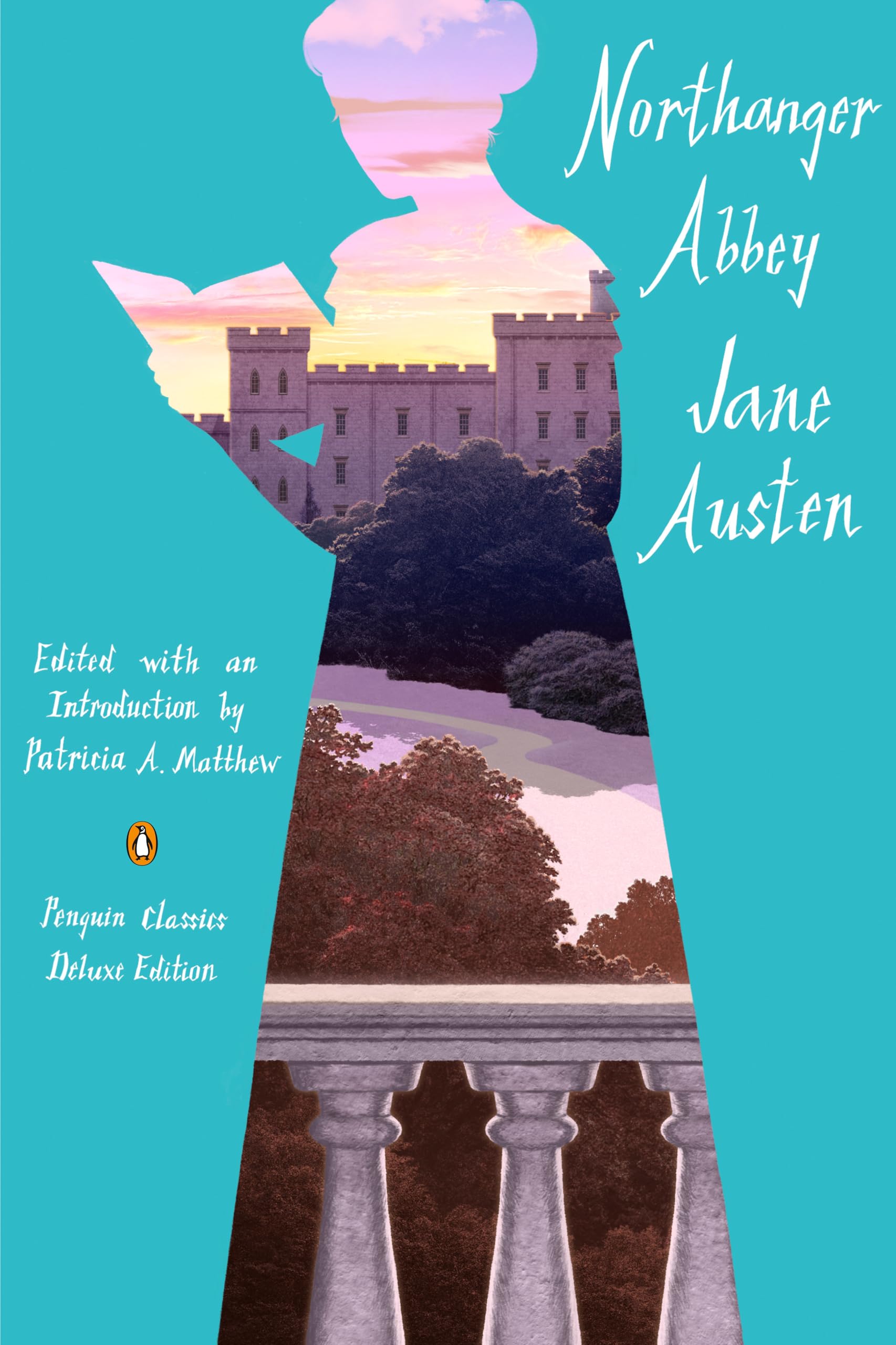



Jane Austen's witty exploration of the perils of mistaking fiction for reality, now in a collectible Deluxe Edition celebrating the 250th anniversary of the author's birth During an eventful season at Bath, young, naïve Catherine Morland experiences fashionable society for the first time, both its pleasures and its pitfalls. She is delighted with her new acquaintances: flirtatious Isabella, who shares Catherine’s love of Gothic romance and horror, and sophisticated Henry and Eleanor Tilney, who invite her to their father’s mysterious house, Northanger Abbey. There, Cather learns the danger of an active imagination. With its broad comedy and irrepressible heroine, this is the most youthful and optimistic of Jane Austen’s works. Penguin Classics is the leading publisher of classic literature in the English-speaking world, representing a global bookshelf of the best works throughout history and across genres and disciplines. Readers trust the series to provide authoritative texts enhanced by introductions and notes by distinguished scholars and contemporary authors, as well as up-to-date translations by award-winning translators. Jane Austen was born on December 16, 1775, in Steventon, a small village in Hampshire, England. As a girl, she wrote stories, including burlesques of popular romances. She lived with her family in Steventon until her father, a clergyman in the Church of England, retired in 1801. After his death, in 1805, she, her mother, and her sister did not have a settled home until 1809, when they moved to Chawton, Hampshire. There she was extraordinarily productive, revising three novels and writing three more from scratch. Published during her lifetime were Sense and Sensibility (1811), Pride and Prejudice (1813), Mansfield Park (1814), and Emma (1815). Austen died on July 18, 1817, in Winchester, where she was receiving medical treatment, and was buried in that city’s cathedral. Two more novels, Northanger Abbey and Persuasion , were published posthumously in 1817 with a biographical notice by her brother Henry Austen, the first formal announcement of her authorship. She also left two earlier compositions: a short epistolary novel, Lady Susan , and an unfinished novel, The Watsons . At the time of her death, she was working on a new novel, Sanditon , a fragmentary draft of which survives. Patricia A. Matthew is an English professor who teaches courses on eighteenth- and nineteenth-century British literature and culture at Montclair State University. A specialist in the history of the novel, she writes about a range of topics for scholars and the general public. Her work has been published in academic journals, and she has written about Jane Austen, Bridgerton , and Sanditon for The Atlantic , The Times Literary Supplement , and Slate . The coeditor of the Oxford University Press series Race in Nineteenth-Century Literatures and Cultures, she is a regular lecturer for the Jane Austen Society of North America. She is currently writing a book on sugar, abolition, and material culture. Chapter 1 No one who had ever seen Catherine Morland in her infancy wouldhave supposed her born to be an heroine. Her situation in life, thecharacter of her father and mother; her own person and disposition,were all equally against her. Her father was a clergyman, withoutbeing neglected, or poor, and a very respectable man, thoughhis name was Richard—and he had never been handsome. He had aconsiderable independence besides two good livings—and he wasnot in the least addicted to locking up his daughters. Her motherwas a woman of useful plain sense, with a good temper, and, whatis more remarkable, with a good constitution. She had three sonsbefore Catherine was born; and instead of dying in bringing thelatter into the world, as anybody might expect, she still livedon—lived to have six children more—to see them growing uparound her, and to enjoy excellent health herself. A family often children will be always called a fine family, where there areheads and arms and legs enough for the number; but the Morlandshad little other right to the word, for they were in general veryplain, and Catherine, for many years of her life, as plain as any.She had a thin awkward figure, a sallow skin without colour, darklank hair, and strong features;—so much for her person; —and notless unpropitious for heroism seemed her mind. She was fond ofall boy's plays, and greatly preferred cricket not merely to dolls,but to the more heroic enjoyments of infancy, nursing a dormouse,feeding a canary-bird, or watering a rose-bush. Indeed she had notaste for a garden; and if she gathered flowers at all, it was chieflyfor the pleasure of mischief—at least so it was conjectured fromher always preferring those which she was forbidden to take. —Suchwere her propensities—her abilities were quite as extraordinary.She never could learn or understand anything before she was taught;and sometimes not even then, for she was often inatte