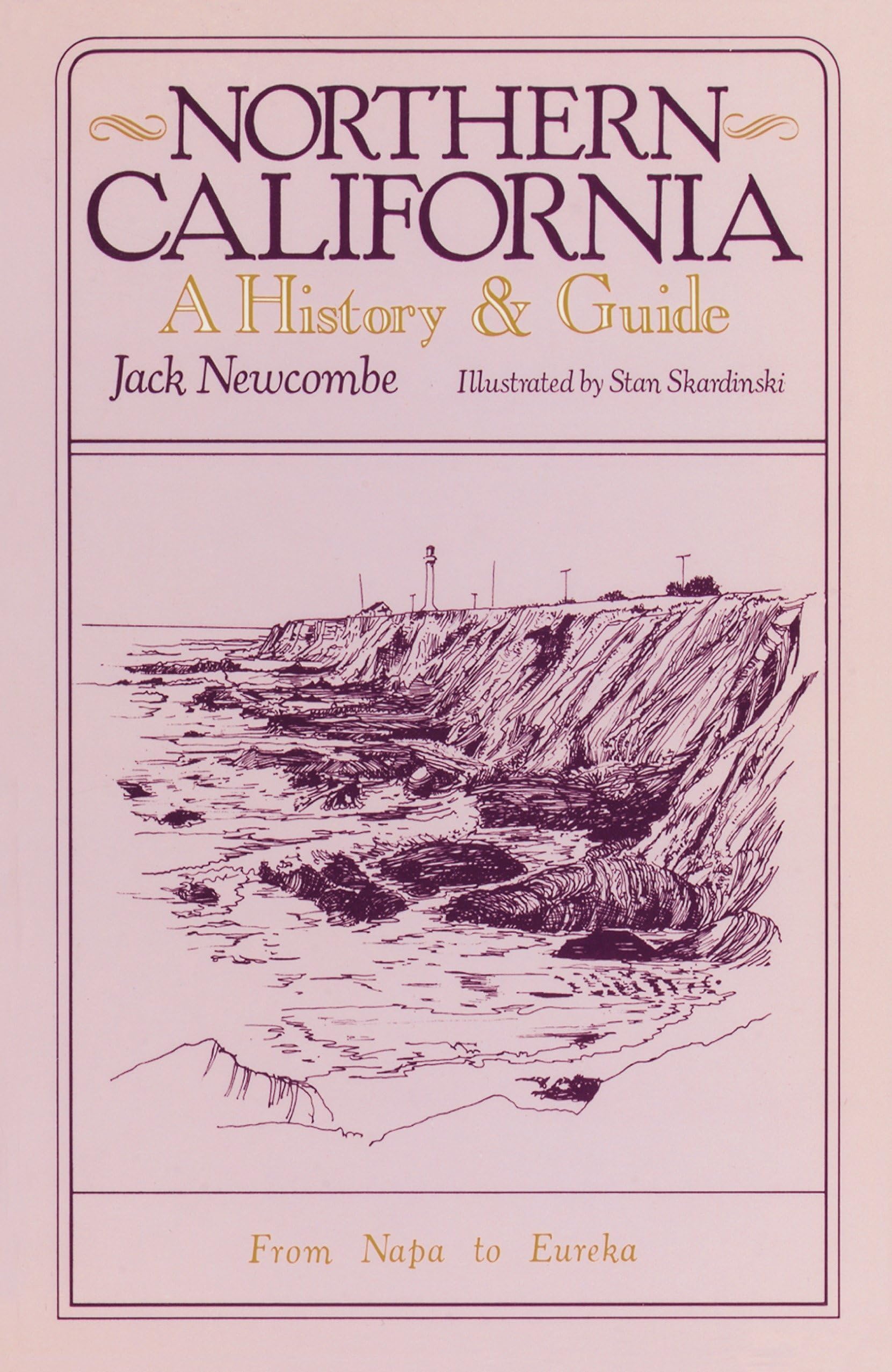



“The landscape of monotony is elsewhere,” Jack Newcombe writes, and the routes he traces through the vineyards, towns, and parkland of northern California—along with the variegated pleasures to be explored en route—bear the proof: • Mud baths and wine tasting in Calistoga • A view from the top at Mt. St. Helena • Wine touring, the slow and selective way, in the Napa and Sonoma valleys • “A Beer Experience” in Petaluma, and a dining treat at the New Boonvile Hotel • Whale watching on the Sonoma and Mendocino coasts • Walking the redwood forest trails • Finishing fleets and Victorian mansions in Eureka These attractions and more—and the colorful past that gave rise to them—are presented in Northern California: A History & Guide , an exciting, indispensable travel companion for a most spectacular region. Jack Newcombe was the author of several works of fiction and nonfiction. A native of Vermont, he attended the University of Missouri, Pomona College and the American University at Biarritz before graduating from Brown University. He worked at Life magazine from 1955 to 1972 as a writer, editor, and bureau chief in London and Washington, and enjoyed a four-year tenure as executive editor of Book-of-the-Month Club. Jack Newcombe died in 1990. INTRODUCTION The geographic appeal of California’s North Coast and its related ridges and valleys can come directly and easily enough from a map of the region: the river-broadened valleys point as vividly as fingers in north-south directions; the ranges pose a challenging barrier to the ocean front; and the coast itself marks a sharp, if irregular, definition between land and sea. There are not the outer banks, penetrating bays or estuaries one encounters along the East Coast. Northern California’s western border takes an abrupt stand against the vast Pacific. But the unique appeals located here must be personally discovered. It is country of swift change—in climate, in terrain, in the use that occupants make of the land. I have sat on Manchester Beach in mid-January against driftwood, being comfortably warmed by the low sun and watching the winter surf slam spectacularly against the shore. From the top of a flowered Mendocino ridge in late spring, I have looked east toward the Sierra where winter still was traced in broad white strokes. In September, after a night of harmonizing coolness among Sonoma vineyards, I have had to take refuge under a eucalyptus to escape midday heat that only the deserts beyond Barstow deserve. I have waited for the dense fog extending the night around Humboldt Bay to lift and dramatically reveal a commercial marina shining with hope for the new day, however meager the fishing hauls have become. The surface of Northern California is quilted with contrasts: the wild and preserved groves of the great redwoods, as primeval as forests can appear to us; the headland’s grassy cover flattened by the steady ocean wind; the rich seasonal presence of rhododendron and poppy, of lilies and foothill lupine; the trim brown grids of grape vines in early winter; scrub oak and manzanita thriving on the steep flank of a ridge; the surprising ridges themselves, which rise so quickly above planted fields and the intermittent towns with their new, semiattached developments. As a Vermonter, I have viewed Northern California with a mixture of familiarity and the astonishment that comes when confronted with the new. The two states have similar longitudinal shapes and physical characteristics of forested peaks and picturesque valleys. Vermont’s western border, Lake Champlain, is hardly a drop in California’s Pacific, but it provides the benefits—and hazards—of deep water, hard waves and winds. Perhaps my analogy stops here because there is no match in America for California’s diversity or the choices it offers in recreation, road travel, light, weather or raw scenery. I have often wondered how much the sight of the stunning country provoked the early Mexican explorers—who, as the first colonists, became Los Californios—or the American pioneers who made the long passage from the East and Midwest to claim the territory. And there were the Indians, the only occupants for hundreds of years, who surely spent their seasons working the land, fishing the rivers and coastal waters, and probably found little time to celebrate the beauty that surrounded them. They did, of course, offer thanks for what the land provided by blessing the early fruits of spring and by ceremonies that prepared for the vital acorn harvests in the fall. As elsewhere, Northern California’s Indian past seems to have been all but erased. True, it survives in historical society archives, in some museums, in influences on contemporary art (such as the ubiquitous craft of basketweaving), in the numbers of rancherias that remain populated by descendents of survivors of Indian wars and white man’s diseases. Yet the Indian names remain: Arcata, Napa, the Mayacamas Mountains,