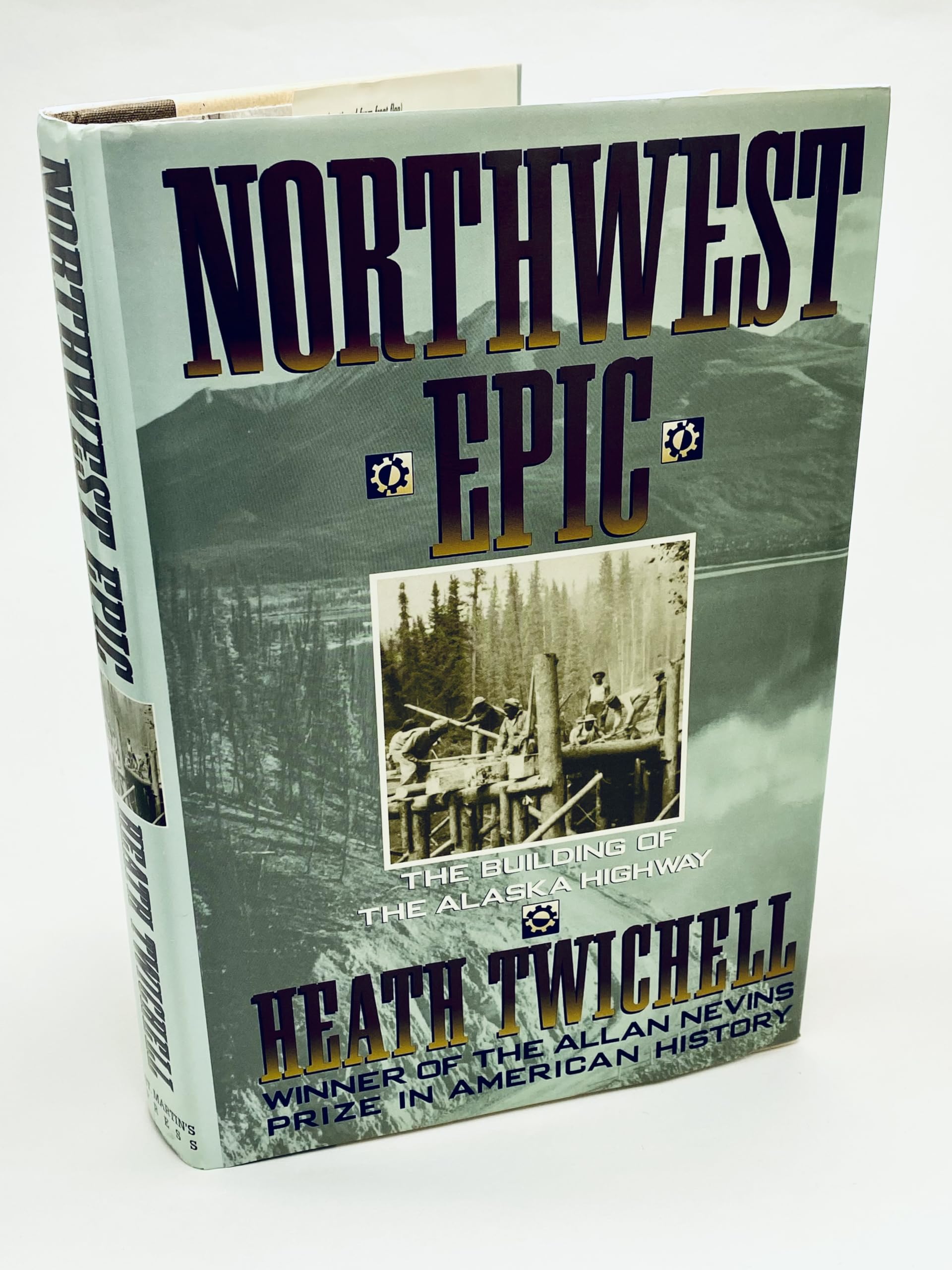



Northwest Epic is the panoramic story of the courageous U.S. Army Engineers and civilian contractors who toiled in the tense months after Pearl Harbor to build a 1,500-mile emergency supply line through the rugged Canadian Rockies to isolated military bases in Alaska. The construction of this winding gravel road--GI's called it the ALCAN--was very much an all-American adventure: blacks, whites, and natives working together under the harshest extremes of climate and terrain--racing to bolster Alaska's defenses and deter another Japanese attack on North American soil. It is a story of ambitious men, such as Lieutenant General Brehon B. Somervell, the Army's suavely ruthless chief logistician, who brooked no opposition to his grandiose schemes. "Dynamite in a Tiffany Box" some called him. It is the story of Master Sergeant Wansley Hill and thousands of other black soldiers who, unwanted by their country for duty on the front lines, nonetheless proved themselves steadfast heroes in the land of the midnight sun. And it is also the story of natives like Charlie McDonald, a guide whose intimate knowledge of the land--with its dense forests, impassable muskeg bogs, and unmapped mountain valleys--was used by the Army Engineers to help build a road that has brought fundamental change to a once-remote corner of the North American continent. The Alaska Highway--with its hundreds of bridges, chain of airfields, and oil refinery and pipeline system (known as CANOL)--opened to traffic in late 1942 and was in full use one year later. Though one of the greatest feats of twentieth-century macro-engineering, this huge project sparked as much protest as patriotism. Critics argued that the road was in the wrong place and would have little postwar value; a well-publicized investigation of CANOL's excesses gave a critical boost to the career of Senator Harry S. Truman. Despite such controversy, the completion of the highway provided a historical watershed for the territory of Alaska, for in the decades that followed, the land would be propelled, often reluctantly, from a pristine refuge, a nineteenth-century land inhabited by natives, dreamers, and rugged individualists, into the twentieth century. In the tradition of David McCullough's The Path Between the Seas, Heath Twichell's Northwest Epic is a sweeping and richly textured history, a book that tells of almost forgotten hardships and heroics during the darkest days of World War II. Historian Twichell has produced a highly readable and exhaustive account of the massive effort during World War II to build the emergency supply road to U.S. bases in Alaska that eventually became the Alaska Highway--at $500 million, the most expensive construction project of the war effort and one that received little military use. Conceived in the post-Pearl Harbor frenzy of wartime activities, the highway soon took on a life of its own, a life well documented through interviews, official records, and oral and personal histories. This book should appeal to those with an interest in Alaska, U.S.-Canadian relations, and war activity on the homefront--an interesting if esoteric confluence. -Mark L. Shelton, Athens, Ohio Copyright 1992 Reed Business Information, Inc. Plodding, statistics-clogged account of the construction of the Alcan Highway, hacked out of the Canadian/Alaskan wilderness by the US military and private contractors during the early, anxiety- filled days of WW II. Twichell is a former West Point history teacher whose father was an Army officer involved with the project. Begun immediately after the Japanese attack on Pearl Harbor, the Alcan Highway, Twichell explains, was intended to provide a relatively safe supply line to the then-Territory of Alaska. Four routes were proposed, each supported by local boosters eager to share in the promised economic bonanza. White and black regiments of the US Army Engineers, mostly ill-trained and ill-equipped, were dispatched to the area. Twichell does a fine job of capturing the tensions and rivalries that accompanied the use of these rigorously segregated troops. But when he turns to an almost mile-by-mile, bulldozer-by-bulldozer, mountain-by-mountain account of their progress, his narrative pace falters, only quickening when he incorporates anecdotes into his story--tales of the grizzled guides, the seat-of-their-pants bush pilots, or the black enlisted men who helped build the highway. Also of interest are Twichell's reports on the backbiting common among top brass; a brief discussion of the Senate investigating committee--headed by future President Truman--that blew the whistle on Army excesses; and a look at the delivery of Lend-Lease planes to Russia over the arctic route. Such bright spots, however, are infrequent as the author devotes page after page to catalogues of distances covered, the number of automotive breakdowns, troop allotments, and other ledger-sheet matters. WW II-era historians may benefit from the welter of facts and figur