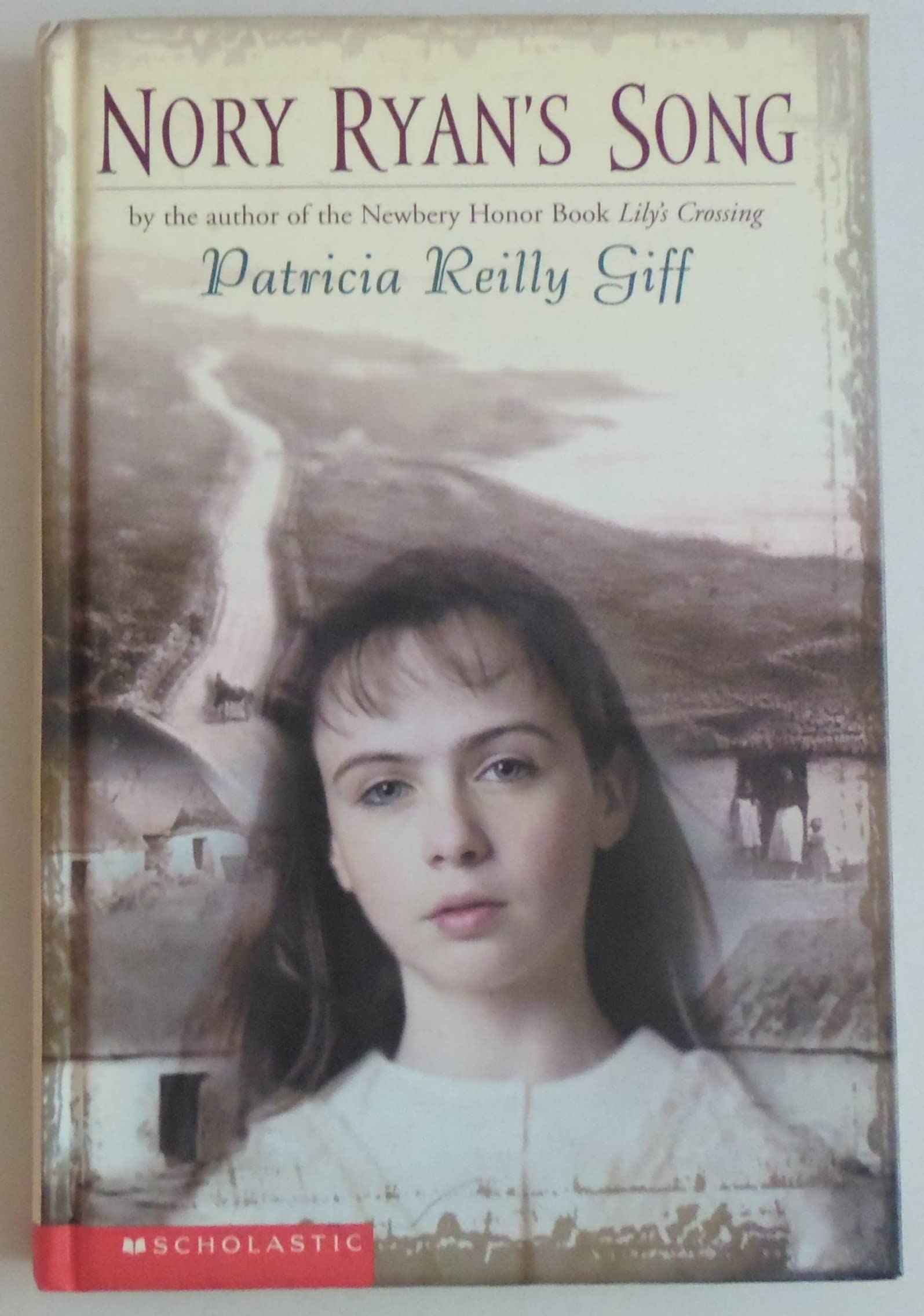



Nory Ryan's family has lived on Maidin Bay on the west coast of Ireland for generations, raising a pig and a few chickens, planting potatoes, getting by. Every year Nory's father goes away on a fishing boat and returns with the rent money for the English lord who owns their cottage and fields, the English lord bent upon forcing the Irish from their land so he can tumble the cottages and clear the fields for grazing. Times are never easy on Maidin Bay, but this year, a terrible blight attacks the potatoes. No crop means starvation. Twelve-year-old Nory must summon the courage and ingenuity to find food, to find hope, to find a way to help her family survive. Life is hard for poor Irish potato farmers, but 12-year-old Nory Ryan and her family have always scraped by... until one morning, Nory wakes to the foul, rotting smell of diseased potatoes dying in the fields. And just like that, all their hopes for the harvest--for this year and next--are dashed. Hunger sets in quickly. The beaches are stripped of edible seaweed, the shore is emptied of fish, desperate souls even chew on grass for the nourishment. As her community falls apart, Nory scrambles to find food for her family. Meanwhile, the specter of America lurks, where, the word is, no one is ever hungry, and horses carry milk in huge cans down cobblestone streets. As Patricia Reilly Giff writes in her note to the reader, the Great Hunger of 1845 to 1852 was a tragic time for the Irish. Enough food to feed double the population was sent out across the sea, while an indifferent government ignored the starving masses. More than one million of the eight million people in Ireland died. Nory Ryan's Song , a fictionalized account based on this terrible era in history, describes the heroic struggles of one girl who refuses to give in to hunger, exhaustion, and hopeless circumstances. Young readers may have heard of the Irish Potato Famine, but they won't truly understand it until they meet Nory. Giff is the author of many beloved books for children, including the Newbery Honor Book Lily's Crossing and the Polk Street School series. (Ages 9 to 12) --Emilie Coulter Grade 5-8-Set at the beginning of the Irish Potato Famine in 1845, this survival story is told by lively, 12-year-old Nory Ryan. She shares a small dwelling with her family, hens, and a pig in a subsistence-farming village on the country's west-central coast. They are anxiously awaiting the return of their Da, who has gone to sea to earn money. Their English landlord is evicting tenants who cannot pay rent, forcing them into the streets, and destroying their thatch-roofed huts. Hunger is common before blight destroys the potato crop; with no potatoes, the people face starvation. The Ryans are eager to join the lucky ones who have obtained passage to America. Nory's observations of the land, cliffs, sea, and people in her community are woven with poignant memories and realistic conversations that vividly re-create this tragic period in Ireland's history. The child grows in strength and courage as she seeks food for her family and friends. The fast pace might occasionally force readers to pause and assimilate the details she shares, and to seek out more information. The book opens with a list of Irish words with definitions and pronunciation guide. Today's readers will appreciate this compelling story with a wonderful female protagonist who is spirited and resourceful, and has a song in her heart. Laura Scott, Baldwin Public Library, Birmingham, MI Copyright 2000 Reed Business Information, Inc. Gr. 4-7. From the first scene on a cliff's edge, the characters in Giff's latest novel balance perilously between survival and loss. Set on the west coast of Ireland during the great famine, the story belongs to 12-year-old Nory, who lives with her grandfather, two sisters, and a small brother in a tiny, earthen-floor home. Like most of their neighbors, the Ryans eke out a subsistence living, but when the potatoes begin to rot, that tenuous stability disintegrates, the family disperses, and Nory is left behind to care for her younger brother. Nory fights against starvation, scaling cliff walls for bird eggs, battling violent townspeople, and making broths with Anna, an aging local herbalist with whom Nory becomes exceptionally close. At the last moment, tickets for America arrive from Nory's father, and she leaves for her new life. The finely paced novel balances the physical and emotional horrors of famine--described in visceral detail--with Nory's courage and intelligence, the love she has for her family, and her close friendship with Sean, a local boy. No notes are provided, so children with some basic historical background will glean the most from the story. But Giff brings the landscape and the cultural particulars of the era vividly to life and creates in Nory a heroine to cheer for. A beautiful, heart-wrenching novel that makes a devastating event understandable. Gillian Engberg Copyright © Americ